




 DISCORD
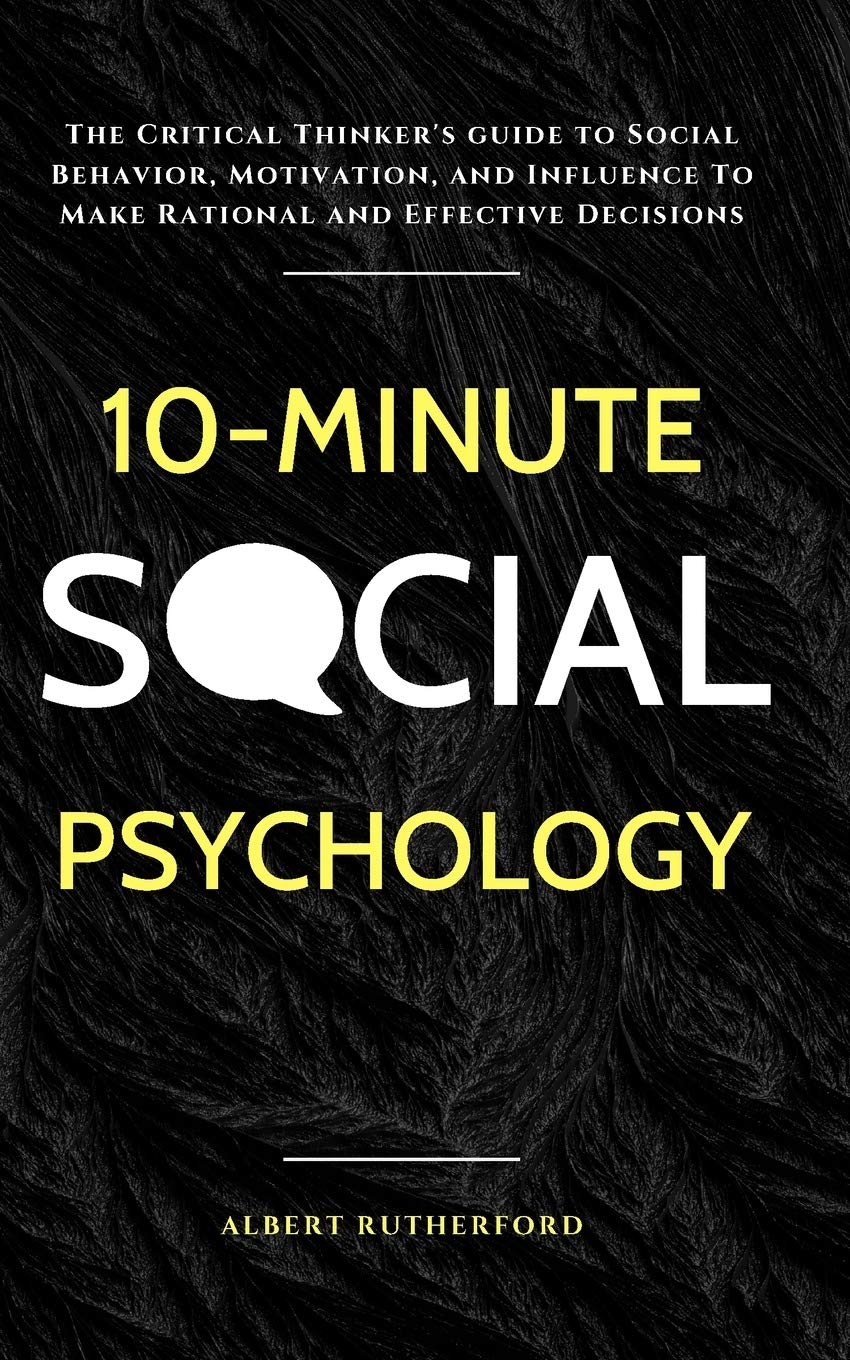
10-Minute Social Psychology
Albert Rutherford

 Apple Books


 25 Min Reading Time
 Audio Version Available
About this book
Unlock the Secrets of Social Interaction in Just 10 Minutes a Day!
Ever wished you could instantly understand what people are thinking and feeling? "10-Minute Social Psychology" offers a unique and insightful exploration into the hidden dynamics of social behavior, conflict, and connection.
Delve into the core principles of social neuroscience and psychology as you discover how to build social awareness, shift your mindset, and take actionable steps to improve your interactions. This book bridges the gap between biology and social cognition, revealing the neurological impact on your behavior and offering practical techniques to:
- Enhance decision-making and critical thinking
- Improve your mental and physical well-being
- Deepen your self-understanding
Address pressing social issues such as discrimination, in-group/out-group biases, and the balance between competition and cooperation. Learn to navigate social acceptability and likability with data-backed strategies from neuroscience and social psychology.
"10-Minute Social Psychology" equips you with the tools to predict and influence both your own behavior and the behavior of others. Become more empathetic, tame unconscious biases related to gender, race, or age, and discover how to:
- Minimize the costs of social stress
- Cultivate cooperation and manage competition effectively
- Resist unwanted social influences
Humans are inherently social beings, and our well-being depends on our connections. This book provides critical insights into understanding and connecting with the people around you, all in just 10 minutes a day.
Summary of Key Ideas
- •
Rational Decisions Through Social Understanding
The book emphasizes the importance of understanding social behavior to make rational and effective decisions. It suggests that by grasping the underlying psychological principles that drive social interactions, individuals can navigate complex social situations more successfully. This understanding can lead to improved communication, conflict resolution, and overall social competence. The ability to critically analyze social dynamics allows for a more objective and less emotionally driven approach to decision-making, ultimately fostering better outcomes in both personal and professional contexts.
- •
Deconstructing Discrimination
The book delves into the complexities of discrimination, examining its roots and manifestations within society. By exploring the psychological mechanisms behind prejudice and bias, it aims to provide readers with a deeper understanding of how discrimination operates. This knowledge is crucial for recognizing and challenging discriminatory practices in various settings, promoting inclusivity, and fostering a more equitable society. The book likely offers strategies for mitigating the effects of discrimination, both on an individual and collective level, encouraging a proactive approach to social justice.
- •
In-Group and Out-Group Dynamics
The book explores the dynamics that arise within and between groups, shedding light on phenomena such as in-group bias and out-group prejudice. It examines how individuals' perceptions and behaviors are influenced by their group affiliations, leading to both cooperation and conflict. Understanding these dynamics is crucial for fostering positive intergroup relations, promoting collaboration, and mitigating the negative consequences of groupthink and social division. The book likely offers insights into strategies for bridging divides and building cohesive communities.
- •
Balancing Competition and Cooperation
The book examines the interplay between competition and cooperation in social contexts, analyzing how these opposing forces shape individual and group behavior. It explores the conditions under which competition can be beneficial, as well as the potential drawbacks of excessive rivalry. Conversely, it highlights the advantages of cooperation, emphasizing its role in achieving common goals and fostering social harmony. The book probably provides guidance on striking a balance between competition and cooperation to maximize positive outcomes in various social situations, promoting both individual success and collective well-being.
- •
The Pursuit of Social Acceptability
The book addresses the pervasive human desire for social acceptability and likability, exploring how these motivations influence individual behavior and decision-making. It examines the psychological pressures that drive people to conform to social norms and seek approval from others. While social acceptance can foster belonging and connection, the book likely also explores the potential pitfalls of prioritizing likability over authenticity and independent thought. Understanding these dynamics is crucial for developing a healthy sense of self and navigating social situations with confidence and integrity.
- •
Neuroscience and Social Psychology Insights
The book utilizes data from neuroscience and social psychology to provide evidence-based insights into social behavior. By drawing on these scientific disciplines, it offers a rigorous and objective understanding of the psychological processes that underpin social interactions. This approach allows readers to critically evaluate social phenomena and avoid relying on anecdotal evidence or unsubstantiated claims. The book likely emphasizes the importance of empirical research in informing our understanding of human behavior and promoting evidence-based solutions to social problems.
Chapter Recap

About The Author
Albert Rutherford
Main Quotes
"Our behavior is a result of continuous interaction between our inner qualities and the demands of the situations we find ourselves in."
"The way we interpret a situation profoundly influences how we'll act."
"Attitudes aren't just abstract evaluations; they're powerful drivers that can predict our actions."
"Our need to belong is a fundamental human motivation."
"Conformity isn't necessarily a sign of weakness; it's often a strategic response to social pressures."
"Obedience to authority can lead individuals to act in ways they'd never imagine."
"Prejudice is a complex attitude with cognitive, affective, and behavioral components."
"Aggression isn't just a random outburst; it's often rooted in frustration, learning, and social norms."
"Altruism can be motivated by genuine empathy or by a desire to improve our own mood."
"Persuasion is most effective when the message is credible, attractive, and understandable."
Who Should Read This Book
Individuals with an interest in psychology, but limited time for in-depth study.
Students of psychology looking for a quick review or introduction to key concepts.
Professionals in fields such as marketing, sales, management, or human resources who want to understand social behavior and influence.
Readers interested in self-improvement and making better decisions through understanding social dynamics.
Critical thinkers seeking to understand the motivations behind social behavior.
Individuals looking for accessible explanations of complex social psychology concepts.
Book Summaries Like
10-Minute Social Psychology



FAQ

Free Access to LitNotes