




 DISCORD
11/22/63
Stephen King


 Amazon Best Sellers
 Barnes & Noble Bestsellers


 206 Min Reading Time
 Audio Version Available
About this book
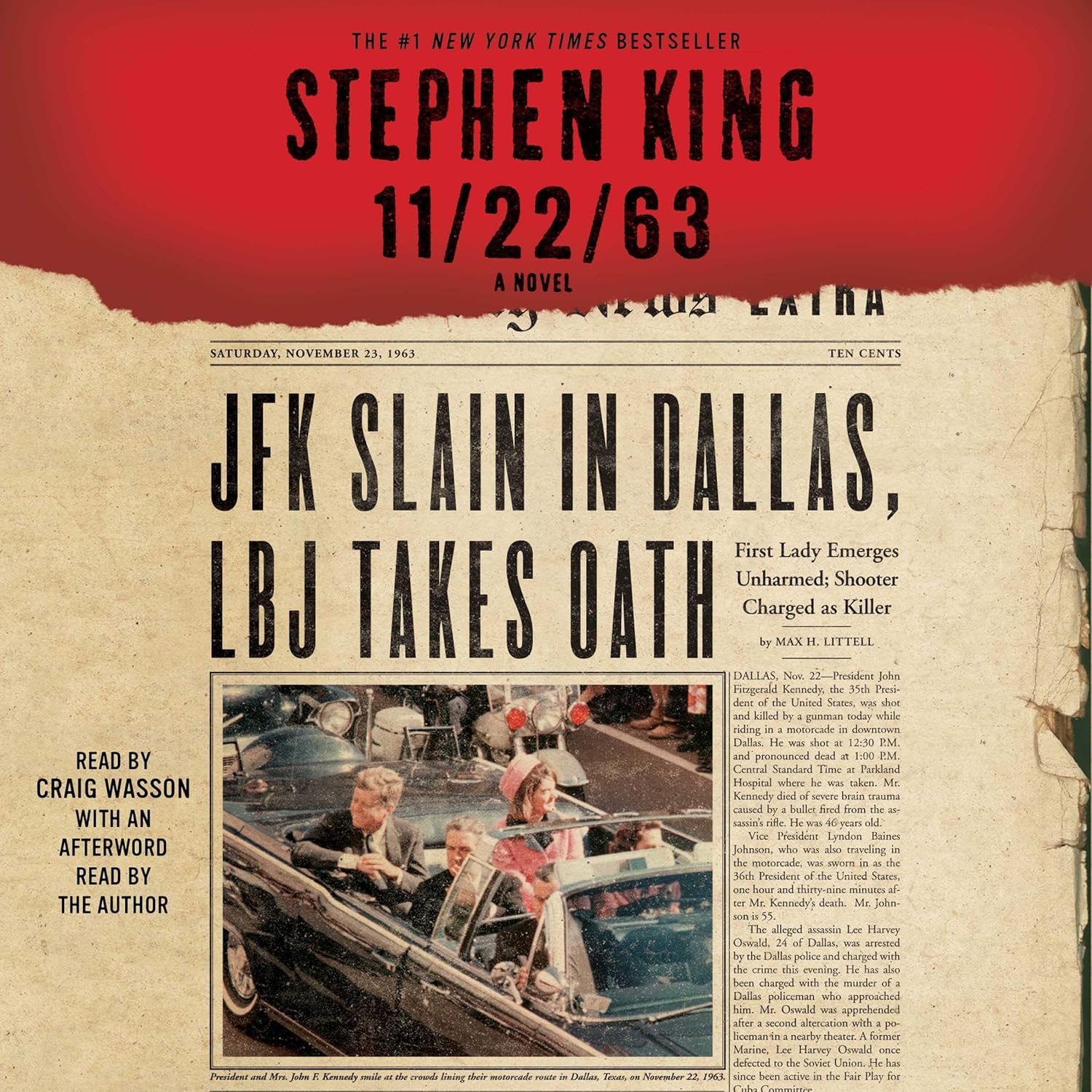
November 22, 1963: Three shots in Dallas. President Kennedy is dead. The world as we know it has changed forever. But what if you could undo it?
Jake Epping, a high school English teacher, is about to find out. A seemingly ordinary diner holds an extraordinary secret: a portal to 1958. Entrusted with a mission to prevent the Kennedy assassination, Jake steps into the past, embracing a new identity as George Amberson.
In a vibrant, dangerous world of Elvis, JFK, and classic Americana, Jake navigates the seductive charm and hidden darkness of the late 50s and early 60s. He finds love with a captivating librarian, Sadie Dunhill, but the closer he gets to his goal, the more the past resists being altered.
As the fateful date looms, Jake confronts a chilling question: Can he change history without destroying his own future? In Dallas, the clock is ticking, and the past is about to become terrifyingly real.
Summary of Key Ideas
- •
The Temptation of Time Travel
The core premise revolves around Jake Epping, a high school English teacher, who discovers a time portal that leads back to 1958. This portal, accessible through a diner's pantry, becomes the catalyst for his mission to prevent the assassination of John F. Kennedy. The book explores the allure and danger of altering historical events, plunging Jake into a world vastly different from his own, filled with both nostalgia and peril. This sets the stage for a journey where the protagonist grapples with the immense responsibility of changing the course of history, confronting the ethical dilemmas and unforeseen consequences that arise from such an endeavor.
- •
The Past's Resistance to Change
King intricately portrays the past as a tangible, almost sentient entity that actively resists change. The "past harmonizes," meaning it pushes back against alterations, manifesting in various forms of adversity – from minor inconveniences to life-threatening events. This resistance is a central conflict, forcing Jake to confront obstacles at every turn as he attempts to reshape history. This idea underscores the fragility of the timeline and the potential chaos that can ensue when one tries to tamper with established events. It raises questions about destiny, free will, and the interconnectedness of time.
- •
Love as a Timeless Anchor
Embedded within the grand narrative of preventing a historical tragedy is a deeply personal love story. Jake's relationship with Sadie Dunhill, a librarian he meets in the past, becomes a cornerstone of his life in 1960s Texas. Their connection adds emotional depth to the story, exploring themes of love, sacrifice, and the challenges of building a relationship across time. Sadie's presence humanizes Jake's mission and provides him with a reason to fight for a better future, even if it means risking everything. Their love story becomes intertwined with the historical stakes, making the potential consequences of failure all the more poignant.
- •
The Ethical Quandary of Changing History
The novel delves into the complex moral implications of altering the past, probing whether changing history for the perceived greater good is justified. Jake wrestles with the potential ramifications of his actions, questioning whether preventing Kennedy's assassination will truly create a better world or simply unleash unforeseen and potentially catastrophic consequences. This exploration of moral ambiguity forces the reader to confront the ethical dilemmas inherent in time travel narratives, prompting reflection on the nature of good and evil, and the potential for unintended consequences to outweigh even the noblest intentions. The narrative suggests that even well-intentioned interventions can have devastating ripple effects.
- •
Nostalgia and the Allure of the Past
King masterfully evokes the atmosphere of the late 1950s and early 1960s, immersing the reader in a world of diners, sock hops, and simpler times. This nostalgic portrayal of the past serves as a backdrop against which Jake's mission unfolds, highlighting the cultural shifts and societal changes that were on the horizon. The novel uses vivid sensory details to transport the reader to a bygone era, exploring both its charms and its darker undercurrents. This backdrop amplifies the sense of loss and longing that permeates the story, as Jake grapples with his connection to both the past and the present.
- •
The Price of Being an Outsider
Throughout his journey, Jake experiences a profound sense of displacement and alienation, struggling to reconcile his modern sensibilities with the social norms and cultural values of the 1960s. As a time traveler, he is perpetually an outsider, never fully belonging to the world he inhabits. This sense of otherness underscores the challenges of adapting to a different era and the personal sacrifices required to pursue his mission. Jake's isolation highlights the universal human experience of feeling like a stranger in a strange land, and the search for belonging that drives so much of human behavior.
- •
The Butterfly Effect and Unintended Consequences
The narrative explores the butterfly effect, demonstrating how seemingly small changes in the past can have dramatic and unpredictable consequences in the future. Jake's actions, even those intended to improve things, often lead to unforeseen and sometimes devastating outcomes. This underscores the interconnectedness of events and the inherent risks of tampering with the timeline. The butterfly effect serves as a cautionary tale about the limits of human control and the potential for unintended consequences to undermine even the most noble aspirations. It illustrates that even the smallest alteration can trigger a cascade of unforeseen events.
Chapter Recap

About The Author
Stephen King
Main Quotes
"Life turns on a dime."
"The past is obdurate. It doesn't want to be changed."
"I was in love with her. In love with her voice, her smell, her smile, her spirit."
"People were always getting ready for tomorrow. I didn't believe in tomorrow."
"If you were going to travel in time, you might as well go all the way back."
"I know life is hard, I think everyone knows that in their hearts, but why does it have to be cruel, as well? Why does it have to bite?"
"Sometimes, I think the past is a story we tell ourselves, so we can get on with our lives."
"What was past was past. I was glad to be present."
"We never know which lives we influence, or when, or why. Not until the future eats the present, anyway. We know when it's too late."
"History is obdurate. It doesn't like to be changed."
Who Should Read This Book
Fans of Stephen King's novels
Readers interested in historical fiction, particularly the Kennedy assassination
Individuals who enjoy time travel and alternate history stories
Readers who appreciate a blend of genres, including thriller, science fiction, and romance
Those interested in American history and culture of the late 1950s and early 1960s
Readers who enjoy long, immersive novels with detailed world-building
People who appreciate stories with moral dilemmas and complex characters
Book Summaries Like
11/22/63



FAQ

Free Access to LitNotes