




 DISCORD
20,000 Leagues Under the Sea
Jules Verne


 Apple Books


 147 Min Reading Time
 Audio Version Available
About this book
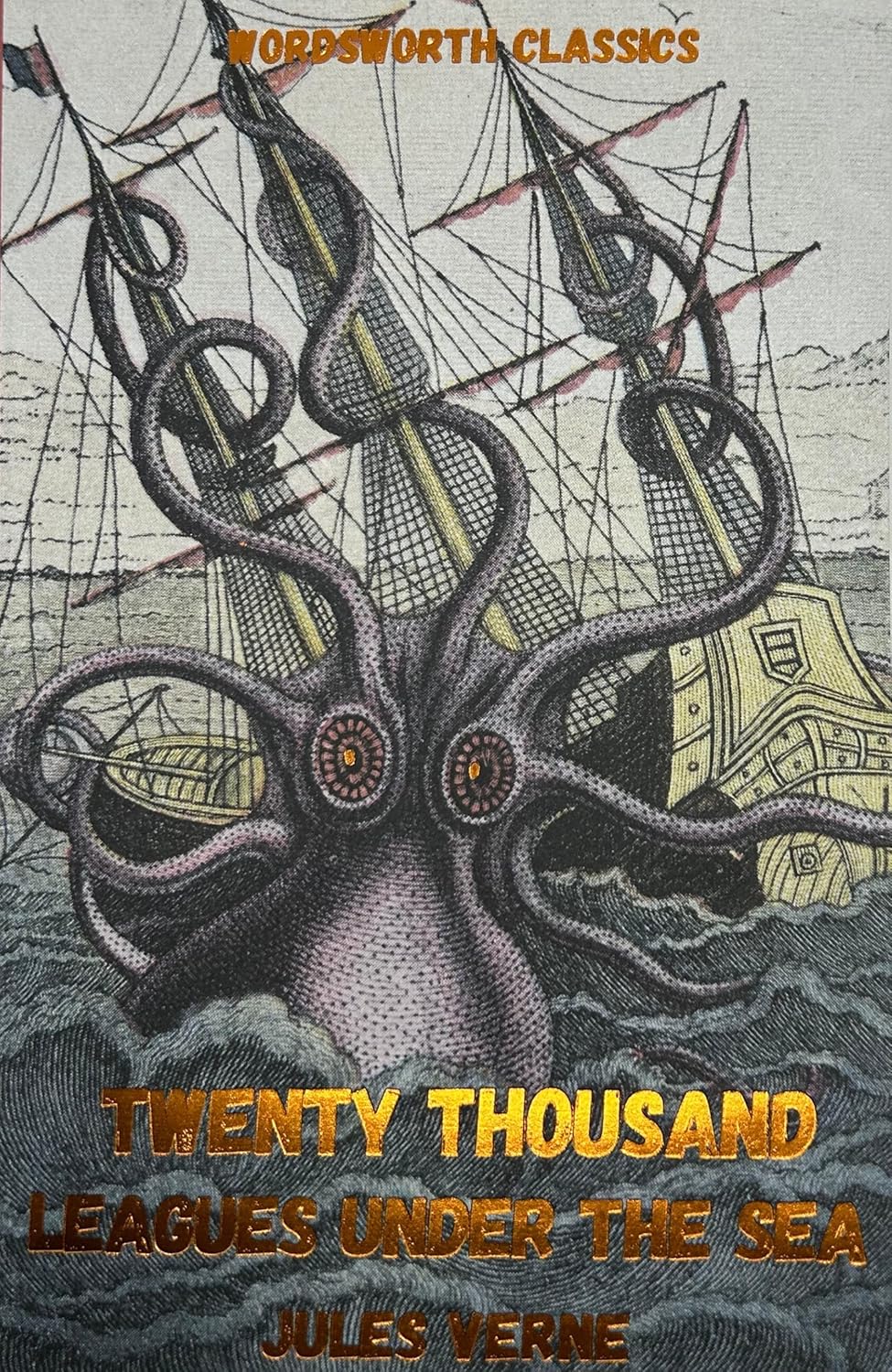
Embark on an unforgettable journey into the depths of the ocean with Jules Verne's timeless classic, 20,000 Leagues Under the Sea. When a mysterious sea monster threatens international shipping, Professor Pierre Aronnax, his loyal servant Conseil, and intrepid harpooner Ned Land join an expedition to hunt the beast. Their adventure takes an unexpected turn when they are captured and brought aboard the Nautilus, a revolutionary submarine commanded by the enigmatic Captain Nemo.
Thrust into a world of breathtaking underwater landscapes and thrilling encounters with strange and wondrous creatures, the trio becomes both prisoners and privileged guests. As they navigate the ocean's hidden realms, from the lost city of Atlantis to the coral reefs of exotic lands, they grapple with Nemo's obsession with vengeance and his complex motivations.
A thrilling blend of science fiction and high-seas adventure, 20,000 Leagues Under the Sea explores themes of exploration, freedom versus confinement, the allure and danger of technology, and humanity's relationship with the natural world. Dive into this extraordinary tale and discover a world of endless fascination and peril beneath the waves.
Summary of Key Ideas
- •
Embracing the Deep: Exploring the Unknown
The Allure of the Unknown: The novel vividly portrays the thrill of underwater exploration and the human desire to uncover the mysteries hidden beneath the ocean's surface. Professor Aronnax, Conseil, and Ned Land are thrust into a world unseen by most, encountering fantastical creatures and landscapes. This exploration mirrors humanity's broader quest for knowledge and understanding of the natural world, pushing the boundaries of scientific discovery. Verne uses the submarine *Nautilus* as a vehicle for this exploration, symbolizing technological advancement and its potential to unlock hidden realms. The journey into the deep becomes a metaphor for venturing into the unknown aspects of both the world and ourselves.
- •
The Power and Peril of Invention
Technological Innovation and its Double-Edged Sword: The *Nautilus* embodies the pinnacle of technological achievement, showcasing the boundless potential of human ingenuity. However, the novel also raises concerns about the implications of advanced technology. Captain Nemo's submarine is both a marvel of engineering and a tool of destruction, highlighting the moral complexities of scientific progress. Verne explores the idea that technology, while capable of great good, can also be used for destructive purposes, particularly when driven by personal vendettas or a desire for power. This theme resonates with contemporary discussions about the ethical responsibilities of scientists and engineers.
- •
Chains of the Sea: Freedom and Confinement
Freedom vs. Imprisonment: The characters grapple with the concept of freedom in various forms throughout the novel. Aronnax, Conseil, and Land are initially held captive aboard the *Nautilus*, their physical freedom restricted by Captain Nemo. However, they also experience a unique kind of freedom through their access to the wonders of the underwater world. Captain Nemo, despite controlling the *Nautilus*, is himself a prisoner of his past and his self-imposed exile from society. The ocean, while seemingly boundless, becomes a gilded cage for both Nemo and his guests, raising questions about the true meaning of freedom and the different forms it can take.
- •
The Bitter Taste of Vengeance
Revenge and its Corrosive Nature: Captain Nemo's actions are largely driven by a deep-seated desire for revenge against those who wronged him and his family. This quest for vengeance consumes him, isolating him from humanity and leading him to commit acts of destruction. Verne explores the destructive consequences of revenge, portraying it as a corrosive force that ultimately harms not only the intended victims but also the person seeking it. Nemo's character serves as a cautionary tale about the dangers of harboring resentment and the importance of forgiveness.
- •
Escaping the Surface: A Critique of Society
The Rejection of Civilization: Captain Nemo represents a rejection of conventional society and its values. Disillusioned by the injustices and conflicts of the surface world, he seeks refuge in the depths of the ocean, creating his own self-sufficient society aboard the *Nautilus*. Nemo's isolation reflects a desire to escape the corruption and hypocrisy he perceives in human civilization. However, his withdrawal from society comes at a cost, as he becomes increasingly detached from humanity and prone to acts of violence. Verne raises questions about the merits of complete isolation and the importance of human connection.
- •
Taming the Abyss: Humanity and the Natural World
Man vs. Nature: The novel explores the complex relationship between humanity and the natural world. The *Nautilus*'s encounters with various sea creatures, both wondrous and dangerous, highlight the power and unpredictability of nature. While the submarine allows humans to explore and even control their environment to some extent, it also underscores their vulnerability in the face of the ocean's vastness. Verne's descriptions of the underwater world evoke both awe and respect for nature, emphasizing the importance of understanding and preserving the delicate balance of the ecosystem.
Chapter Recap

About The Author
Jules Verne
Main Quotes
"The sea is everything. It covers seven tenths of the terrestrial globe. Its breath is pure and healthy. It is an immense desert, where man is never lonely, for he feels life stirring on all sides. The sea is only the embodiment of a supernatural and wonderful existence. It is nothing but love and emotion; it is the 'Living Infinite'."
"The human mind delights in grand conceptions of supernatural beings."
"We may brave human laws, but we cannot resist natural ones."
"The earth does not want new continents, but new men."
"These are the only ties that bind me to the earth. But I had done with the world on the day when my Nautilus plunged for the first time beneath the waters."
"I am not what you call a civilized man! I have done with society entirely, for reasons which I alone have the right of appreciating. I do not, therefore, obey its laws."
"There is hope in dreams, imagination, and in old stories."
"It is from books that wise people derive consolation in their troubles."
"Was it possible that I was going to be imprisoned in this underwater boat?"
"Nature has given us two ears, two eyes, and but one tongue, to the end that we should hear and see more than we speak."
Who Should Read This Book
Young adults and adults interested in classic literature
Readers of science fiction and adventure novels
Individuals fascinated by marine biology and oceanography
Fans of Jules Verne's works
Readers interested in historical fiction set in the 19th century
People who enjoy stories with themes of exploration, discovery, and scientific advancement
Educators and students studying literature, science, or history
Readers seeking thrilling and imaginative stories
Fans of steampunk and retrofuturism
Individuals interested in the relationship between humanity and nature
Book Summaries Like
20,000 Leagues Under the Sea


FAQ

Free Access to LitNotes