




 DISCORD
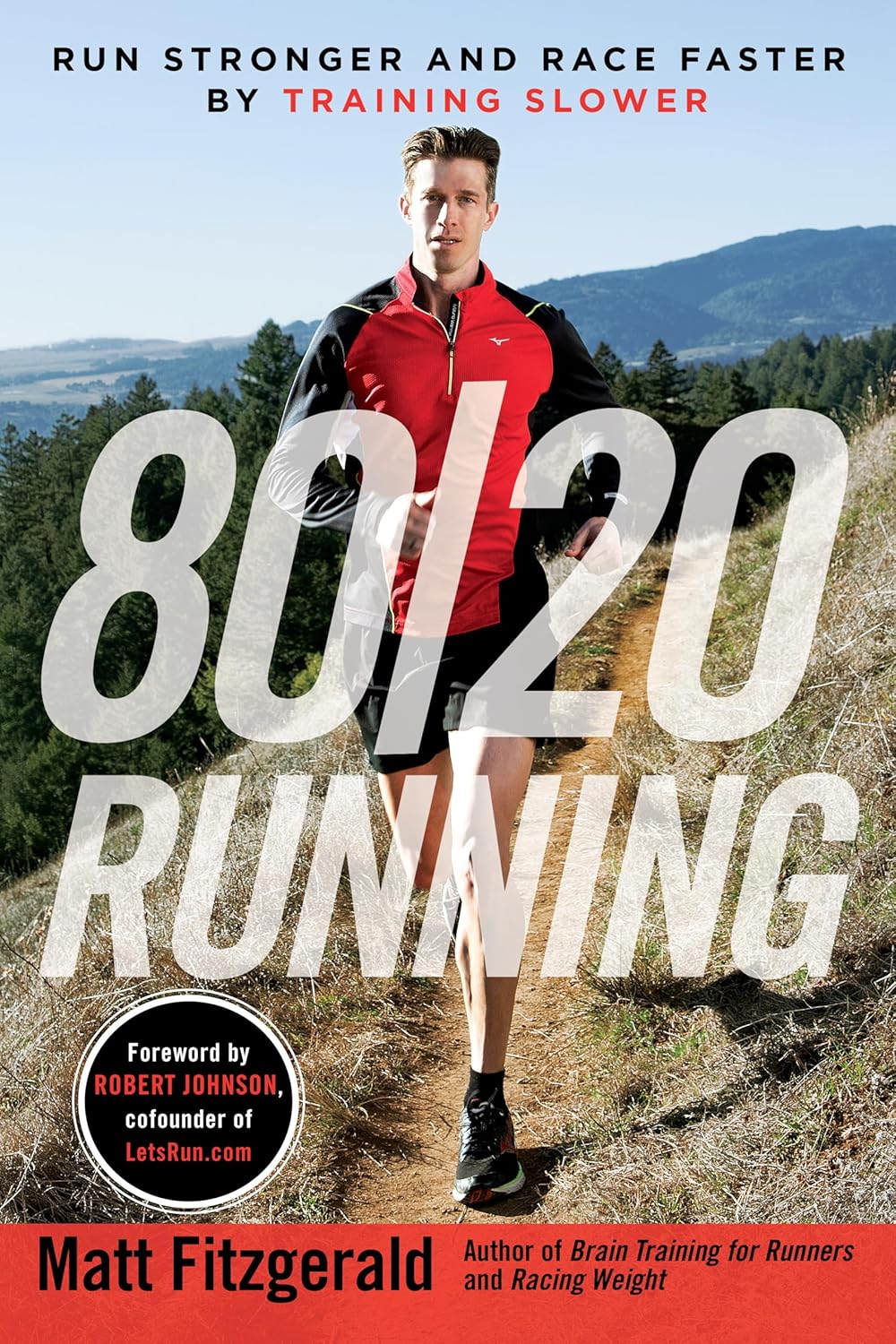
80/20 Running
Matt Fitzgerald


 Apple Books


 43 Min Reading Time
 Audio Version Available
About this book
Unlock your running potential with the revolutionary 80/20 method! In 80/20 Running, acclaimed fitness expert Matt Fitzgerald reveals the training secret embraced by elite runners to achieve extraordinary results. Discover how dedicating 80% of your runs to low intensity and just 20% to high intensity can transform your performance, regardless of your current level. Backed by scientific research and packed with practical training plans for 5K, 10K, half-marathon, and marathon distances, this book is your guide to running faster, avoiding burnout, and reaching new heights of fitness. Experience more enjoyable, less draining runs, reduced fatigue, and significant improvements in your high-intensity efforts. Embrace the 80/20 principle and revolutionize your training today!
Summary of Key Ideas
- •
Embrace the 80/20 Intensity Balance
The core principle of 80/20 running emphasizes that optimal endurance performance is achieved by spending approximately 80% of your training time at a low intensity and the remaining 20% at a high intensity. This distribution is based on observations of elite runners and scientific research suggesting that a polarized approach to training yields superior results compared to traditional methods that often involve a larger proportion of moderate-intensity running. By prioritizing low-intensity work, runners can enhance their aerobic capacity, improve fat oxidation, and reduce the risk of overtraining and injury. This approach allows for better recovery and prepares the body for the more demanding high-intensity sessions.
- •
Build a Strong Aerobic Base with Low Intensity
Low-intensity running, often referred to as easy running, plays a crucial role in building a strong aerobic base. This type of running should be performed at a conversational pace, where you can comfortably hold a conversation without gasping for air. By spending a significant portion of your training at this intensity, you enhance your body's ability to utilize oxygen efficiently, improve capillary density in muscles, and increase mitochondrial function. These adaptations contribute to improved endurance, allowing you to run for longer periods at a given pace. Furthermore, low-intensity running promotes active recovery and reduces the risk of fatigue and injury, ensuring that you can consistently train over time.
- •
Harness the Power of High-Intensity Workouts
High-intensity training is essential for improving speed, power, and overall running performance. These workouts, which should constitute approximately 20% of your training, include interval training, tempo runs, and hill repeats. Interval training involves alternating between periods of high-intensity effort and periods of recovery, which improves your VO2 max and lactate threshold. Tempo runs are sustained efforts at a comfortably hard pace, enhancing your body's ability to sustain a high level of effort for an extended period. Hill repeats build strength and power, improving your running economy and resilience. It is crucial to approach high-intensity sessions strategically, ensuring adequate recovery to maximize the benefits and minimize the risk of injury.
- •
Monitor Heart Rate Zones for Optimal Training
Understanding and monitoring your heart rate zones is vital for implementing the 80/20 running approach effectively. Heart rate zones provide a practical way to gauge the intensity of your workouts and ensure that you are spending the appropriate amount of time in each zone. By using a heart rate monitor or other wearable device, you can track your heart rate during runs and adjust your pace accordingly. Typically, low-intensity running should be performed in heart rate zone 1 or 2, while high-intensity training should be performed in zone 4 or 5. Monitoring your heart rate zones allows you to fine-tune your training, ensuring that you are maximizing the benefits of each workout and avoiding overtraining.
- •
Minimize Overtraining and Injury Risk
One of the key advantages of 80/20 running is its ability to reduce the risk of overtraining and injury. By prioritizing low-intensity running, you minimize the stress on your musculoskeletal system, allowing your body to recover and adapt more effectively. Overtraining can lead to fatigue, decreased performance, and increased susceptibility to injuries. By incorporating sufficient rest and recovery into your training plan, you can prevent overtraining and ensure that you are consistently progressing towards your goals. Listening to your body and adjusting your training accordingly is essential for avoiding injuries and maintaining long-term consistency.
- •
Personalize Your Training for Optimal Results
The 80/20 running approach is not a one-size-fits-all solution, and it is essential to personalize your training plan based on your individual goals, fitness level, and training history. Factors such as your experience as a runner, your current fitness level, and the specific race or event you are training for will influence the details of your 80/20 training plan. As you progress, you may need to adjust your training plan to accommodate your changing needs and goals. Experimenting with different types of workouts and monitoring your body's response is crucial for optimizing your training and achieving your full potential.
- •
Prioritize Consistency in Your Training
Consistency is paramount when following the 80/20 running approach. Sticking to your training plan and consistently logging your runs, even when you don't feel like it, is essential for building a strong aerobic base and improving your overall running performance. It's more effective to maintain a consistent training schedule with a balanced mix of low and high-intensity runs, rather than sporadically pushing yourself too hard and risking burnout or injury. Consistency also allows you to better gauge your progress and make informed adjustments to your training plan.
- •
Emphasize Recovery for Enhanced Adaptation
Proper recovery is an integral component of the 80/20 running method, helping to enhance adaptation and prevent overtraining. Adequate recovery includes sufficient sleep, nutrition, and rest days strategically placed within your training schedule. Aim for 7-9 hours of quality sleep each night to allow your body to repair and rebuild muscle tissue. Fuel your body with a balanced diet rich in carbohydrates, protein, and healthy fats to support your training. Incorporate rest days or active recovery sessions into your week to give your body a break from the demands of running. Listen to your body and take extra rest when needed to avoid fatigue and injury.
Chapter Recap

About The Author
Matt Fitzgerald
Main Quotes
"The key to improving performance and enjoying running more is to train at the right intensity balance."
"The 80/20 Rule is the cornerstone of effective running training."
"Run most of your miles very easily."
"Don't let ego dictate your training intensity."
"If you have success, you want more. So you think more is better instead of looking back at what has worked for you."
"Recovery is one of the most important aspects of running."
"A full week without any good or great workouts indicates the same."
"Tolerance for suffering is also trainable."
"The week of slow is the running equivalent of a juice fast."
"Listen to your body and adjust your training accordingly."
Who Should Read This Book
Runners of all levels seeking to improve performance
Runners interested in a structured training approach
Data-driven runners who appreciate the science behind training methodologies
Runners looking for a guide with training programs for various race distances (5K, 10K, half-marathon, marathon)
Endurance athletes interested in optimizing training intensity
Coaches and trainers seeking evidence-based training strategies
Runners prone to injury, looking for a balanced training approach
Book Summaries Like
80/20 Running




FAQ

Free Access to LitNotes