




 DISCORD
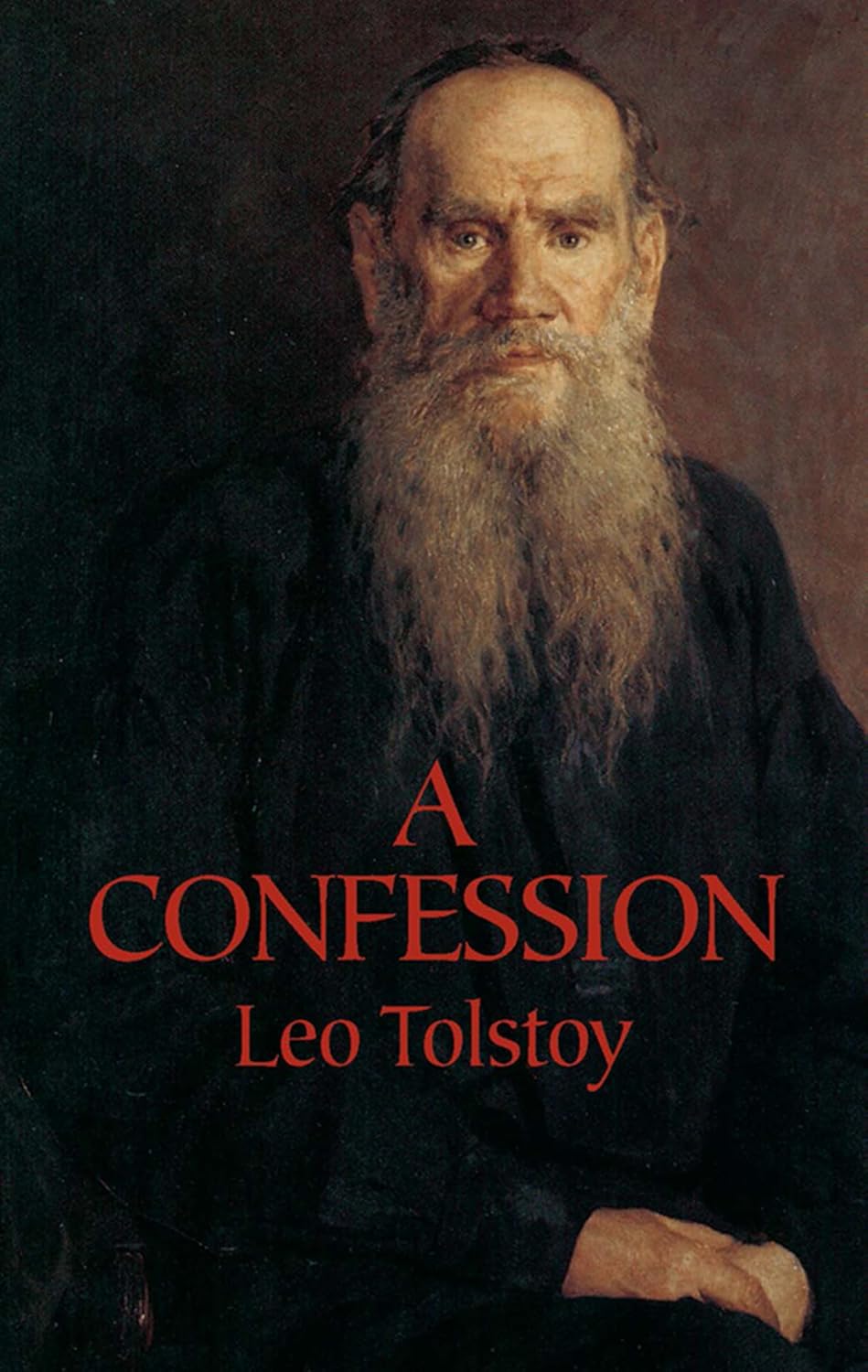
A Confession By Leo Tolstoy
Лев Толстой


 Apple Books


 20 Min Reading Time
 Audio Version Available
About this book
At the height of his literary fame, after penning masterpieces like War and Peace and Anna Karenina, Leo Tolstoy was consumed by a profound existential crisis. A Confession is his unflinchingly honest account of that spiritual struggle, a journey from the depths of despair to a renewed understanding of faith and the meaning of life.
Haunted by the inevitability of death and the apparent meaninglessness of existence, Tolstoy questioned the value of art, science, and human connection. This deeply personal narrative delves into his search for truth, his grappling with Christian orthodoxy, and his eventual embrace of a faith rooted in simplicity and compassion.
More than just a memoir, A Confession is a timeless exploration of universal human concerns: mortality, purpose, and the search for inner peace. Tolstoy's raw and introspective voice resonates with anyone who has ever questioned their place in the world, making this a vital and inspiring read for seekers of all generations.
Summary of Key Ideas
- •
The Existential Void: Confronting Meaninglessness
The core of "A Confession" revolves around Tolstoy's profound spiritual crisis, marked by an overwhelming sense of meaninglessness and despair despite achieving worldly success and recognition. He grapples with the existential questions of life's purpose, the inevitability of death, and the apparent absurdity of human existence. This crisis stems from his realization that his intellectual pursuits and social standing offer no solace or lasting meaning in the face of life's ultimate questions. Tolstoy's initial response is a deep-seated depression and contemplation of suicide, highlighting the severity of his internal conflict.
- •
The Failure of Reason: Limits of Science and Philosophy
Tolstoy meticulously examines the limitations of science and philosophy in providing satisfactory answers to life's fundamental questions. He finds that while these disciplines can explain the material world and human behavior, they fail to address the spiritual and moral dimensions of existence. Science offers descriptions of how things work but cannot provide a reason for why we exist or how we should live. Similarly, philosophy raises complex questions but often leads to contradictory or inconclusive answers, leaving Tolstoy feeling more lost than before. This disillusionment with rational inquiry propels him towards seeking alternative sources of meaning.
- •
Wisdom of the Simple: Embracing Faith and Tradition
In his search for meaning, Tolstoy turns to the ordinary people, particularly the peasants, observing their simple faith and acceptance of life's hardships. He contrasts their unreflective belief with his own intellectual skepticism, recognizing a profound wisdom in their ability to find purpose and contentment in their daily lives. He sees their faith, passed down through generations, as a source of strength and resilience, offering a sense of connection to something larger than themselves. This observation marks a turning point in Tolstoy's journey, leading him to reconsider the value of religious belief.
- •
Critique of the Church: Exposing Hypocrisy and Corruption
Tolstoy critiques the hypocrisy and corruption he perceives within the institutionalized Orthodox Church. He observes a disconnect between the Church's teachings and the actions of its members, particularly among the upper classes. He is troubled by the Church's involvement in worldly affairs and its failure to embody the true spirit of Christianity, which he understands as love, compassion, and self-sacrifice. This critique leads him to question the validity of organized religion as a whole, even as he seeks genuine spiritual connection.
- •
Rediscovering Faith: Embracing Simple Christianity
Despite his criticisms of the Church, Tolstoy ultimately embraces a simplified, personal form of Christian faith centered on the teachings of Jesus Christ. He focuses on the core principles of love, forgiveness, and non-resistance to evil, rejecting the dogmas and rituals that he sees as obscuring the true message of the Gospels. This personal faith provides him with a renewed sense of purpose and a framework for living a meaningful life. He finds solace in the belief that love and compassion are the keys to overcoming despair and finding true happiness.
- •
The Path to Fulfillment: Simplicity, Humility, and Service
Tolstoy advocates for a life of simplicity, humility, and service to others as the path to true fulfillment. He rejects the pursuit of wealth, fame, and power, arguing that these worldly ambitions only lead to emptiness and dissatisfaction. Instead, he emphasizes the importance of living in accordance with Christian principles, dedicating oneself to helping those in need, and finding joy in simple pleasures. This emphasis on ethical living reflects his belief that true happiness comes from aligning one's actions with one's beliefs and contributing to the well-being of others.
Chapter Recap

About The Author
Лев Толстой
Main Quotes
"I searched for the truth, and wherever I found it, I embraced it."
"Faith is the force of life. If a man lives he believes in something. If he did not believe that one must live for something, he would not live."
"What is my life? A pause during which I can know God, or a pause during which I neither know nor care to know Him?"
"I felt that something had broken within me on which I had always relied, that I had nothing left to hold on to, and that morally my life had stopped."
"My life came to a standstill. I could breathe, eat, drink, and sleep, and I could not help doing these things; but there was no life, for there were no wishes the fulfilment of which I could consider reasonable."
"So I lived, not well, but not very badly, till I was thirty-five. But then a strange thing happened to me. I began to have moments of bewilderment; at first perplexing, though trifling, and continually recurring."
"I should long ago have destroyed myself, had I not had a dim hope that I might find someone who understood the meaning of life."
"I have searched for an explanation of these questions unceasingly for more than fifty years, and yet I am still terribly afraid of them."
"And I understood that I could not look for a solution of my questions in the field of knowledge."
"Is there any meaning in my life that the inevitable death awaiting me does not destroy?"
Who Should Read This Book
Readers interested in philosophical explorations of life's meaning
Individuals experiencing a midlife crisis or existential questioning
Those interested in religious and spiritual journeys
Readers of Russian literature and Leo Tolstoy's works
Students of philosophy, theology, and literary criticism
People struggling with depression, melancholia, or loss of faith
Readers interested in autobiographical works and personal narratives
Individuals seeking answers to questions about faith, morality, and the existence of God
Those interested in social criticism and Tolstoy's views on society
Readers of classic literature and intellectual works
Book Summaries Like
A Confession By Leo Tolstoy

FAQ

Free Access to LitNotes