




 DISCORD
A Fever in the Heartland
Timothy Egan


 Goodreads Choice Awards
 Apple Books


 72 Min Reading Time
 Audio Version Available
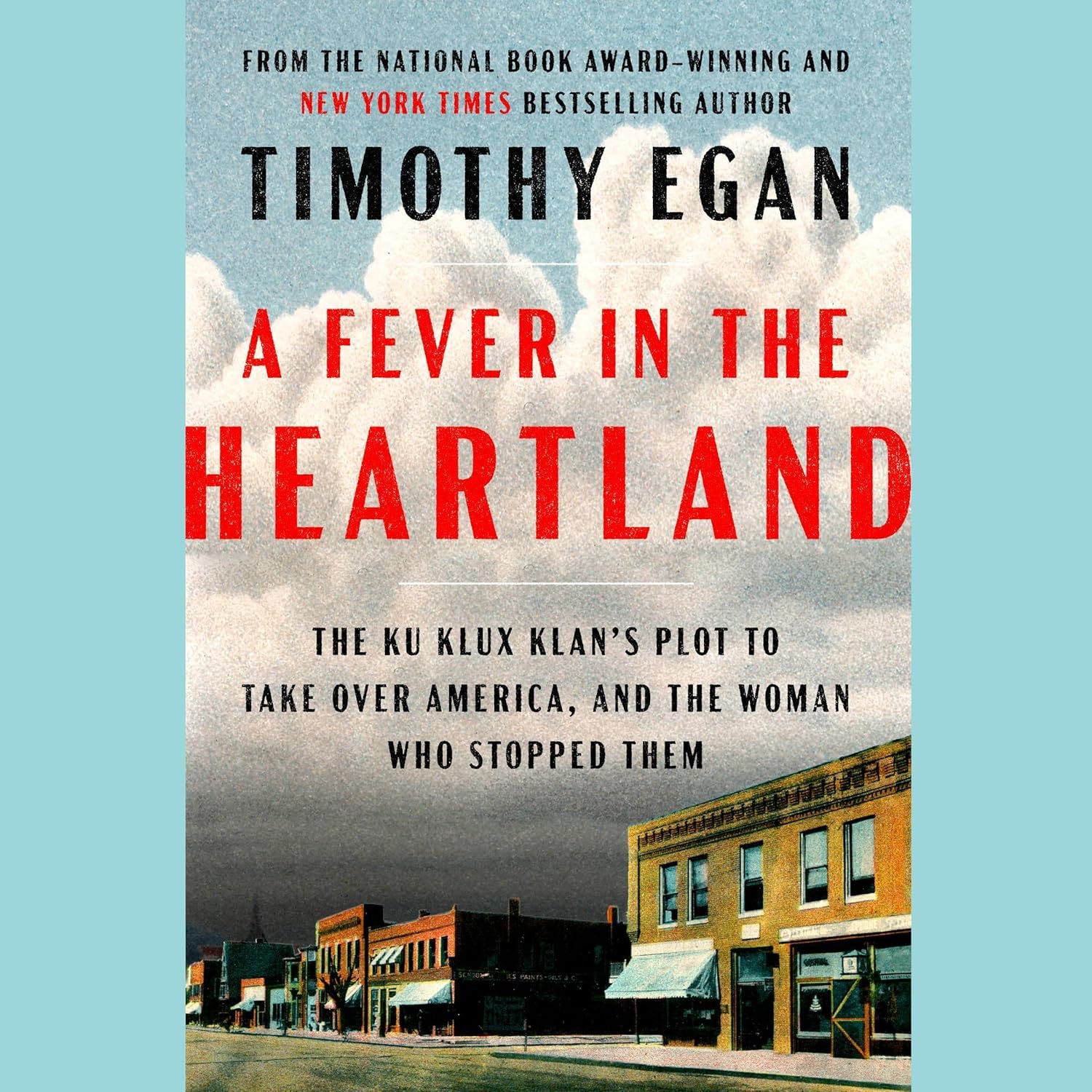
About this book
In the shadow of the Roaring Twenties, a uniquely American evil took root. While flappers danced to jazz, the Ku Klux Klan rose to terrifying power not in the Old Confederacy, but in the Heartland and the West, fueled by hatred against Blacks, Jews, Catholics, and immigrants. At the center of this surge stood D.C. Stephenson, a charismatic con man who became the Grand Dragon of Indiana, his gospel of hate spread from pulpits to town squares, embraced by judges, governors, and senators. But when Stephenson's cruelty led to the tragic death of Madge Oberholtzer, her courageous deathbed testimony exposed his dark secrets and brought the Klan crashing down. A Fever in the Heartland, by Pulitzer and National Book Award-winning author Timothy Egan, is a propulsive historical thriller and a chillingly resonant reckoning with a sinister chapter in American history, revealing how easily hatred can be disguised and the power of one woman to ignite the spark of justice.
Summary of Key Ideas
- •
The Klan's Explosive Growth
The Second Klan's Rapid Ascent: Egan meticulously details the resurgence of the Ku Klux Klan in the 1920s, highlighting its transformation from a fringe group into a powerful social and political force. This rise was fueled by anxieties related to immigration, urbanization, and changing social norms. The Klan exploited these fears, offering a sense of belonging and order to those feeling marginalized by the rapid changes of the era. The book emphasizes how the Klan's message resonated across various segments of society, attracting not only the poor and uneducated but also middle-class professionals and community leaders.
- •
Indiana: Klan Stronghold
Indiana as the Epicenter: Egan pinpoints Indiana as the unlikely heartland of Klan activity during this period. Factors such as a large native-born white population, a history of racial prejudice, and a weak political structure contributed to the Klan's dominance in the state. The book explores how the Klan effectively infiltrated Indiana's government, law enforcement, and even religious institutions, wielding significant influence over policy and public life. This focus on Indiana provides a microcosm for understanding the Klan's broader appeal and impact across the nation.
- •
The Grand Dragon's Fall
D.C. Stephenson's Corrupt Leadership: The book centers around the figure of D.C. Stephenson, the Grand Dragon of the Indiana Klan, as a key driver of the organization's success and eventual downfall. Egan portrays Stephenson as a charismatic yet deeply flawed individual who used the Klan to amass personal wealth and political power. His corruption, abuse of authority, and eventual conviction for murder exposed the hypocrisy at the heart of the Klan's moralistic rhetoric, contributing significantly to its decline.
- •
Klan Hypocrisy Unveiled
Hypocrisy and Moral Decay: Egan exposes the stark contrast between the Klan's proclaimed values of morality and patriotism and the reality of its members' behavior. Through detailed accounts of corruption, violence, and sexual scandals, the book reveals the hypocrisy that undermined the Klan's credibility. This exposure of moral decay within the organization played a crucial role in disillusioning members and eroding public support.
- •
Women's Fight Against Hate
The Power of Women's Resistance: While the book focuses on the Klan's rise and fall, it also highlights the courageous resistance of individuals who opposed the organization. The story of Madge Oberholtzer serves as a pivotal point. Her victimization by Stephenson and her brave testimony exposed his crimes and the Klan's true nature. Egan underscores the vital role women played in challenging the Klan's power and advocating for justice, often at great personal risk.
- •
Historical Parallels and Contemporary Relevance
Echoes of the Past in the Present: Egan draws parallels between the Klan's resurgence in the 1920s and contemporary political and social movements. The book suggests that the anxieties and divisions that fueled the Klan's rise – fear of outsiders, economic insecurity, and cultural change – continue to resonate in American society today. By highlighting these connections, Egan encourages readers to critically examine the present and learn from the mistakes of the past.
- •
Fueling Hate Through Fear
Exploitation of Fear and Prejudice: A central theme is how the Klan effectively manipulated existing prejudices and fears within American society to gain power and influence. The book illustrates how the Klan preyed on anxieties surrounding race, religion, and immigration, offering simplistic solutions to complex social problems. This exploitation of fear and prejudice serves as a cautionary tale about the dangers of demagoguery and the importance of critical thinking.
- •
Democracy Under Threat
The Fragility of Democracy: Egan's narrative underscores the fragility of democratic institutions in the face of extremism and intolerance. The Klan's ability to infiltrate and influence government, law enforcement, and the judiciary demonstrates the vulnerability of democratic systems to organized hate movements. The book serves as a reminder of the importance of vigilance, civic engagement, and protecting the rights of all citizens to safeguard democracy.
- •
The Need to Belong
The Allure of Belonging: The book examines the psychological factors that contributed to the Klan's appeal, particularly the desire for belonging and community. In a rapidly changing society, the Klan offered a sense of identity and purpose to those feeling alienated or disenfranchised. This exploration of the allure of belonging highlights the importance of fostering inclusive communities and addressing the root causes of social isolation.
Chapter Recap

About The Author
Timothy Egan
Main Quotes
"No one can deny that the United States is a white Protestant country."
"They could join the Ku Klux Klan, their natural brothers in spirit, faith, and Americanism."
"He discovered that if he said something with enough conviction, people would believe it."
"The Klan was a business, and hate was the product."
"The Invisible Empire was a shadow government, a parallel universe of power and intimidation."
"The Klan was a fraternal order, a social club, a self-help group for white Protestants who felt left behind."
"The poison of prejudice, once ingested, is hard to purge."
"The Klan offered a sense of belonging, a feeling of superiority, and a chance to strike back at a world that seemed to be changing too fast."
"In the Klan's twisted logic, patriotism and prejudice were one and the same."
"It was a time of vast fortunes and grinding poverty, of flappers and evangelists, of racial terror and booming cities."
Who Should Read This Book
Readers interested in American history, particularly the history of the Ku Klux Klan.
Individuals interested in social justice and civil rights issues.
Readers of non-fiction books that explore themes of racism, prejudice, and discrimination.
Those interested in true crime stories with a historical context.
Readers of Timothy Egan's previous works.
People interested in the history of the Midwest, especially Indiana.
Individuals who enjoy books about political movements and corruption.
Readers of books that explore the role of women in history.
Book Summaries Like
A Fever in the Heartland

FAQ

Free Access to LitNotes