




 DISCORD
A Flicker in the Dark
Stacy Willingham


 Goodreads Choice Awards
 Apple Books


 105 Min Reading Time
 Audio Version Available
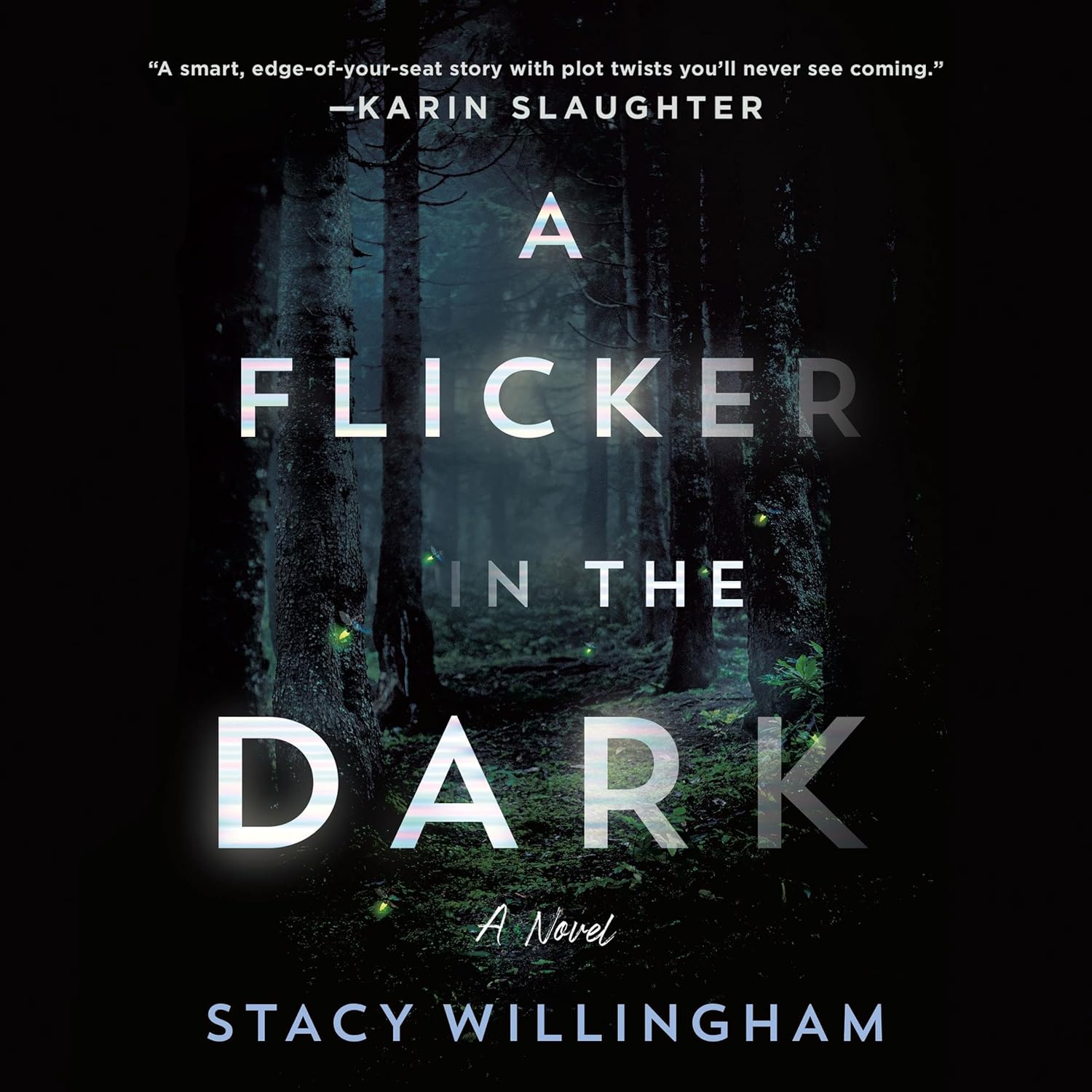
About this book
In the small Louisiana town where Chloe Davis grew up, six teenage girls vanished one terrifying summer. Her own father confessed to the crimes, leaving Chloe and her family to grapple with the shattering aftermath. Now, twenty years later, Chloe is a psychologist in Baton Rouge, on the verge of marriage, and finally grasping at a fragile happiness.
But when a local teenage girl disappears, followed by another, the horrors of her past resurface. Is Chloe imagining connections that aren't there, or is history repeating itself? Haunted by the fear that she's losing control, Chloe must confront the chilling possibility that she's about to unmask another killer—or become the next victim.
Summary of Key Ideas
- •
The Enduring Scars of Childhood Trauma
The novel delves into the pervasive impact of childhood trauma. Chloe Davis, the protagonist, grapples with the psychological scars left by her father's conviction as a serial killer when she was just twelve years old. This trauma shapes her present-day anxieties, relationships, and self-perception. The narrative explores how early experiences, particularly those involving violence and betrayal, can continue to haunt individuals, influencing their behavior and decision-making long into adulthood. Chloe's journey highlights the complexities of healing and the challenges of escaping the shadow of a dark past, even when one actively seeks to rebuild their life.
- •
Defining Identity in the Shadow of Evil
Identity is a central theme in "A Flicker in the Dark," particularly the struggle to define oneself amidst familial darkness. Chloe battles to forge her own identity, separate from her father's horrific legacy. The book explores how individuals connected to infamous figures can grapple with public perception and internal conflict as they strive to establish their own sense of self-worth and purpose. Chloe’s profession as a psychologist reflects her determination to understand and shape her identity, using her knowledge to help others while secretly trying to resolve her own internal struggles and prove that she is not defined by her father's actions.
- •
The Weight of Inherited Guilt
The novel explores the concept of inherited guilt and the question of whether the sins of the father are visited upon the children. Chloe constantly questions if she carries some inherent darkness because of her biological connection to a serial killer. This fear fuels her anxiety and impacts her relationships, as she worries about the potential for violence within herself. The narrative explores the psychological burden of being associated with evil and the struggle to prove one's innocence and moral integrity in the face of societal suspicion and personal doubt, highlighting the unfairness of judgment based on familial connections.
- •
The Unreliable Nature of Memory and Perception
The book examines the unreliability of memory and perception, particularly in the context of trauma. Chloe's memories of her childhood and the events surrounding her father's arrest are often fragmented and distorted by her emotional state. This unreliability casts doubt on her present-day perceptions, making it difficult for her to discern reality from paranoia. The narrative challenges the reader to question the accuracy of their own perceptions and the potential for past experiences to cloud judgment. This theme underscores the fragility of truth and the difficulty of achieving certainty when dealing with deeply ingrained trauma.
- •
The Pervasive Power of Suspicion and Paranoia
Suspicion and paranoia are dominant forces in the novel, creating an atmosphere of unease and distrust. As the disappearances begin anew, Chloe becomes increasingly suspicious of those around her, including her loved ones. This paranoia stems from her past trauma and the fear that history is repeating itself. The narrative explores how suspicion can erode relationships and create a sense of isolation, even in close-knit communities. The reader is kept guessing, mirroring Chloe’s own uncertainty and contributing to the overall suspenseful atmosphere, as the line between genuine threat and imagined danger blurs.
- •
The Cyclical Nature of Violence and Trauma
The cyclical nature of violence is a key theme, suggesting that patterns of abuse and trauma can repeat themselves across generations. The reappearance of missing girls in Chloe’s town triggers a fear that the past is not truly buried and that the darkness of her father’s crimes is resurfacing. This cycle raises questions about the potential for individuals to be predisposed to violence and the challenges of breaking free from destructive patterns. The narrative explores the social and psychological factors that contribute to the perpetuation of violence, suggesting that addressing the root causes of trauma is essential to prevent future tragedies.
- •
The Importance of Mental Health Awareness
Mental health is a significant aspect of the story, with Chloe grappling with anxiety, panic attacks, and the lingering effects of trauma. Her struggles highlight the importance of seeking help and destigmatizing mental illness. As a psychologist, Chloe understands the importance of therapy, yet she still struggles to manage her own mental health. The novel portrays the complexities of living with mental health challenges and the ongoing effort required to maintain well-being. It emphasizes the message that even those who are knowledgeable about mental health can benefit from support and treatment.
- •
The Illusion and Necessity of Control
The book explores the theme of control, particularly in relation to trauma and fear. Chloe attempts to control her environment and her emotions as a way to cope with the uncertainty and anxiety stemming from her past. Her meticulous routines and attempts to solve the mystery surrounding the missing girls are driven by a need to regain a sense of power over her life. However, the narrative also reveals the limitations of control and the importance of accepting vulnerability. Chloe's journey shows that true healing involves letting go of the need to control everything and embracing the unpredictable nature of life.
Chapter Recap

About The Author
Stacy Willingham
Main Quotes
"There are so many subtle ways we women subconsciously protect ourselves throughout the day; protect ourselves from shadows, from unseen predators."
"I became a psychologist because I understand trauma; I understand it in a way that no amount of schooling could ever teach. I understand the way the brain..."
"I fear all situations where I'm not in control. I imagine the things that can happen to me in my sleep, defenseless. I imagine the things that can happen to me..."
"And for one single moment, like a flicker in the dark, it felt good."
"People tend to stash their dirtiest secrets in the most common of places."
"Monsters don't hide in the woods. They aren't shadows in the trees or invisible things lurking in darkened corners. No, the real monsters move ..."
"...the image I project out into the world isn't actually real, but carefully crafted…I am one small stumble away from ..."
"We all have secrets. Some are just better at hiding them than others."
"The truth is a funny thing. It can be buried, but it never really goes away."
"Sometimes, the scariest monsters are the ones we create ourselves."
Who Should Read This Book
Adult readers of mystery and thriller novels
Readers who enjoy suspenseful, atmospheric, and character-driven stories
Fans of psychological thrillers with dark themes and plot twists
Readers interested in stories about trauma, family secrets, and the impact of the past
Those who appreciate lyrical writing in the thriller genre
Readers who enjoy books with female protagonists and unreliable narrators
Book Summaries Like
A Flicker in the Dark

![The Tenant [Large Print].](https://altauri-public.s3.amazonaws.com/litnotes/BookCover/gbs_686aee471d4dee74794ba556.jpeg)

FAQ

Free Access to LitNotes