




 DISCORD
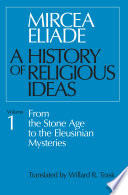
A History of Religious Ideas Volume 1
Mircea Eliade, Willard R. Trask

 Apple Books


 81 Min Reading Time
 Audio Version Available
About this book
Embark on a profound exploration of humankind's earliest spiritual quests with this extraordinary volume. From Neanderthal burial rituals to the vibrant mythologies of the Iron Age, journey through the religious landscapes of Mesopotamia, Egypt, Greece, Israel, India, and beyond. Mircea Eliade masterfully unveils both the remarkable diversity of religious expression and the underlying unity of religious phenomena, offering new insights into the human adventure for anyone seeking to understand the roots of faith. Discover the philosophical concepts of ancient China, Brahmanism, Hinduism, Buddhism, Celtic and German religions, Judaism, and the dawn of Christianity in this sweeping and illuminating study of prehistoric and ancient religious thought.
Summary of Key Ideas
- •
The Sacred vs. the Profane
The Sacred and the Profane: Eliade's foundational concept revolves around the distinction between the sacred and the profane as the basis of religious experience. The sacred manifests as hierophanies, or appearances of the divine, which break through the uniformity of the profane world. These manifestations establish a sacred space and time, providing meaning and orientation for religious individuals. This distinction is not merely intellectual but is lived and experienced, shaping human existence and understanding of reality. The sacred provides a point of reference, a fixed center in an otherwise chaotic and meaningless world. Through rituals and myths, religious individuals seek to maintain contact with the sacred, renewing their connection to the divine source of meaning.
- •
Hierophanies: Revealing the Divine
Hierophanies: Manifestations of the Sacred: A hierophany is a manifestation of the sacred in the world. It can be anything – a natural object, a place, a person, or an event – that reveals the presence of the divine or the sacred. Eliade argues that these manifestations are crucial for understanding religious phenomena because they provide tangible points of contact between the human and the divine. The recognition of a hierophany transforms an ordinary object or space into something extraordinary, imbued with religious significance. These moments of revelation are not simply symbolic; they are real and transformative experiences for those who perceive them. By studying hierophanies, we can gain insight into the diverse ways in which different cultures have perceived and interacted with the sacred.
- •
The Power of Religious Symbols
Religious Symbolism: The Language of the Sacred: Religious symbols are not merely decorative or representational; they are imbued with profound meaning and power. They serve as a means of communicating complex religious ideas and experiences that cannot be expressed through ordinary language. Symbols connect the human and the divine, providing a bridge between the finite and the infinite. Eliade emphasizes the importance of understanding the symbolic language of religion to grasp the deeper meaning of myths, rituals, and beliefs. Religious symbols are often multi-layered, with different levels of meaning that can be accessed through contemplation and initiation. These symbols offer a way to participate in the sacred reality and to transform one's own existence.
- •
Myth: Foundation of Reality
Myth as Foundation: Narratives of Creation and Meaning: Myths are not simply stories but are foundational narratives that explain the origin of the world, the nature of humanity, and the relationship between the human and the divine. They provide a framework for understanding reality and offer models for human behavior. Myths are often associated with rituals, serving to reenact and revitalize the original events described in the myth. Eliade argues that myths are essential for maintaining a sense of cosmic order and meaning in the face of chaos and uncertainty. By studying myths, we can gain insight into the fundamental values and beliefs of different cultures. Myths offer a timeless perspective on the human condition and provide a sense of continuity with the past.
- •
Cosmos and Cyclical Time
Archaic Religions: Cosmos and Regeneration: Eliade explores the characteristics of archaic religions, focusing on their emphasis on the cosmos and the cyclical nature of time. Archaic societies often viewed the universe as a living organism, with its own cycles of birth, death, and regeneration. Rituals were designed to maintain cosmic order and to ensure the continuation of life. The concept of regeneration is central to many archaic religions, with rituals that symbolize death and rebirth, allowing individuals to renew their connection to the sacred source of life. Eliade highlights the importance of understanding these archaic religious patterns to appreciate the roots of later religious traditions. These religions offer a perspective on the interconnectedness of all things and the importance of living in harmony with the natural world.
- •
Shamanism: Bridging Worlds
Shamanism: Ecstasy and Healing: Shamanism, as discussed by Eliade, is an archaic technique of ecstasy, characterized by the shaman's ability to enter altered states of consciousness and communicate with the spirit world. Shamans act as intermediaries between the human and the divine, performing rituals of healing, divination, and protection. Their ecstatic experiences provide access to hidden knowledge and power, which they use to benefit their community. Eliade emphasizes the universality of shamanic practices across different cultures and their importance in understanding the relationship between religion and altered states of consciousness. Shamanism highlights the human capacity for spiritual transformation and the potential for direct experience of the sacred.
- •
Transcending Time through Ritual
Time and Eternity: Sacred vs. Historical Time: Eliade distinguishes between sacred and historical time. Sacred time is cyclical and reversible, allowing individuals to return to the mythical time of origins through rituals and festivals. Historical time, on the other hand, is linear and irreversible, marked by events that cannot be undone. Religious individuals often seek to escape the constraints of historical time by participating in rituals that transport them to the sacred time of creation. This return to origins provides a sense of renewal and restores the connection to the divine source of meaning. Eliade argues that the tension between sacred and historical time is a fundamental aspect of the human religious experience.
- •
Ritual: Connecting to the Divine
The Significance of Ritual: Re-enacting the Sacred: Rituals are formalized actions or ceremonies that serve to connect individuals with the sacred. They are not empty gestures but are imbued with profound meaning and power. Rituals often involve the re-enactment of myths, allowing participants to relive the events of the sacred past and to renew their connection to the divine. Eliade emphasizes the importance of understanding the symbolic language of rituals to grasp their deeper meaning and significance. Rituals provide a way to participate in the sacred reality and to transform one's own existence. They offer a sense of continuity with the past and a means of maintaining cosmic order.
Chapter Recap

About The Author
Mircea Eliade
Main Quotes
"Man becomes aware of the Sacred because it manifests itself, shows itself, as something wholly different from the Profane."
"For religious man, space is not homogeneous; he experiences interruptions, breaks in it; some parts of space are qualitatively different from others."
"The experience of the sacred is incommunicable."
"The symbol is never arbitrary; it is not a free creation of the mind; it is not validated by an agreement among men."
"By creating, the gods not only gave form and structure to the world but also infused it with the sacred forces that sustain it."
"Religious man cannot live except in a world possessing a sacred dimension."
"The world speaks, it reveals the mode of being of things and, ultimately, of God."
"The sacred is pre-eminently the real."
"The terror of desacralized existence can go as far as the annihilation of the world."
"The memory of an exemplary act is equivalent to a reactualization of the mythical time when that act was revealed."
Who Should Read This Book
Students of religious studies
Scholars of comparative religion
Individuals interested in the history of religion
Readers interested in mythology and symbolism
Those studying cultural history
People interested in the history of ideas
Individuals exploring spirituality
Readers interested in ancient civilizations and cultures
Students of literature seeking to understand religious themes
Those interested in the intersection of religion and anthropology
Book Summaries Like
A History of Religious Ideas Volume 1
FAQ

Free Access to LitNotes