




 DISCORD
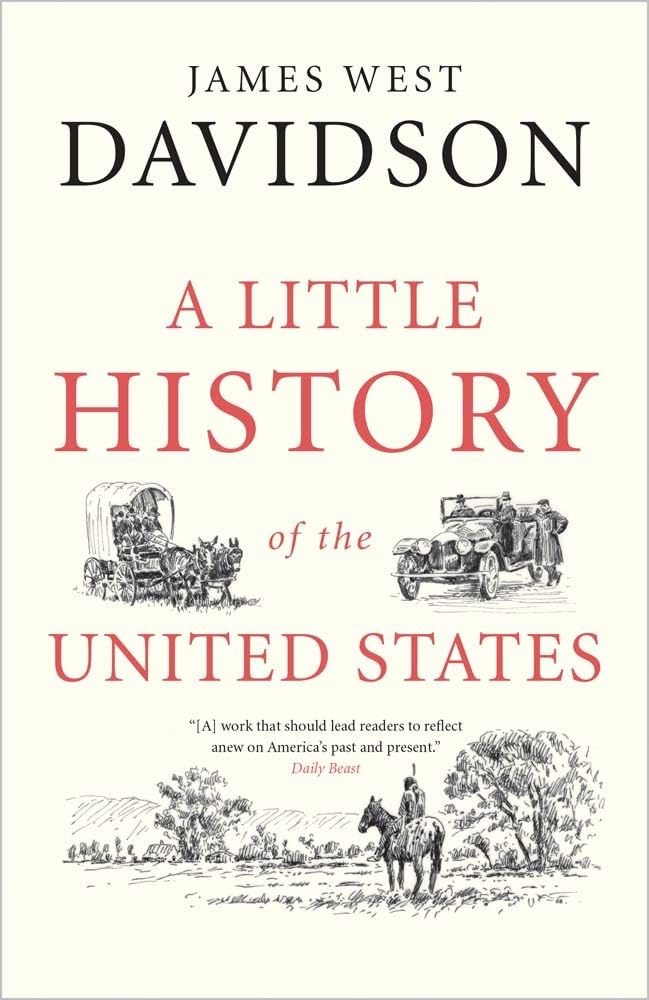
A Little History of the United States
James West Davidson


 Barnes & Noble Bestsellers


 162 Min Reading Time
 Audio Version Available
About this book
From a wild continent to a global superpower, journey through 500 years of American history in this vivid and fast-paced narrative. James West Davidson captures the nation's unique saga, revealing the triumphs and struggles of a diverse people united under the ideals of freedom and equality.
In captivating, bite-sized chapters, A Little History of the United States brings to life the individuals who shaped the American story. Encounter Pilgrim William Bradford's comical misstep upon arrival, witness Harriet Tubman's ingenious escapes, and glimpse a young Andrew Carnegie's insatiable ambition. These are more than just anecdotes; they are windows into the enduring questions of freedom, equality, and unity that continue to define this ever-evolving nation.
Perfect for readers of all ages, this accessible and engaging history invites you to reflect on America's past and present, and to consider how we might better realize the promise of E pluribus unum.
Summary of Key Ideas
- •
The Transformative First Contact
The book emphasizes the significance of the initial contact between Europeans and Native Americans. It highlights the profound cultural clashes, exchanges, and the devastating impact of colonization on indigenous populations. This encounter shaped the trajectory of American history, setting in motion conflicts and transformations that continue to resonate today. Davidson explores how this initial interaction laid the groundwork for subsequent territorial expansion, economic exploitation, and the development of a distinct American identity intertwined with both opportunity and injustice.
- •
The Contested Meanings of Liberty
Davidson illustrates the evolving concept of liberty and freedom throughout American history. From the colonists' struggle for independence from British rule to the Civil War's fight against slavery and the ongoing pursuit of civil rights, the book demonstrates how the meaning and application of freedom have been continuously contested and redefined. It shows how different groups – including enslaved Africans, women, and marginalized communities – fought to expand the promise of American freedom to include them, revealing the inherent contradictions and complexities within the nation's founding ideals.
- •
The Divisive Nature of Regionalism
The book underscores the persistent tension between national unity and regional differences, particularly the economic and social disparities between the North and the South. This divide culminated in the Civil War, a defining moment that tested the very fabric of the nation. Davidson explains how these regional tensions, rooted in differing labor systems, economic interests, and cultural values, shaped political debates and ultimately led to a violent struggle over the future of the United States. The legacy of this conflict continues to influence American identity and politics.
- •
The Industrial Revolution and its Consequences
Davidson explores the rise of American industrialization and its profound impact on society. The book examines how technological advancements, coupled with entrepreneurial spirit and abundant resources, transformed the United States into an economic powerhouse. However, it also addresses the social costs of industrialization, including the exploitation of labor, the growth of urban poverty, and the rise of corporate power. The book analyzes how Americans grappled with these challenges, leading to labor movements, progressive reforms, and ongoing debates about the role of government in regulating the economy.
- •
America's Evolving Role in the World
The book traces the evolution of American foreign policy from isolationism to global engagement, highlighting the nation's growing influence on the world stage. From the Monroe Doctrine to the World Wars and the Cold War, Davidson examines the key events and decisions that shaped America's role in international affairs. It explores the motivations behind American interventionism, including economic interests, ideological considerations, and the pursuit of national security. The narrative also acknowledges the controversies and unintended consequences associated with America's global power.
- •
The Long Fight for Civil Rights
Davidson illustrates the continuous struggle for civil rights and equality for all Americans, focusing particularly on the African American experience. From slavery and Reconstruction to the Civil Rights Movement and beyond, the book demonstrates the resilience and determination of those who fought against racial discrimination. It showcases the landmark legal victories, grassroots activism, and individual acts of courage that helped to dismantle segregation and advance the cause of racial justice. The narrative also acknowledges the persistent challenges and inequalities that remain, underscoring the ongoing need for progress.
- •
The Enduring Myth of American Exceptionalism
The narrative emphasizes the recurring theme of American exceptionalism – the belief that the United States is unique and possesses a special destiny. Davidson explores how this idea has shaped American identity, foreign policy, and national aspirations. While acknowledging the positive aspects of American exceptionalism, such as its emphasis on democracy and individual liberty, the book also examines its potential drawbacks, including a tendency towards arrogance, isolationism, and a disregard for the perspectives of other nations. The book encourages a critical examination of this concept.
- •
The Transforming Power of Immigration
Davidson explores how immigration has continually reshaped American society, bringing new cultures, ideas, and perspectives to the nation. The book examines the diverse waves of immigration throughout American history, highlighting the contributions of immigrants to the economy, arts, and sciences. It also addresses the challenges faced by immigrants, including discrimination, nativism, and the struggle to assimilate. The book shows how immigration has enriched American culture while also creating social tensions, shaping the ongoing debate about national identity and belonging.
- •
The Mirror of American Culture
The book emphasizes how popular culture, including music, literature, and film, reflects and shapes American values, beliefs, and attitudes. Davidson shows how cultural expressions have both reinforced dominant ideologies and challenged existing social norms. From the transcendentalist movement to the Harlem Renaissance and the counterculture of the 1960s, the book examines how artists and intellectuals have grappled with the complexities of American life, offering critiques, celebrating diversity, and imagining alternative futures. It underscores the dynamic interplay between culture and society.
Chapter Recap

About The Author
James West Davidson
Main Quotes
"The Revolution, however, was less a turning point than a sharp bend in a road that never quite found a direction."
"Each time the nation has compromised on its ideals, it has paid a price."
"The story of the United States is the story of its people."
"But ideas are a bit like dandelions. Like a tiny seed clinging to an explorer's boot, an idea can cross the Atlantic lodged in the back of someone's head."
"The past is never really past. It is part of us, and we are part of it."
"Perhaps that is why Americans have always been so restless, so ready to pull up stakes and move on."
"The question of who should be included in "we, the people" has been the central drama of American history."
"A union held together by hypocrisy and violence was no union at all."
"No one knew whether the American experiment in self-government would succeed."
"The future was not fixed, and the choices people made mattered."
Who Should Read This Book
Young adults and general readers interested in an accessible overview of US history
High school students seeking a supplementary resource for US history courses
Adults looking for a concise and engaging refresher on American history
Homeschooling families seeking a readable US history text
Readers who enjoy narrative history and are looking for an engaging introduction to the subject
Individuals interested in a broad survey of American history from a non-fiction perspective
Book Summaries Like
A Little History of the United States

FAQ

Free Access to LitNotes