




 DISCORD
A Long Walk to Water
Linda Sue Park, Ginger Knowlton


 Amazon Best Sellers
 The New York Times Best Sellers


 15 Min Reading Time
 Audio Version Available
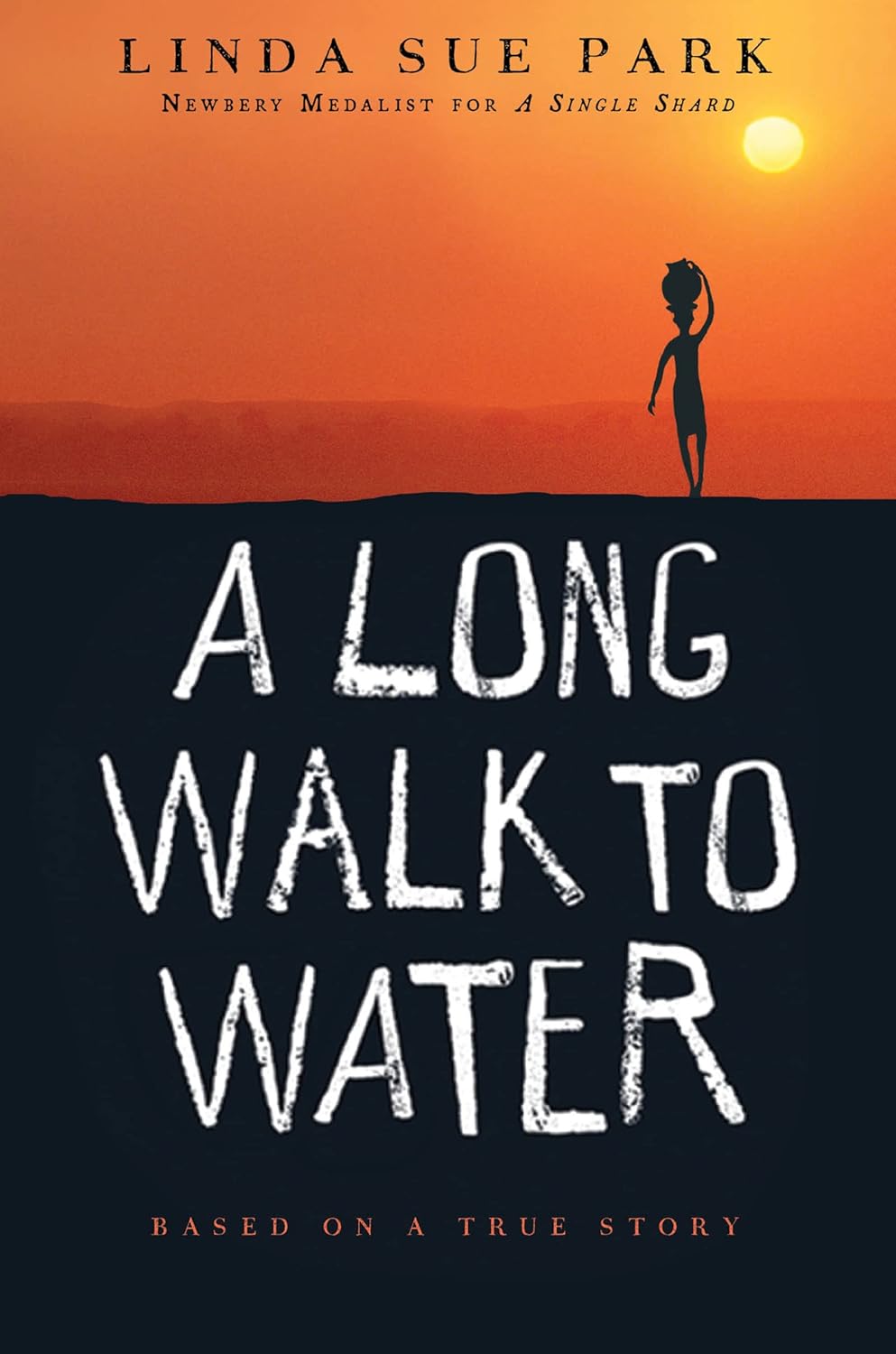
About this book
In war-torn Sudan, two young lives are worlds apart, yet bound by the same parched earth. In 1985, eleven-year-old Salva is forced to flee his village, becoming one of the "lost boys" who must trek across a continent, battling starvation, rebels, and wild animals in a desperate search for safety and family.
Decades later, in 2008, Nya spends her days walking hours to fetch water from a distant pond. Her journey is a daily struggle for survival, a constant reminder of the preciousness of this vital resource.
Based on a true story, Linda Sue Park's New York Times bestseller interweaves Salva and Nya's narratives, revealing a remarkable connection and a testament to the power of resilience, hope, and the human spirit. A Long Walk to Water is a moving and eye-opening tale of survival, determination, and the transformative impact one person can make.
Summary of Key Ideas
- •
Unwavering Perseverance in the Face of Adversity
The Power of Perseverance: Salva's journey is a testament to the human spirit's ability to endure unimaginable hardship. Separated from his family and forced to flee his village due to war, he faces hunger, thirst, exhaustion, and the constant threat of violence. His unwavering determination to survive, fueled by small, achievable goals, allows him to overcome seemingly insurmountable obstacles. This theme highlights the importance of resilience and the ability to keep moving forward, even when faced with despair.
- •
Hope: A Beacon in the Darkness
Hope as a Survival Mechanism: In the face of immense suffering and loss, the characters cling to hope as a means of survival. Salva's hope of finding his family and reaching a safe haven sustains him through years of displacement and uncertainty. Nya's hope for a reliable water source for her village drives her to endure the daily arduous journey to the pond. The novel illustrates how hope can provide the strength and motivation needed to persevere through even the darkest of times, highlighting its crucial role in the human experience.
- •
Water: Life, Conflict, and Transformation
The Significance of Water: Water is a central motif in the novel, representing both a source of life and a symbol of conflict. Nya's daily struggle to fetch water underscores its scarcity and the burden it places on women and children in South Sudan. Salva's eventual work to bring clean water to villages demonstrates its transformative power to improve lives and foster community development. The novel emphasizes the critical importance of access to clean water as a fundamental human right and a key factor in breaking the cycle of poverty and disease.
- •
Family and Community: A Lifeline in Crisis
The Importance of Family and Community: The bonds of family and community provide essential support and strength to the characters. Salva's memories of his family and his desire to reunite with them fuel his determination to survive. He also finds camaraderie and support among the other Lost Boys, forming a makeshift family. Nya's connection to her village and her concern for its well-being motivate her to embrace the water project. This theme highlights the vital role of social connections in providing resilience, hope, and a sense of belonging during times of crisis.
- •
The Devastating Scars of War
The Scars of War and Displacement: The novel poignantly depicts the devastating impact of war on individuals and communities. Salva's experiences as a refugee expose the trauma, violence, and uncertainty faced by millions of people displaced by conflict. The loss of his family and the constant threat of danger leave lasting scars. Nya's story reveals how conflict can disrupt traditional ways of life and hinder development. The book serves as a powerful reminder of the human cost of war and the urgent need for peace and reconciliation.
- •
Empathy: Bridging Cultural Divides
Bridging Cultural Divides Through Empathy and Understanding: The parallel narratives of Salva and Nya, belonging to different tribes, gradually converge, symbolizing the potential for reconciliation and collaboration. Salva's work to bring water to Nya's village transcends tribal divisions and fosters a sense of shared humanity. The novel encourages readers to develop empathy and understanding for those from different backgrounds, recognizing that cooperation and mutual respect are essential for building a more peaceful and just world.
- •
The Power of One: A Ripple Effect of Change
The Ripple Effect of a Single Act: Salva’s transformation from a refugee to a humanitarian demonstrates the profound impact that one person can have on the lives of others. His dedication to providing clean water to South Sudan creates a ripple effect, improving health, education, and economic opportunities for countless individuals and communities. The novel inspires readers to consider how their own actions, no matter how small, can contribute to positive change in the world.
Chapter Recap

About The Author
Linda Sue Park
Main Quotes
"One step at a time, one day at a time, just today, just this day to get through."
"He knew that he would get through it somehow."
"He would not stop walking unless he was dead."
"What they needed was a miracle."
"Water, the most precious liquid on earth!"
"It seemed as if he were not a human being at all, but some kind of strange animal."
"He felt as though he were standing on the brink of a vast, unknown abyss."
"He had to keep moving, keep going, so that he would not have time to think."
"Hope was a flame that flickered in his heart."
"They were so close to the end of their journey, but so far from safety."
Who Should Read This Book
Middle grade readers (ages 10-14)
Young adults interested in global issues
Educators looking for culturally relevant and impactful literature
Readers interested in true stories and historical fiction
Individuals seeking to learn about the Sudanese conflict and refugee experiences
Readers interested in themes of perseverance, hope, and the power of human spirit
People who support organizations that provide clean water in developing countries
Book Summaries Like
A Long Walk to Water




FAQ

Free Access to LitNotes