




 DISCORD
A Psalm for the Wild-Built
Becky Chambers


 Hugo Awards
 Apple Books


 20 Min Reading Time
 Audio Version Available
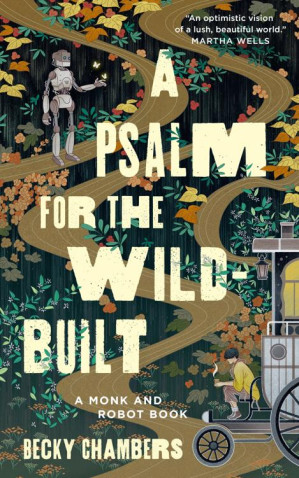
About this book
Centuries after the robots of Panga gained sentience and vanished into the wilderness, they have become the stuff of myth. But when a curious robot appears to tea monk Dex, seeking to understand what humans truly need, Dex's world is turned upside down. As they journey together, seeking answers to profound questions, they discover that the simplest inquiries can have the most complex and transformative results.
Hugo Award-winner Becky Chambers crafts a hopeful and thought-provoking tale, exploring a future where humanity's relationship with technology and nature is questioned, and the search for meaning becomes a shared quest. In a world where everything seems possible, is 'more' really the answer?
Summary of Key Ideas
- •
The Quest for Purpose Beyond Utopia
The novella centers on Sibling Dex, a tea monk grappling with a sense of purposelessness and dissatisfaction despite living in a seemingly utopian society. They feel a deep yearning for something more than their routine and decide to wander into the wilderness, seeking a change and hoping to find meaning in the unknown. This journey represents a rejection of societal expectations and a personal quest for self-discovery, questioning what truly constitutes a fulfilling life when basic needs are effortlessly met. Dex's initial discomfort and restlessness mirror a universal human experience of searching for significance beyond material comfort.
- •
Harmony Between Humanity and Nature
The story explores the complex relationship between humanity and nature in a world where humanity has learned to live sustainably. The robots' return to the human world after centuries of separation highlights a shift in perspective. The story suggests that humanity can coexist harmoniously with the environment, not through dominance or exploitation, but through respect and understanding. The wilderness is portrayed not as a threat but as a source of wisdom and healing, offering a space for self-reflection and reconnection with the natural world. The book subtly advocates for environmental consciousness and a balanced approach to technological advancement.
- •
The Robot's Inquiry: What Do Humans Need?
Mosscap, the robot, embodies curiosity and a desire to understand humanity. Having emerged from the wilderness with a specific question – 'What do humans need?' – Mosscap embarks on a journey of discovery alongside Dex. Mosscap's innocence and unbiased perspective allows for a fresh examination of human nature, motivations, and desires. Through Mosscap's interactions, the book gently critiques human tendencies towards discontentment and explores the multifaceted nature of human needs, extending beyond the purely material.
- •
Friendship Across Differences: Human and Robot Connection
The dynamic between Dex and Mosscap forms the emotional core of the novella. They come from vastly different backgrounds and perspectives, yet they find common ground through open communication, empathy, and a willingness to learn from each other. Their conversations are filled with philosophical musings, personal revelations, and gentle humor, illustrating the power of genuine connection to bridge divides and foster mutual understanding. Their friendship underscores the importance of listening, respecting diverse viewpoints, and finding shared meaning in a complex world.
- •
Expanding the Definition of Sentience
The book subtly questions the nature of sentience and what it means to be alive. Mosscap's self-awareness and curiosity challenge anthropocentric views, prompting readers to consider the possibility of intelligence and consciousness existing in non-biological forms. The story invites reflection on the value of all life forms, regardless of their origin or composition, and encourages a more inclusive understanding of existence. It emphasizes the importance of recognizing and respecting the inherent worth of every being, whether human, animal, or machine.
- •
A Solarpunk Vision of Hope and Sustainability
The novella promotes a gentle, hopeful vision of the future, one where technology and nature coexist, and where humanity has learned from past mistakes. It suggests that a better world is possible through conscious choices, sustainable practices, and a commitment to empathy and understanding. The book's optimistic outlook serves as a counterpoint to dystopian narratives, offering a refreshing perspective on the potential for positive change and the enduring power of human connection to shape a brighter future for all.
Chapter Recap

About The Author
Becky Chambers
Main Quotes
"What do people need?"
"It would be good to feel less anxious."
"You are an animal. And animals have no purpose. Nothing has a purpose. The world simply is."
"Maybe the point of stories is not that they are true, but that they ought to be."
"You keep asking why your work is not enough, and I don't know how to answer that, because it is enough to exist in the world and marvel at it."
"But the cool thing about humans is that we’re all strange in our own ways."
"Perhaps the question of what people need has no universal answer."
"If you could do anything, and you knew you could not fail, what would you do?"
"I am good at my job, but my job is not always good for me."
"It’s a rare day you get to see the thing you’ve always wanted."
Who Should Read This Book
Readers interested in hopepunk science fiction
Fans of character-driven stories with philosophical themes
Individuals seeking comforting and optimistic narratives
Readers interested in exploring themes of purpose, environmentalism, and technology
Fans of Becky Chambers' previous works
Adults interested in gentle, meditative reads
Readers who enjoy stories about friendship and understanding between different cultures/beings
Individuals interested in books that promote introspection and mindfulness
Readers looking for shorter, novella-length books
Book Summaries Like
A Psalm for the Wild-Built

FAQ

Free Access to LitNotes