




 DISCORD
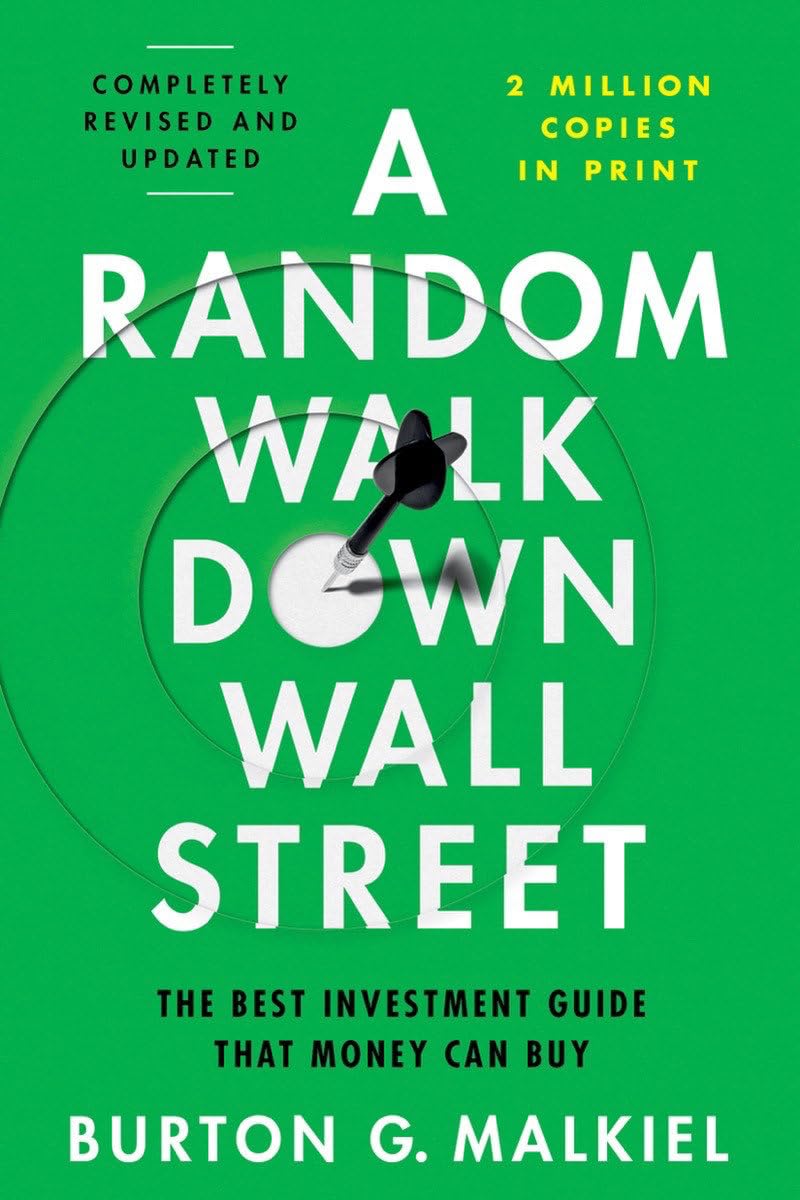
A Random Walk Down Wall Street
Burton Gordon Malkiel


 Apple Books


 79 Min Reading Time
 Audio Version Available
About this book
Navigate the complexities of Wall Street with Burton G. Malkiel's A Random Walk Down Wall Street, the timeless guide that has empowered millions to invest with confidence. This accessible and thoroughly researched book cuts through market noise, offering a time-tested strategy for building a successful portfolio, whether you're starting your first 401(k) or planning for retirement.
Drawing on decades of experience as an economist, financial advisor, and investor, Malkiel debunks investment fads and reveals why a diversified approach, centered on low-cost index funds, often surpasses the performance of high-priced professionals. Stay ahead of the curve with insights on cryptocurrencies, tax-loss harvesting, factor investing, and risk parity, and discover how to tailor your investment strategy to any stage of life.
A Random Walk Down Wall Street equips you with the knowledge to analyze a full range of investment opportunities—from stocks and bonds to real estate and tangible assets—and provides a calm, clear path to protecting and growing your wealth in today's turbulent markets.
Summary of Key Ideas
- •
The Efficient Market Hypothesis
The Efficient Market Hypothesis (EMH) posits that stock prices fully reflect all available information, making it impossible to consistently achieve above-average returns through technical or fundamental analysis. Malkiel argues that new information is rapidly incorporated into stock prices, causing them to move randomly. This implies that attempting to 'beat the market' is a futile exercise for most investors. He presents compelling evidence to support the EMH, challenging the notion that skilled stock pickers can reliably outperform passive investment strategies over the long term. Understanding the EMH is crucial for developing a rational investment approach.
- •
Embrace Passive Investing
Malkiel advocates for passive investing through index funds and Exchange Traded Funds (ETFs) as a superior alternative to active management. Index funds replicate a specific market index, such as the S&P 500, offering broad diversification at a low cost. By investing in index funds, investors can achieve market-average returns without the risk of underperforming due to poor stock selection or high management fees. Malkiel highlights the consistent underperformance of actively managed funds compared to index funds, especially after accounting for fees and taxes. This approach aligns with the EMH, emphasizing the difficulty of outsmarting the market.
- •
The Power of Diversification
Diversification is a cornerstone of Malkiel's investment philosophy. By spreading investments across a wide range of asset classes, industries, and geographic regions, investors can reduce the impact of any single investment on their overall portfolio. Diversification helps to mitigate risk, as losses in one area can be offset by gains in another. Malkiel stresses the importance of constructing a well-diversified portfolio that aligns with an investor's risk tolerance and long-term goals. He cautions against concentrating investments in a few high-growth stocks or sectors, as this increases the potential for significant losses.
- •
Minimize Investment Costs
Malkiel emphasizes the importance of minimizing investment costs, including management fees, trading commissions, and taxes. High costs can erode investment returns over time, significantly impacting long-term wealth accumulation. He advises investors to choose low-cost index funds and ETFs, avoid excessive trading, and utilize tax-advantaged accounts to reduce their tax burden. By focusing on cost efficiency, investors can maximize their returns and improve their chances of achieving their financial goals. This principle is particularly relevant in today's low-yield environment, where every basis point counts.
- •
Think Long Term
Adopting a long-term investment perspective is crucial for success in the stock market. Malkiel encourages investors to focus on their long-term goals, such as retirement, and to avoid making impulsive decisions based on short-term market fluctuations. He argues that time is an investor's greatest asset, as it allows them to ride out market volatility and benefit from the compounding of returns. By staying disciplined and patient, investors can increase their chances of achieving their financial objectives. Malkiel cautions against trying to time the market, as this is a difficult and often unsuccessful strategy.
- •
Debunking Investment Myths
Malkiel debunks several common investment myths, such as the belief that technical analysis can predict future stock prices or that certain stocks are 'sure things.' He presents evidence to show that these beliefs are often based on flawed reasoning and can lead to poor investment decisions. He also warns against the dangers of following investment fads and chasing hot stocks, as these strategies are unlikely to generate sustainable returns. By dispelling these myths, Malkiel empowers investors to make more informed and rational decisions.
- •
Acknowledging Market Inefficiencies
While the book champions passive investing, it acknowledges that market anomalies and behavioral biases can create opportunities for astute investors. However, exploiting these inefficiencies requires specialized knowledge and a disciplined approach. The average investor is better off sticking to a passive strategy. Malkiel recognizes that markets are not perfectly efficient, and mispricings can occur due to investor emotions or irrational behavior. However, he argues that consistently profiting from these mispricings is extremely difficult, even for professional investors.
- •
Understand Your Risk Tolerance
Understanding risk tolerance is essential for constructing a suitable investment portfolio. Malkiel advises investors to assess their risk appetite and choose investments that align with their comfort level. He explains the relationship between risk and return, noting that higher potential returns typically come with higher risk. Investors should carefully consider their financial situation, time horizon, and emotional capacity for handling market volatility before making investment decisions. A portfolio that is too aggressive can lead to anxiety and poor decision-making, while a portfolio that is too conservative may not generate sufficient returns to meet long-term goals.
Chapter Recap

About The Author
Burton Gordon Malkiel
Main Quotes
"The madness of the crowd can be truly spectacular."
"A blindfolded monkey throwing darts at a newspaper's financial pages could select a portfolio that would do just as well as one carefully selected by experts."
"Investment decisions should be based on cold, hard facts, not on hope."
"The best way to improve your investment results is to reduce your expenses."
"An investment in a low-cost index fund is the most sensible equity investment for the great majority of investors."
"I am skeptical of the ability of technical analysis to provide superior investment results."
"Speculation is neither illegal, immoral, nor (for most people) fattening. But it can be dangerous."
"The investor's chief problem--and even his worst enemy--is likely to be himself."
"Markets are rationally inefficient."
"Put time on your side. Start saving early and save regularly. Live modestly and don't touch the money that's been set aside."
Who Should Read This Book
Individual investors
Beginner to intermediate investors
Those interested in learning about the stock market and investment strategies
Readers seeking a book grounded in economic theory
People interested in passive investing strategies like index funds
Students of finance and economics
Readers looking for a long-term investment approach
Young adults starting their investment journey
Those skeptical of active stock picking and market timing
Readers wanting to understand the efficient market hypothesis
Book Summaries Like
A Random Walk Down Wall Street
FAQ

Free Access to LitNotes