




 DISCORD
A Spy Among Friends
Ben Macintyre, John Lee


 Goodreads Choice Awards
 Apple Books


 88 Min Reading Time
 Audio Version Available
About this book
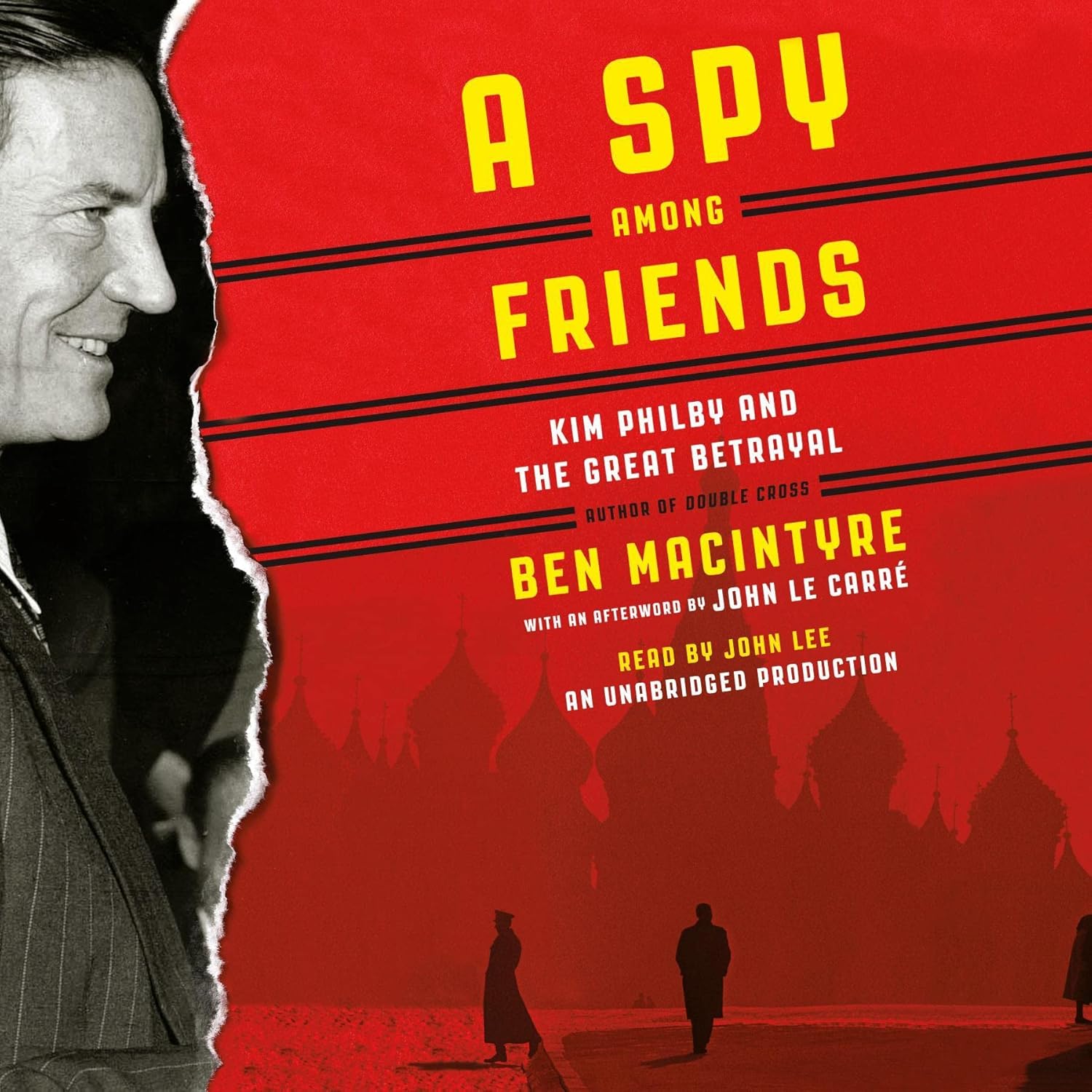
In the treacherous landscape of the Cold War, Kim Philby, a British intelligence officer, rose to the pinnacle of MI6, all while secretly serving as a double agent for the Soviet Union. Ben Macintyre masterfully unveils this true story of betrayal, loyalty, and deception, focusing on Philby's intimate relationships with Nicholas Elliott, his MI6 colleague and closest friend, and James Jesus Angleton, the CIA's counterintelligence chief.
To Elliott and Angleton, Philby was a trusted confidant, a fellow member of their exclusive world. Unbeknownst to them, every secret shared, every strategy discussed, was immediately relayed to Moscow, compromising countless Anglo-American spy operations and costing numerous lives.
Based on personal papers and newly declassified British intelligence files, A Spy Among Friends explores how Philby managed to maintain his facade for so long, and the devastating impact of his exposure on those who believed in him most. More than just a spy story, it's a gripping psychological portrait of a man who betrayed his friends, his country, and the very ideals he swore to protect. Now a major series starring Damian Lewis and Guy Pearce.
Summary of Key Ideas
- •
The Devastating Impact of Betrayal
The book revolves around the profound betrayal perpetrated by Kim Philby, a high-ranking MI6 officer who secretly worked as a double agent for the Soviet Union. This deception had far-reaching consequences, compromising Western intelligence operations and eroding trust within the British intelligence community. Philby's ability to maintain his facade for decades underscores the devastating impact of deep-seated treachery and the difficulty in detecting it, even among close colleagues and friends. The betrayal wasn't just a political act; it was a personal one, deeply affecting those who trusted and admired him.
- •
The Intimate Betrayal of Friendship
The close friendship between Kim Philby and Nicholas Elliott forms the emotional core of the narrative. Elliott, a fellow MI6 officer, genuinely considered Philby a close friend and was instrumental in vouching for him throughout his career. The book explores the complexities of this relationship, highlighting the deep personal bond that existed alongside Philby's duplicity. Elliott's ultimate realization of Philby's betrayal is a poignant moment, showcasing the profound sense of loss and disillusionment that accompanies such a profound breach of trust. This friendship highlights the personal cost of political espionage.
- •
The Culture of Complicity within MI6
Macintyre delves into the culture of the British intelligence services during the Cold War, portraying a world of privilege, social connections, and a certain degree of complacency. This environment allowed Philby to operate with relative impunity for an extended period, as his social standing and personal connections often shielded him from suspicion. The book subtly critiques this system, suggesting that its inherent biases and lack of rigorous oversight contributed to the failure to detect Philby's treachery earlier. It highlights the dangers of relying on established networks and the importance of objective assessment in matters of national security.
- •
The Enigma of Philby's Motivations
Philby's motivations for becoming a double agent are complex and multifaceted. While the book explores his ideological commitment to communism, it also suggests that personal factors, such as a desire for recognition and a sense of alienation, may have played a role. Understanding Philby's motivations is crucial to grasping the full scope of his betrayal and the psychological factors that can drive individuals to commit acts of espionage. The book avoids simplistic explanations, instead presenting a nuanced portrait of a man driven by a combination of conviction and personal ambition.
- •
Intelligence Failures and Systemic Blind Spots
The narrative examines the intelligence failures that allowed Philby to operate undetected for so long. These failures include a reliance on personal connections, a lack of rigorous vetting procedures, and a degree of institutional arrogance that blinded MI6 to the possibility of betrayal from within its ranks. The book serves as a cautionary tale about the importance of vigilance, objectivity, and continuous self-assessment in the intelligence community. It underscores the need to learn from past mistakes and adapt to evolving threats to national security.
- •
The Cold War Context and Ideological Conflict
The book explores the broader historical context of the Cold War and the ideological battle between the West and the Soviet Union. Philby's actions are presented against this backdrop, highlighting the stakes involved in the espionage game and the profound impact that individual betrayals could have on the balance of power. The Cold War context underscores the ideological fervor that motivated individuals on both sides and the willingness to engage in morally ambiguous actions in the name of national security or ideological conviction. It shows how personal loyalties could become secondary to ideological allegiances.
- •
The Lingering Aftermath and Unanswered Questions
The story extends beyond Philby's exposure and defection to Moscow, detailing the aftermath and the lingering questions surrounding his case. The book explores the attempts to understand the full extent of the damage he caused and the ongoing debate about his legacy. The epilogue examines the continued relevance of Philby's story in the context of modern espionage and the challenges of maintaining security in an era of increasing technological sophistication and shifting geopolitical alliances. It shows that the repercussions of betrayal can last for decades.
- •
The Psychological Toll of Espionage
The book delves into the psychological toll that espionage and betrayal take on individuals involved. Nicholas Elliott, in particular, suffers a profound crisis of faith and questions his own judgment and loyalty. The constant deception and the awareness of being manipulated can lead to paranoia, distrust, and a sense of isolation. Macintyre highlights the human cost of espionage, demonstrating that it is not just a game of political maneuvering but a deeply personal and emotionally damaging experience for those involved, both the perpetrators and the victims.
- •
A Character Study of a Master Deceiver
The book is not just a historical account but also a character study of Kim Philby, exploring his personality, his motivations, and his ability to deceive those around him. Macintyre attempts to understand Philby as a complex individual, rather than simply portraying him as a villain. This nuanced approach allows readers to grapple with the complexities of human nature and the capacity for both good and evil that exists within us all. It provides a more complete and disturbing account than other narratives on the infamous double agent.
Chapter Recap

About The Author
Ben Macintyre
Main Quotes
"Friendship is precious, not only in the shade, but in the sunshine of life."
"The fatal conceit of most spies is to believe they are loved, in a relationship between equals, and not merely manipulated."
"If I had to choose between betraying my country and betraying my friends, I hope I should have the guts to betray my country."
"Eccentricity is one of those English traits that looks like frailty but masks a concealed strength; individuality disguised as oddity."
"Deception is a sort of seduction. In love and war, adultery and espionage, deceit can only succeed if the deceived party is willing, in some way, to be deceived."
"“He never engaged you in serious conversation—it was always irony.”"
"To this day I am convinced that we was no an ideologue. Spying was just his way of being above lesser mortals."
"Spies though, a whole life lived hidden, take this to a different space, and the idea of never being really seen by another, truly, is as awful ..."
"A good spy is one who is trusted."
"The best lies are always mixed with truth."
Who Should Read This Book
Readers interested in Cold War history
Fans of espionage and spy stories
Readers of true crime and historical non-fiction
Individuals fascinated by the Cambridge Five spy ring
Those interested in the history of MI6 and the KGB
Readers who enjoy books about betrayal and deception
People who appreciate detailed historical accounts with a personal angle
Those who like character-driven narratives within a historical context
Readers of Ben Macintyre's other books
Individuals interested in British history and society
Book Summaries Like
A Spy Among Friends




FAQ

Free Access to LitNotes