




 DISCORD
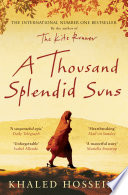
A Thousand Splendid Suns
Khaled Hosseini


 Amazon Best Sellers
 USA Today Best Sellers


 137 Min Reading Time
 Audio Version Available
About this book
In war-torn Afghanistan, Mariam and Laila, born decades apart, find their lives tragically intertwined. Mariam, a fifteen-year-old forced into marriage with the harsh Rasheed, and Laila, a young woman yearning for love and education, become unlikely allies amidst escalating violence and oppression. As the Taliban seize control, their bond deepens, forging a profound connection that transcends circumstance. In a world of brutality and fear, their resilience shines, revealing the extraordinary power of love and sacrifice. A Thousand Splendid Suns is a breathtaking saga of unwavering devotion, unexpected heroism, and the enduring strength of the human spirit.
Summary of Key Ideas
- •
The Oppression of Women
The novel poignantly portrays the systematic oppression of women in Afghanistan, particularly during the Taliban regime. Mariam and Laila, the two central characters, endure forced marriages, domestic abuse, and the denial of basic human rights. Hosseini illustrates how women are stripped of their autonomy, their voices silenced, and their bodies controlled, reflecting the harsh realities faced by many Afghan women. The story underscores the importance of female solidarity and resilience in the face of such adversity, demonstrating how women find strength in their relationships with one another to navigate a patriarchal society.
- •
Resilience and Survival
Despite enduring immense suffering, Mariam and Laila demonstrate remarkable resilience and an unwavering will to survive. Their capacity to withstand unimaginable hardship, adapt to ever-changing circumstances, and find hope in the bleakest of situations highlights the strength of the human spirit. The novel showcases how these women navigate personal tragedies and societal upheaval, ultimately finding solace and purpose in their connection and mutual support. This theme emphasizes the importance of inner fortitude and the ability to persevere even when faced with seemingly insurmountable obstacles.
- •
The Power of Female Friendship
A central theme revolves around the profound bonds of female friendship and solidarity. Despite initially being forced into a rivalry, Mariam and Laila forge a deep connection built on mutual understanding, empathy, and shared experiences of oppression. Their relationship evolves from animosity to a sisterly bond, providing each other with emotional support, strength, and a sense of belonging in a world that often seeks to tear them apart. This theme highlights the vital role of female relationships in empowering women and helping them overcome adversity.
- •
Afghanistan's Tumultuous History
The narrative provides a historical backdrop of Afghanistan's tumultuous past, chronicling the Soviet invasion, the rise of the Mujahideen, and the subsequent Taliban regime. Through the personal stories of Mariam and Laila, Hosseini illustrates the devastating impact of war and political instability on ordinary Afghan lives, particularly on women. The novel serves as a poignant reminder of the human cost of conflict and the enduring legacy of trauma and displacement experienced by generations of Afghans. It emphasizes how political events directly shape personal destinies, often with tragic consequences.
- •
The Importance of Sacrifice
The theme of sacrifice permeates the novel, as characters repeatedly make difficult choices for the sake of others. Mariam's ultimate sacrifice exemplifies this theme, as she chooses to protect Laila and her children from Rasheed's abuse, even at the cost of her own life. This act of selflessness underscores the power of love, loyalty, and the willingness to prioritize the well-being of loved ones above personal safety. The theme highlights the moral complexities of survival in a war-torn society and the profound impact of individual choices on the lives of others.
- •
The complexities of Motherhood
The novel explores the theme of motherhood in its various forms – biological, adoptive, and surrogate. Mariam initially struggles with her inability to bear children, while Laila embraces motherhood as a source of strength and purpose. The bond between Laila and her children, as well as the surrogate maternal relationship that develops between Mariam and Laila's children, illustrates the transformative power of maternal love. This theme emphasizes the nurturing and protective instincts of women and their capacity to create families even in the most challenging circumstances.
- •
The Enduring Scars of War
Hosseini uses the characters and events in “A Thousand Splendid Suns” to highlight the far-reaching effects of war and violence on individual lives and Afghan society as a whole. The constant state of conflict leads to displacement, loss, and trauma, leaving deep scars on the characters' psyches. The violence perpetrated by both foreign powers and internal factions disrupts family structures, destroys communities, and creates an environment of fear and uncertainty. The novel serves as a powerful indictment of the devastating consequences of war and its enduring impact on generations.
- •
The Power of Education
The narrative underscores the significance of education, particularly for women, as a means of empowerment and social change. Laila's access to education stands in stark contrast to Mariam's limited opportunities, highlighting the transformative potential of knowledge and learning. Education enables Laila to envision a better future for herself and her children, providing her with the skills and confidence to challenge societal norms and pursue her aspirations. The novel advocates for the right of all individuals, regardless of gender, to access education as a fundamental human right and a catalyst for progress.
Chapter Recap

About The Author
Khaled Hosseini
Main Quotes
"Marriage can wait, education cannot."
"One could not count the moons that shimmer on her roofs, Or the thousand splendid suns that hide behind her walls."
"A man's heart is a wretched, wretched thing. It isn't like a mother's womb. It won't bleed. It won't stretch to make room for you."
"Of all the hardships a person had to face, none was more punishing than the simple act of waiting."
"Like a compass needle that points north, a man's accusing finger always finds a woman. Always."
"But time is a stubborn thing; it insists on unfolding at its own pace."
"In the end, the world always wins. That's just the way of things."
"She was leaving the world as a woman who had loved and been loved back."
"Learn this now and learn it well, my daughter: Like a compass needle that points north, a man’s accusing finger always finds a woman. Always. You remember that, Mariam."
"I know you're still young, but I want you to understand and learn this now. Marriage can wait, education cannot."
Who Should Read This Book
Readers of historical fiction, particularly those interested in Afghanistan and the Middle East.
Individuals interested in stories about women's experiences, particularly in challenging social and political environments.
Readers who enjoy emotionally resonant and character-driven narratives.
Book clubs and discussion groups focused on social issues, women's rights, and global literature.
Readers of Khaled Hosseini's previous novel, "The Kite Runner."
Young adults and adults (14+) interested in learning about Afghan history and culture through fiction.
People interested in war literature and its impact on individuals and families.
Book Summaries Like
A Thousand Splendid Suns



FAQ

Free Access to LitNotes