




 DISCORD
Adventures of Huckleberry Finn
Mark Twain


 Apple Books


 130 Min Reading Time
 Audio Version Available
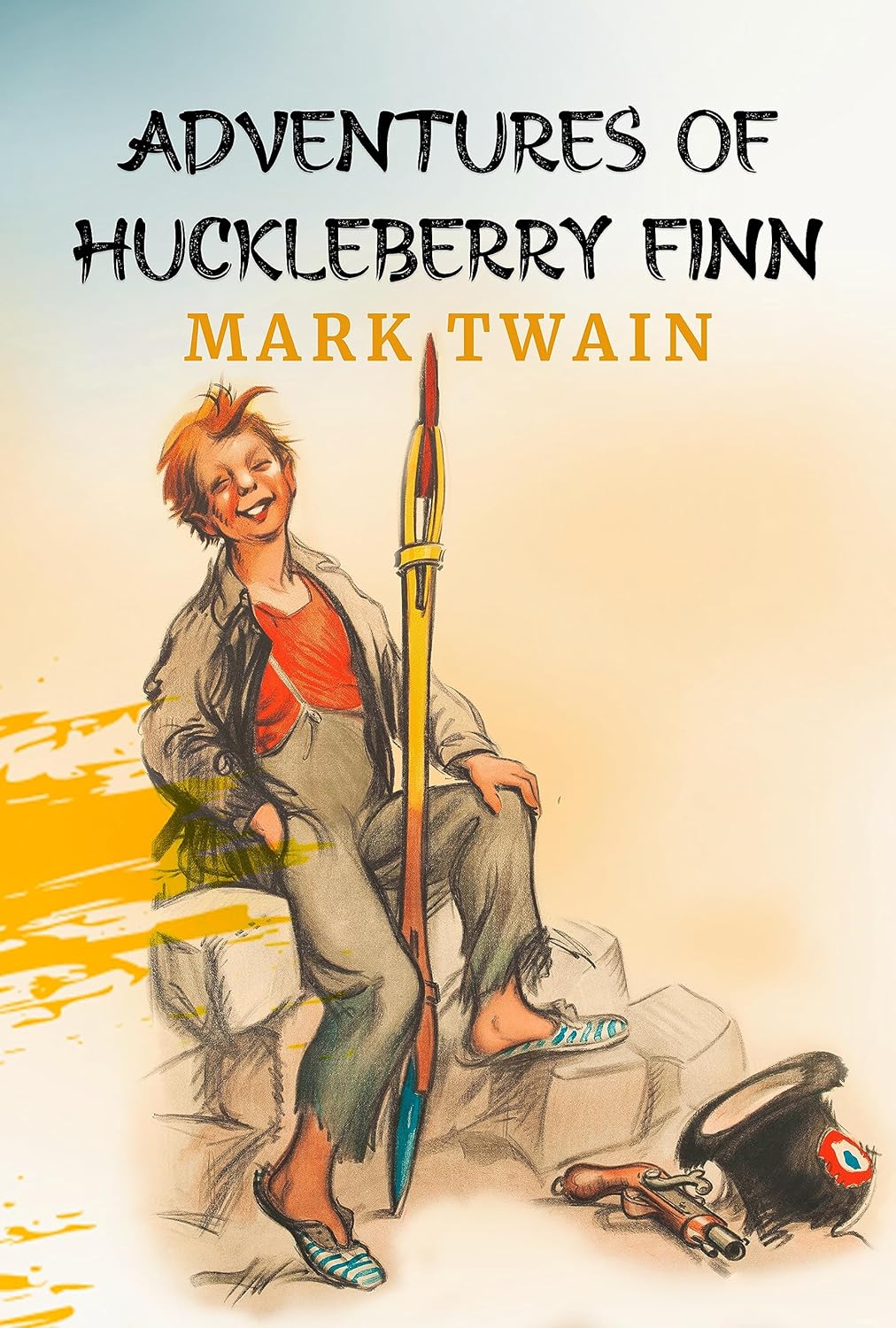
About this book
Embark on an unforgettable journey down the Mississippi River with Mark Twain's timeless classic, Adventures of Huckleberry Finn. Through the eyes of young Huck, escape the confines of civilization and navigate the complexities of a pre-Civil War South alongside Jim, a runaway slave yearning for freedom.
As Huck and Jim raft through the heart of America, they encounter a colorful cast of characters and confront the hypocrisy and deeply rooted prejudices of society. Huck's moral compass is tested as he grapples with the conflicting values of the world around him and the burgeoning friendship he develops with Jim.
A poignant exploration of freedom, racism, and the search for identity, Adventures of Huckleberry Finn remains a powerful and enduring story that challenges readers to question societal norms and embrace the true meaning of humanity. This edition, featuring insightful commentary by Gerald Graff and James Phelan, provides a fresh perspective on Twain's masterpiece, making it an essential read for both longtime fans and new readers alike.
Summary of Key Ideas
- •
The Corrosive Nature of Racism
Huckleberry Finn critiques the pervasive racism and slavery of the antebellum South, exposing the hypocrisy of a society that claims to be civilized while perpetuating inhumane practices. Through Huck's evolving relationship with Jim, a runaway slave, Twain challenges readers to confront the moral bankruptcy of racial prejudice. The novel illustrates how societal norms and laws can be deeply unjust, prompting readers to question the foundations of their own beliefs. Huck's internal conflict highlights the struggle between societal indoctrination and individual conscience, ultimately leading him to reject the racist values he was taught.
- •
Hypocrisy of Civilized Society
The book contrasts the perceived order and morality of "civilized" society with the genuine humanity found in individuals deemed outcasts. Characters like the Widow Douglas and Miss Watson represent the constraints and superficiality of social norms, while Huck and Jim find freedom and authenticity on the river. Twain satirizes the institutions and customs of the time, revealing the hypocrisy and moral decay hidden beneath a veneer of respectability. Huck's rejection of societal expectations underscores the importance of individual integrity over blind conformity.
- •
The Journey as Moral Education
Huck's journey down the Mississippi River is not only a physical one but also a moral and intellectual awakening. He begins as a largely uneducated and naive boy, shaped by the prejudices of his surroundings. However, his experiences with Jim and his observations of the world gradually broaden his understanding and challenge his preconceived notions. The river becomes a symbol of freedom and possibility, allowing Huck to develop his own moral compass independent of societal pressures. By the end of the novel, Huck has grown significantly, demonstrating the power of experience and empathy in shaping one's character.
- •
The Power of Friendship and Loyalty
Huck and Jim's relationship evolves from one of master and slave to a deep and genuine friendship. Despite the societal constraints that dictate their roles, they find common ground in their shared humanity and desire for freedom. Their bond challenges the racist assumptions of the time, demonstrating that empathy and connection can transcend social barriers. Huck's willingness to defy societal norms and risk damnation to help Jim gain his freedom highlights the transformative power of human connection and the importance of standing up for what is right, even when it is unpopular.
- •
The Quest for Freedom
Freedom is a central theme in the novel, encompassing both physical and personal liberation. Jim seeks freedom from slavery, while Huck desires freedom from the constraints of civilized society and abusive father. The Mississippi River symbolizes this freedom, offering an escape from the restrictive norms of land-bound communities. However, the novel also explores the complexities of freedom, as Huck and Jim constantly face threats and challenges to their autonomy. Ultimately, the pursuit of freedom drives their actions and shapes their identities.
- •
Satire as Social Commentary
Twain uses satire to critique various aspects of American society, including religious hypocrisy, romantic ideals, and political corruption. The Grangerford family's obsession with their feud and the Duke and King's fraudulent schemes serve as examples of the absurdity and moral decay that Twain observed in his society. Through humor and exaggeration, Twain exposes the flaws and contradictions of human nature and social institutions, prompting readers to question the values and beliefs they hold dear. The satirical elements of the novel add depth and complexity to its social commentary.
- •
The Role of Superstition
Superstition plays a significant role in the lives of many characters, particularly Huck and Jim. Jim's reliance on omens and folk beliefs reflects the cultural traditions of enslaved African Americans, while Huck's skepticism is tempered by his own experiences with the unexplained. Twain explores the ways in which superstition can provide comfort, guidance, and a sense of control in a world filled with uncertainty. However, he also highlights the potential for superstition to be exploited or to perpetuate ignorance and prejudice. The presence of superstition adds a layer of cultural richness to the novel.
Chapter Recap

About The Author
Mark Twain
Main Quotes
"“All right, then, I’ll go to hell”"
""It's lovely to live on a raft. We had the sky, up there, all speckled with stars, and we used to lay on our backs and look up at them, and discuss about whether they was made, or only just happened""
"“Human beings can be awful cruel to one another.”"
""It was awful thoughts and awful words, but they was said. And I let them stay said; and never thought no more about reforming.""
"“I reckon I got to light out for the Territory ahead of the rest, because Aunt Sally she’s going to adopt me and sivilize me, and I can’t stand it. I been there before.”"
"“It was like being born again, I was so glad to find out he hadn't killed me.”"
"“Right is right, and wrong is wrong, and a body ain’t got no business doing wrong when he ain’t ignorant and knows better.”"
""We said there warn't no home like a raft, after all. Other places do seem so cramped up and smothery, but a raft don't. You feel mighty free and easy and comfortable on a raft.""
""The average man don't like trouble and danger.""
"“What's the use you learning to do right, when it's troublesome to do right and ain't no trouble to do wrong, and the wages is just the same?”"
Who Should Read This Book
Readers interested in classic American literature
Students of American history and culture
Readers interested in social commentary and satire
Individuals interested in stories about morality, freedom, and prejudice
Readers who enjoy adventure stories set in the 19th century American South
Educators and students studying themes of racism and societal injustice
Readers interested in Mark Twain's works and his perspective on American society
Book clubs and discussion groups focusing on literary classics
Individuals seeking a thought-provoking and challenging read
Readers interested in coming-of-age stories
Book Summaries Like
Adventures of Huckleberry Finn

FAQ

Free Access to LitNotes