




 DISCORD
American Midnight
Adam Hochschild


 Goodreads Choice Awards
 Apple Books


 87 Min Reading Time
 Audio Version Available
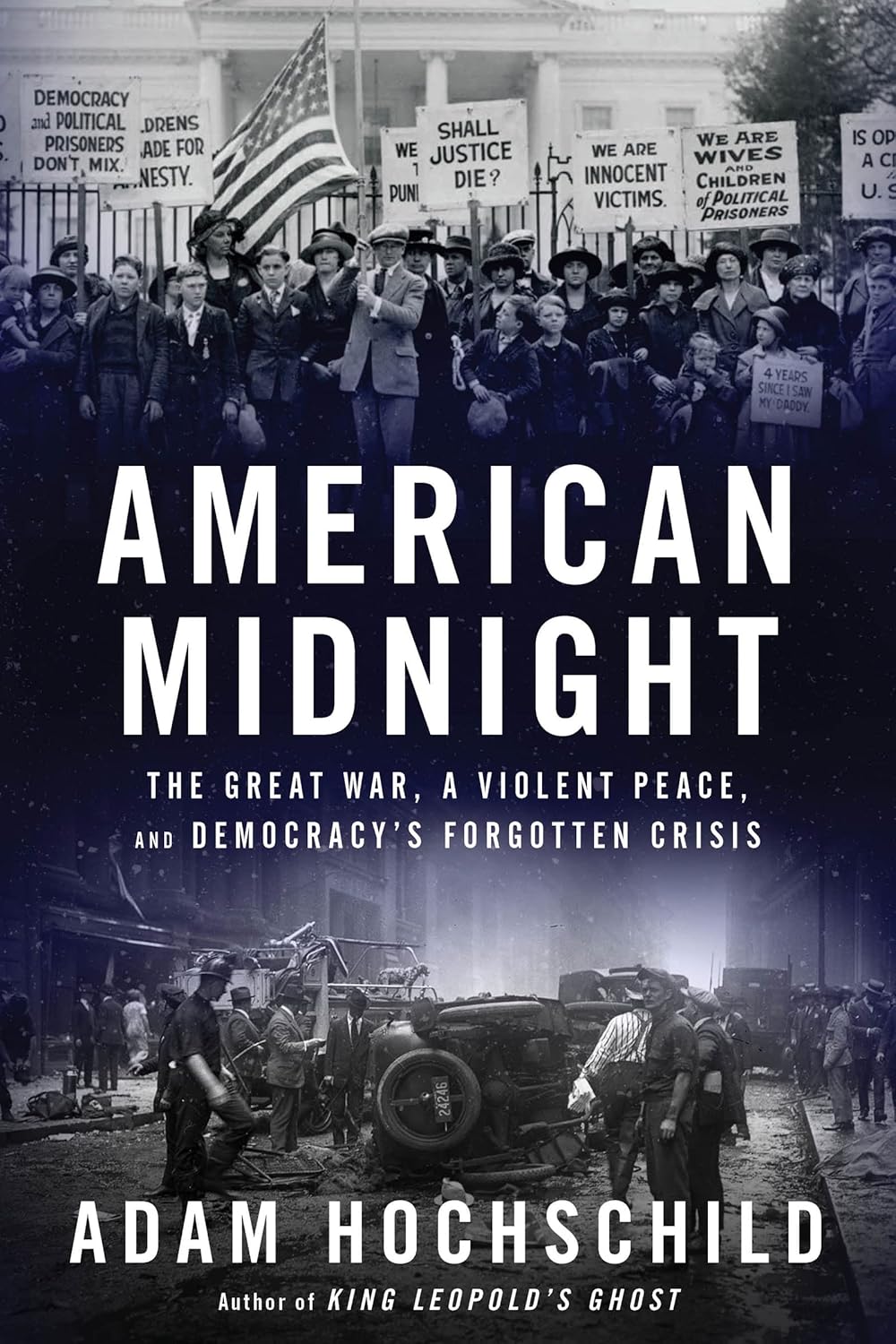
About this book
In the shadow of World War I, America faced a crisis unlike any other. In American Midnight, Adam Hochschild masterfully unveils a startlingly relevant period between the Great War and the Roaring Twenties, when the very foundations of American democracy were threatened. It was an era of rampant injustice: Black churches burned, dissenters imprisoned for private opinions, vigilantes running wild, and the government itself fanning the flames of repression.
Through vivid storytelling, Hochschild introduces us to the forgotten players of this tumultuous time: from Woodrow Wilson and fiery antiwar voices like Kate Richards O’Hare and Emma Goldman, to labor leader Eugene Debs and a young, ambitious J. Edgar Hoover. American Midnight illuminates a dark chapter of lynchings, censorship, and the abuse of conscientious objectors, revealing the toxic currents of racism, nativism, and contempt for the rule of law that echo in our own era. Discover the harrowing, yet ultimately inspiring, stories of those who fought to redeem a fractured nation, and understand how their struggles continue to shape us today.
Summary of Key Ideas
- •
Democracy's Fragility
The fragility of democracy is a central theme. Hochschild illustrates how easily democratic principles can be eroded during times of perceived crisis, such as war or social upheaval. The book serves as a warning about the importance of vigilance in protecting civil liberties and constitutional rights, even when faced with fear and uncertainty. It emphasizes that democratic institutions are not invulnerable and require constant safeguarding against authoritarian tendencies.
- •
Wartime Repression
World War I served as a catalyst for widespread political repression. The government used the war as justification to suppress dissent, target political opponents, and curtail freedom of speech. The Espionage Act and Sedition Act were instrumental in these efforts, leading to the arrest and imprisonment of individuals who spoke out against the war or the government. This period demonstrates how wartime hysteria can be exploited to justify the violation of civil liberties.
- •
Racial Injustice and White Nationalism
The book highlights the intense racism and white nationalism prevalent in America during this period. African Americans faced systematic discrimination, violence, and disenfranchisement. The rise of the Ku Klux Klan and the occurrence of numerous lynchings underscored the deep-seated racial animosity that permeated American society. The narrative emphasizes the government's failure to protect Black citizens and, in some cases, its complicity in perpetuating racial injustice.
- •
Xenophobia and the Red Scare
Xenophobia and anti-immigrant sentiment were rampant. The Red Scare fueled suspicion and hostility towards immigrants, particularly those from Eastern Europe and Russia. Many immigrants were falsely accused of being communists or anarchists and were subjected to deportation and other forms of persecution. The book illustrates how fear of foreigners can lead to discriminatory policies and the violation of basic human rights.
- •
Suppression of Labor and Socialism
The suppression of labor movements and socialist organizations is a key aspect of the book. The government and corporations actively worked to undermine labor unions and socialist groups, viewing them as threats to the established order. Strikes were violently suppressed, and labor leaders were arrested and prosecuted. This repression aimed to silence dissent and maintain the power of the elite.
- •
Resistance and Resilience
Despite the widespread repression, there were individuals and organizations who bravely resisted these injustices. Activists, lawyers, journalists, and ordinary citizens fought to defend civil liberties, challenge discriminatory laws, and expose government misconduct. Their stories of courage and resilience offer a glimmer of hope and demonstrate the importance of standing up for one's beliefs, even in the face of overwhelming opposition.
- •
Government Overreach
The abuse of power by the federal government during this era is a central theme. Hochschild details how the government overstepped its authority, violated constitutional principles, and engaged in surveillance and intimidation of its own citizens. The book underscores the importance of checks and balances and the need for accountability to prevent future abuses of power. It is a reminder that government power must be constrained and subject to public scrutiny.
- •
Post-War Disillusionment
The aftermath of World War I and the failure of the peace process contributed to disillusionment and social unrest. The promises of a better world after the war were not fulfilled, leading to widespread discontent and a sense of betrayal. This disillusionment fueled further social and political instability, exacerbating the existing tensions within American society. The book highlights the long-lasting consequences of war and the challenges of building a just and equitable society in its wake.
- •
Propaganda and Misinformation
Hochschild explores the use of propaganda and misinformation to manipulate public opinion. The government and other institutions employed various techniques to shape public perception of the war, immigrants, and political dissidents. This manipulation of information contributed to the atmosphere of fear and suspicion that characterized the era. The book underscores the importance of critical thinking and media literacy in resisting propaganda and discerning the truth.
Chapter Recap

About The Author
Adam Hochschild
Main Quotes
"The war was bringing undreamed-of powers to the federal government."
"Perhaps our going to war is the only way in which our present preeminent trade position can be maintained and a panic averted."
"The military crafted a secret 57-page contingency plan to put the entire country under martial law."
"No alien should ever be permitted to land on our shores who is not in hearty accord with American institutions."
"A moment often arrives when substantial victory is yours if by some slight appearance of a concession you can save the face of the opposition."
"He is where he belongs. He should stay there."
"Cells were full of people apprehended under the Espionage Act."
"The only way to make the world safe for democracy was to crush all dissent at home."
"If the ignorant and lawless are allowed to vote, they will vote to plunder the rich."
"The consciously criminal rich, and the unconsciously criminal poor, join hands and fraternize."
Who Should Read This Book
Readers interested in American history, particularly the period during and after World War I
Individuals interested in the history of civil liberties and social justice in the United States
Readers of narrative history and non-fiction
Those interested in political history and the history of democracy
Readers of Adam Hochschild's previous books
People concerned about contemporary issues of racism, white nationalism, and threats to democracy
Academics and students studying American history, political science, or sociology
Readers interested in the Red Scare and government suppression of dissent
Book Summaries Like
American Midnight

FAQ

Free Access to LitNotes