




 DISCORD
Ancient Law
Henry Sumner Maine


 Apple Books


 52 Min Reading Time
 Audio Version Available
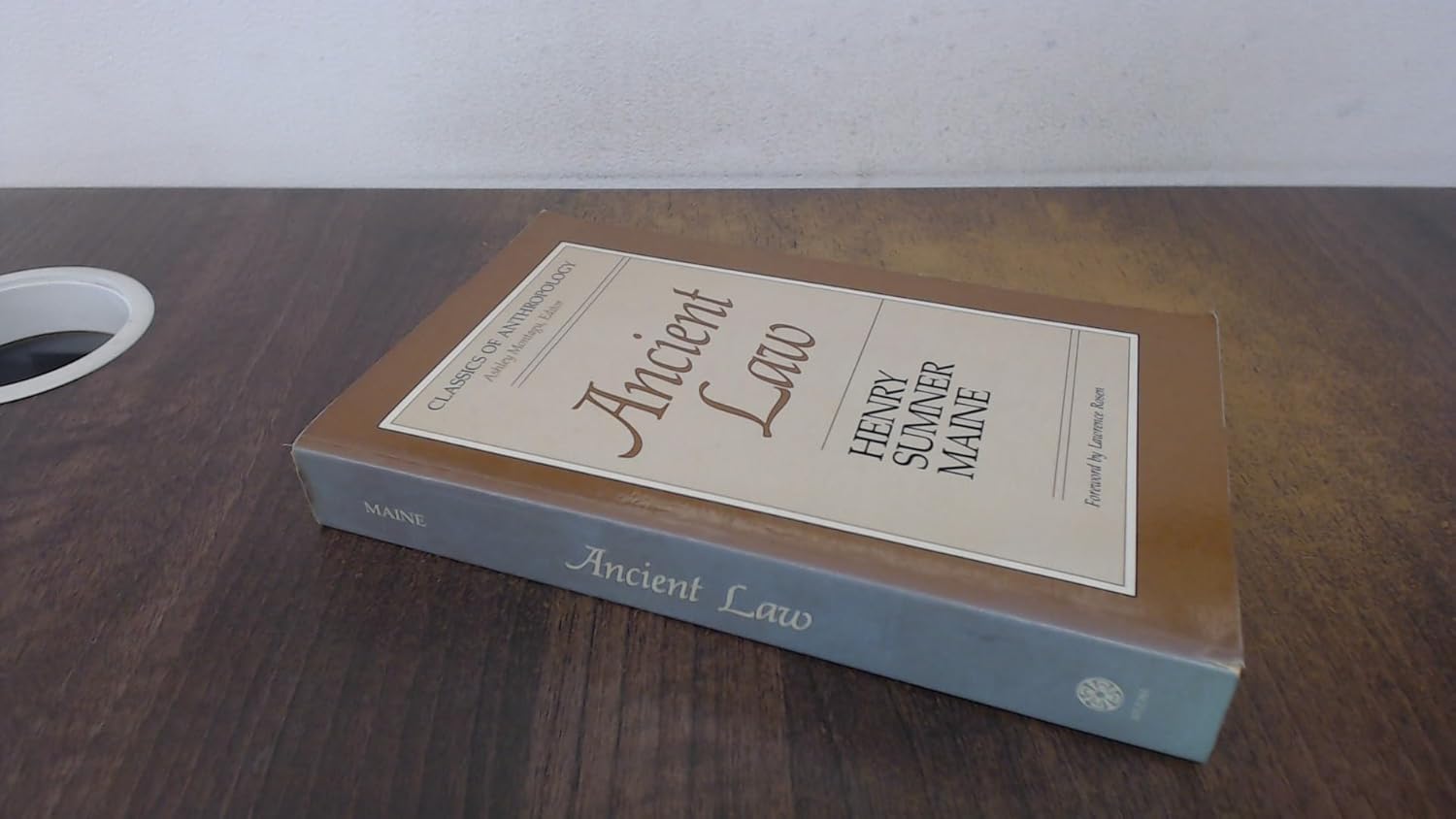
About this book
In "Ancient Law," Sir Henry James Sumner Maine, a towering figure in comparative jurisprudence and history, lays out his groundbreaking thesis: the evolution of law and society "from status to contract." Journey back to the ancient world, where individuals were bound by tradition and group status, and witness the transformation into modernity, where autonomous beings forge their own paths through contracts and associations.
A cornerstone of modern sociology of law, Maine's work draws upon Roman law and a vast range of observations, offering insights that resonate across cultures. Discover the roots of our legal systems and social structures in this classic work, as relevant today as it was upon its original publication in 1861.
Summary of Key Ideas
- •
The Shift from Status to Contract
From Status to Contract: Maine's central thesis revolves around the historical progression of law and society from a system based on fixed social status to one grounded in individual contracts and voluntary agreements. In ancient societies, an individual's rights, duties, and social standing were largely determined by birth, family affiliation, and rigid social hierarchies. As societies evolve and progress, these status-based relationships gradually give way to systems where individuals are increasingly free to enter into contracts and define their own legal obligations. This transition signifies a shift towards greater individual autonomy and freedom, reflecting a more dynamic and modern social order. Maine argues that this movement is a hallmark of progressive societies.
- •
Customary Law as the Bedrock of Society
The Primacy of Customary Law: Maine emphasizes the importance of customary law in early societies. These unwritten rules and traditions, passed down through generations, formed the foundation of legal systems before the advent of formal legislation. Customary law reflected the deeply ingrained social norms, beliefs, and practices of a community, shaping individual behavior and maintaining social order. Maine suggests that understanding customary law is crucial for comprehending the origins and evolution of legal institutions, as it provides insights into the values and principles that guided early human interactions and governance. The transition from customary law to codified law represents a significant step in legal development.
- •
Legal Fictions as Agents of Change
The Role of Legal Fictions: Maine discusses the use of legal fictions as a mechanism for adapting ancient laws to changing social conditions. Legal fictions involve the deliberate alteration or misrepresentation of facts to bring a particular case within the scope of existing legal rules. By employing fictions, ancient societies could circumvent the rigidity of their legal systems and achieve more equitable outcomes without explicitly overturning established laws. Maine views legal fictions as evidence of the inherent tension between the need for legal stability and the imperative to adapt to evolving social needs. They demonstrate the ingenuity of early legal thinkers in finding ways to reconcile tradition with progress.
- •
Equity's Role in Legal Fairness
The Significance of Equity: Maine highlights the emergence of equity as a means of mitigating the harshness and inflexibility of strict legal rules. Equity involves the application of principles of fairness and justice to resolve disputes in situations where the formal law produces unjust outcomes. In ancient societies, equity often arose through the intervention of royal or religious authorities who possessed the power to override or supplement the existing legal framework. Maine sees the development of equity as a crucial step towards a more humane and responsive legal system, reflecting a growing awareness of the need to consider individual circumstances and promote fairness in legal decision-making.
- •
Transformations in Family Law
The Evolution of Family Structures: Maine examines the evolution of family structures and their impact on legal development. He argues that ancient societies were characterized by patriarchal family systems, where the male head of household held absolute authority over his family members. As societies progress, the power of the patriarch gradually diminishes, and individual family members gain greater autonomy and legal rights. This shift reflects a broader trend towards individualism and the recognition of individual rights within the legal system. Maine suggests that changes in family structures are closely intertwined with broader social and legal transformations.
- •
The Rise of Contractual Freedom
The Development of Contract Law: Maine traces the development of contract law from its rudimentary origins in ancient societies to its more sophisticated forms in modern legal systems. He observes that early forms of contract were often highly formalistic and ritualistic, requiring strict adherence to prescribed procedures. Over time, contract law becomes more flexible and adaptable, allowing individuals to create their own legal obligations through voluntary agreements. Maine views the evolution of contract law as a key indicator of social and economic progress, reflecting a shift towards greater individual freedom and the expansion of market-based transactions.
- •
The Enduring Legacy of Roman Law
Influence of Roman Law: Maine emphasizes the profound influence of Roman law on the development of legal systems in Europe and beyond. He highlights the sophisticated legal concepts and principles developed by Roman jurists, which served as a foundation for many modern legal systems. Maine sees Roman law as a remarkable achievement of human reason and a testament to the enduring power of legal ideas. Its emphasis on principles like natural law, equity, and individual rights has had a lasting impact on legal thought and practice, shaping the course of legal history.
- •
The Value of Legal Comparison
The Importance of Comparative Law: Maine advocates for the study of comparative law as a means of gaining a deeper understanding of legal systems and their evolution. By comparing different legal traditions and institutions, scholars can identify common patterns and divergent paths in legal development. Maine believes that comparative law can shed light on the underlying principles and values that shape legal systems, as well as the social and cultural factors that influence their evolution. His work exemplifies the value of comparative analysis in understanding the complexities of law and society.
Chapter Recap

About The Author
Henry Sumner Maine
Main Quotes
"The movement of the progressive societies has hitherto been a movement from Status to Contract."
"All the objects of ancient law are single, definite, and aimed at in the simplest manner."
"The history of political ideas begins, in fact, with the assumption that kinship in blood is the sole possible ground of community in political functions."
"Few things are more remarkable than the extreme distaste of archaic nations for generalization."
"Legal fictions are the greatest of all impediments to symmetrical jurisprudence."
"Substantive law has at first the look of being gradually secreted in the interstices of procedure."
"The penal law of ancient communities is not the law of crimes; it is the law of torts."
"We are accustomed to say that the written law has superseded the unwritten. In point of fact, it has only been superimposed upon it."
"It is only through fiction that Roman law was gradually brought into harmony with changing needs of society."
"The early history of law is the history of legal fictions."
Who Should Read This Book
Legal historians
Legal scholars
Sociologists
Anthropologists
Those interested in the history of law and society
Students of classical legal theory
Comparative law enthusiasts
Anyone studying the evolution of legal systems
Individuals interested in Victorian-era intellectual history
Academics researching the development of social norms and institutions
Book Summaries Like
Ancient Law




FAQ

Free Access to LitNotes