




 DISCORD
Angels & Demons
Dan Brown

 Amazon Best Sellers
 Apple Books


 93 Min Reading Time
 Audio Version Available
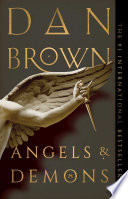
About this book
In the heart of Rome, an ancient war is reignited. When Harvard symbologist Robert Langdon is summoned to investigate a mysterious symbol seared into a murdered physicist's chest, he uncovers the unthinkable: the resurgence of the Illuminati, a powerful secret brotherhood thought to be long extinct.
With the Vatican on the brink of a holy conclave, a chilling message from the Illuminati confirms Langdon's worst fears—a devastating time bomb hidden somewhere in Vatican City. Racing against the clock, Langdon joins forces with Vittoria Vetra, a brilliant scientist, in a desperate fight to save the Vatican from annihilation.
Their frantic hunt plunges them into a labyrinth of sealed crypts, treacherous catacombs, and forgotten cathedrals. Following a 400-year-old trail of cryptic symbols, Langdon and Vetra must unlock the secrets of the Illuminati's hidden lair to find any hope of salvation. In this explosive thriller, science and religion collide in a battle where dark truths emerge, and the fate of the Vatican hangs in the balance.
Summary of Key Ideas
- •
Science vs. Religion: An Enduring Conflict
The central conflict revolves around the age-old tension between science and religion, particularly the historical animosity between the Catholic Church and the Illuminati. This theme explores how both institutions, despite their contrasting methodologies, seek to understand and explain the universe. The narrative suggests that the conflict is often manufactured or exaggerated, obscuring the potential for science and religion to coexist and even complement each other. The book questions the rigid dogmas of both sides, highlighting the dangers of extremism and the importance of open-minded inquiry and tolerance. Ultimately, it prompts readers to consider the balance between faith and reason in the pursuit of knowledge and truth.
- •
The Power of Symbols and Codes
The novel emphasizes the importance of symbols and codes as keys to unlocking hidden knowledge and historical truths. Robert Langdon's expertise in symbology is crucial to deciphering the Illuminati's messages and navigating the treacherous path to prevent disaster. Symbols serve not only as clues but also as a means of communication and preservation of secret traditions. The book illustrates how understanding these symbols provides insight into the past and helps to unravel complex conspiracies. This highlights the power of symbols in shaping history and influencing human actions, urging readers to look beyond the surface and appreciate the deeper meanings embedded in cultural artifacts and historical landmarks.
- •
The Enigmatic World of Secret Societies
Angels & Demons delves into the clandestine world of secret societies, particularly the Illuminati, portraying them as a powerful and influential organization seeking to challenge the authority of established institutions. The novel explores the history and mythology surrounding the Illuminati, blurring the lines between fact and fiction to create a sense of intrigue and paranoia. It raises questions about the potential for secret societies to manipulate events and exert control behind the scenes. By highlighting the secretive nature and hidden agendas of these groups, the book encourages critical thinking about power structures and the potential for abuse of authority.
- •
A Race Against Time: The Urgency of Action
The narrative unfolds as a fast-paced thriller, driven by a race against time to prevent a catastrophic event. The characters face constant pressure and imminent danger, creating a sense of urgency and suspense. The ticking clock device heightens the stakes and forces the protagonists to make difficult choices under extreme circumstances. This element of urgency underscores the importance of quick thinking, collaboration, and decisive action in the face of crisis. The constant threat of disaster keeps the reader engaged and invested in the outcome, emphasizing the precariousness of human existence and the potential for catastrophic consequences.
- •
Deception and Betrayal: Unmasking Hidden Agendas
Betrayal and deception are recurring themes, as characters often have hidden agendas and conflicting loyalties. The protagonists must navigate a web of lies and hidden motives to uncover the truth and identify the true enemy. This element of distrust creates tension and uncertainty, forcing the characters (and the reader) to question everyone's intentions. The revelation of betrayals often has significant consequences, altering the course of the story and raising the stakes even higher. This underscores the importance of discernment and critical thinking in assessing information and judging character.
- •
Vatican City: A Stage of Intrigue and Power
The story unfolds against the backdrop of Vatican City, a place steeped in history, tradition, and religious significance. The novel explores the inner workings of the Catholic Church, revealing both its grandeur and its vulnerabilities. The setting becomes a character in itself, shaping the events and influencing the actions of the protagonists. The architectural marvels, historical landmarks, and religious rituals of Vatican City add depth and richness to the narrative, enhancing the sense of mystery and intrigue. This exploration of the Vatican's power, secrets, and internal conflicts provides a compelling context for the unfolding drama.
- •
Navigating Moral Dilemmas
The characters face moral dilemmas that force them to confront their values and make difficult choices. These ethical quandaries often involve conflicts between personal beliefs, loyalty to institutions, and the greater good. The novel explores the complexities of moral decision-making, highlighting the gray areas and the absence of easy answers. By presenting characters with challenging ethical dilemmas, the book prompts readers to consider their own values and beliefs, and to contemplate the consequences of their choices. This element of moral ambiguity adds depth and complexity to the narrative, inviting reflection on the nature of good and evil.
- •
Triumph of Intellect and Problem-Solving
Despite the dark themes and dangerous situations, the novel celebrates the power of human intellect and problem-solving. Robert Langdon's expertise in symbology, combined with the scientific knowledge of Vittoria Vetra, allows them to overcome seemingly insurmountable obstacles. Their collaboration demonstrates the importance of intellectual curiosity, critical thinking, and the pursuit of knowledge. The successful resolution of the mystery underscores the potential for human intelligence to triumph over ignorance and malice. This celebration of intellect provides a sense of hope and optimism, suggesting that reason and knowledge can be powerful tools for solving complex problems.
Chapter Recap

About The Author
Dan Brown
Main Quotes
"Science tells me God must exist. My mind tells me I will never understand God. And my heart tells me I am not meant to."
"Faith is a gift. Don't try to understand it. Live it."
"The world is always in movement."
"Our minds sometimes see what our hearts wish were true."
"God answers all prayers, but sometimes his answer is no."
"Men go to far greater lengths to avoid what they fear than to obtain what they desire."
"The greatest trick the Devil ever pulled was convincing the world he didn't exist."
"Seek the light and you shall find it."
"History is always written by the winners. When two cultures clash, the loser is obliterated, and the winner writes the history books-books which glorify their own cause and disparage the conquered foe."
"Apathy is death."
Who Should Read This Book
Readers of mystery and thriller novels
Fans of Dan Brown's other works, particularly those interested in the Robert Langdon series
Individuals interested in art, symbology, and historical conspiracies
Readers who enjoy fast-paced, action-packed stories set in Europe
People fascinated by the relationship between science and religion
Readers interested in the Vatican and the Catholic Church
Those who appreciate books with controversial or thought-provoking themes
Readers looking for an escape or a page-turner
Individuals who enjoy books with elements of suspense and adventure
Readers of popular fiction
Book Summaries Like
Angels & Demons
FAQ

Free Access to LitNotes