




 DISCORD
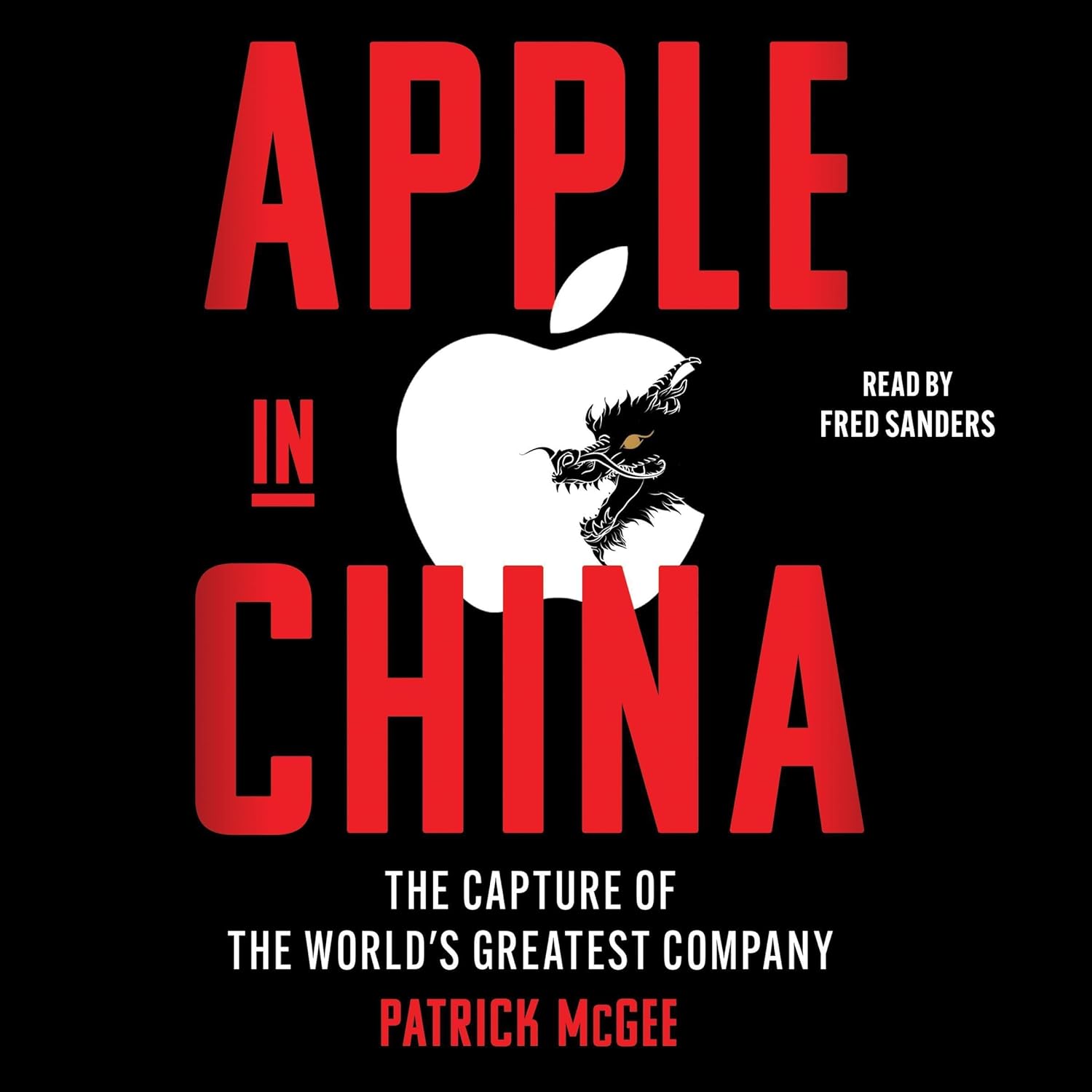
Apple in China
Patrick McGee


 The New York Times Best Sellers


 170 Min Reading Time
 Audio Version Available
About this book
How did Apple, the company that urged us to "Think Different," become entangled with an authoritarian regime? Apple in China unveils the untold story of how Apple fueled China's rise as an electronics superpower, only to find itself caught in a high-stakes game of geopolitical maneuvering.
Drawing on over 200 interviews with Apple insiders, journalist Patrick McGee exposes the hidden deals, technological exchanges, and Faustian bargains that have shaped Apple's dependence on China. From the brink of bankruptcy to the iPhone's global dominance, discover how Apple's quest for cheap labor and manufacturing prowess inadvertently empowered Beijing, creating a complex and precarious relationship that now threatens the company's future.
Apple in China is a riveting cautionary tale for the 21st century, revealing the human cost and strategic implications of outsourcing, and the challenges faced by a company caught between profit and principles in the new Cold War.
Summary of Key Ideas
- •
The Faustian Bargain: Apple's Dependence on China
Apple's dependence on China for manufacturing has created a Faustian bargain. To achieve unprecedented scale and efficiency, Apple outsourced production to China, becoming reliant on its vast labor force and infrastructure. This dependence, however, has come at a cost. It has entangled Apple with the Chinese Communist Party (CCP) and made the company vulnerable to political pressures and supply chain disruptions. The book argues that this reliance threatens Apple's autonomy and potentially its long-term success, as it navigates the complex and often conflicting demands of the Chinese government and its global consumer base.
- •
Apple as a Catalyst for China's Manufacturing Prowess
China's manufacturing prowess was significantly shaped by Apple's presence. The book challenges the narrative that China was always a manufacturing powerhouse. Instead, it posits that Apple played a crucial role in training and developing the Chinese workforce and infrastructure to meet its exacting standards. This transfer of knowledge and technology, while benefiting Apple in the short term, has inadvertently empowered China and enabled it to become a formidable competitor in the global technology market. This also created a complicated situation where Apple helped build the manufacturing capabilities of a nation that now challenges its dominance.
- •
The Price of Admission: Ethical Compromises in China
Apple's compromises on censorship and data privacy to operate in China raise ethical concerns. To maintain access to the Chinese market, Apple has made concessions on issues such as censorship and data privacy, adhering to the CCP's strict regulations. This includes removing apps from the App Store that are deemed politically sensitive and storing Chinese users' data on servers within China, potentially accessible to the government. The book examines the ethical implications of these compromises, questioning whether Apple is prioritizing profits over its values and contributing to the erosion of human rights in China.
- •
Clash of Ideologies: Apple's Values vs. China's Authoritarianism
The book explores the inherent conflict between Apple's global values and the CCP's authoritarian regime. Apple, as a company that often champions privacy and freedom of expression, finds itself in a difficult position operating within China's authoritarian system. The CCP's emphasis on control, censorship, and surveillance clashes directly with Apple's espoused values. McGee argues that this conflict is unsustainable in the long run, forcing Apple to constantly navigate a tightrope between appeasing the Chinese government and upholding its brand image and values in the rest of the world. This delicate balance impacts Apple's strategic decisions and overall corporate identity.
- •
Geopolitical Risks: Vulnerability of Apple's Supply Chain
Apple's supply chain is vulnerable to geopolitical risks and potential disruptions. Concentrating its manufacturing in China exposes Apple to significant geopolitical risks. Rising tensions between the United States and China, trade wars, and potential military conflicts could severely disrupt Apple's supply chain, impacting its ability to produce and deliver products to consumers worldwide. The book emphasizes the need for Apple to diversify its supply chain and reduce its dependence on China to mitigate these risks and ensure business continuity in an increasingly uncertain global environment. The COVID-19 pandemic highlighted these vulnerabilities and the need for greater resilience.
- •
The Long Arm of the CCP: Influence on Apple's Business
The CCP's influence extends beyond censorship, impacting Apple's business decisions and strategic direction. The book illustrates how the CCP exerts influence over Apple's operations in China through various means, including regulations, inspections, and informal pressure. This influence extends beyond censorship and data privacy, affecting Apple's business decisions, investment strategies, and even product development. The CCP's agenda can subtly shape Apple's priorities in China, potentially diverting resources and attention away from other global markets. This creates a complex dynamic where Apple must constantly balance its business objectives with the political realities of operating in China.
Chapter Recap

About The Author
Patrick McGee
Main Quotes
"Quite simply, you don't get to do business in China today without doing exactly what the Chinese government wants you to do. Period. No one is immune."
Who Should Read This Book
Individuals interested in business strategy and the global economy
People curious about the relationship between Western corporations and China's economic rise
Readers interested in the history and operations of Apple Inc.
Those concerned with geopolitical issues and international trade
Individuals working in the technology industry, particularly in supply chain management
Readers interested in investigative journalism and behind-the-scenes accounts of major companies
People who follow Chinese politics and economics
Academics and students studying international business, political science, or Asian studies
Book Summaries Like
Apple in China

FAQ

Free Access to LitNotes