




 DISCORD
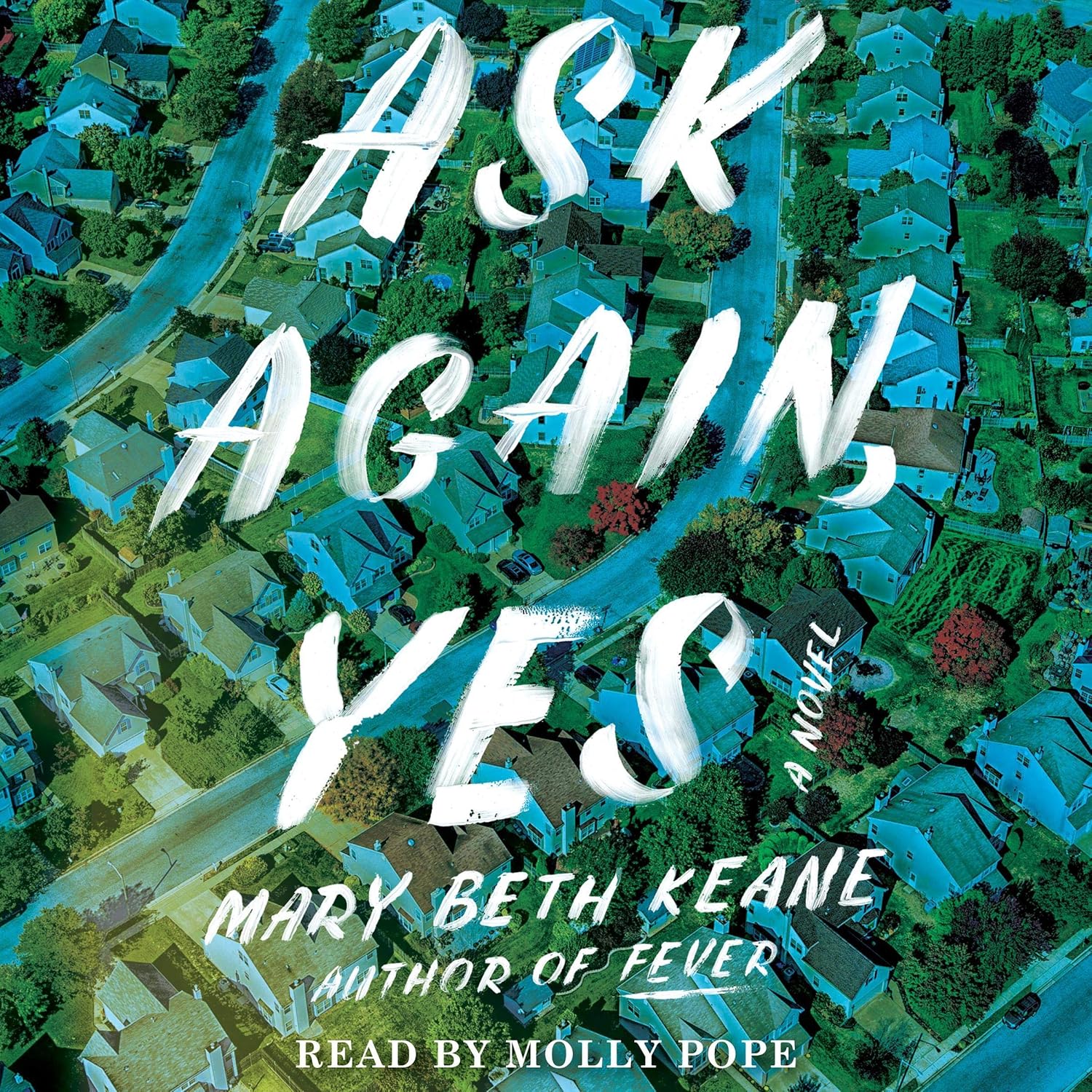
Ask Again, Yes
Mary Beth Keane


 Apple Books


 79 Min Reading Time
 Audio Version Available
About this book
In the suburbs of 1970s New York, rookie NYPD cops Francis Gleeson and Brian Stanhope become neighbors, their lives unknowingly entwined. Behind closed doors, the loneliness of Francis's wife, Lena, and the instability of Brian's wife, Anne, create a volatile atmosphere that threatens to erupt.
Born just months apart, Kate Gleeson and Peter Stanhope forge an unbreakable bond that transcends the simmering tensions of their families. But one fateful night, a shocking act divides their loyalties and sets in motion a series of events that will echo through the next four decades.
Ask Again, Yes is a poignant exploration of forgiveness, the complexities of marriage, and the enduring power of love. As Kate and Peter navigate the haunted landscape of their shared past, they discover that childhood memories can shift and transform with the passage of time, revealing hidden truths and challenging long-held perceptions. Theirs is a story of tenderness and resilience, a testament to the idea that even the deepest wounds can be healed with grace and understanding.
Summary of Key Ideas
- •
The Intricacies of Family Bonds
The novel deeply explores the complexities of family relationships, highlighting the enduring bonds and inherent challenges that come with them. It illustrates how families can be sources of both immense support and profound pain, often simultaneously. Keane delves into the ways that shared history, unspoken secrets, and individual struggles can shape the dynamics between parents and children, siblings, and extended family members. The story emphasizes the importance of understanding, forgiveness, and resilience in navigating these intricate connections, showing how love and loyalty can endure even through the most difficult times. Family, in all its messy glory, is portrayed as a central force in shaping individuals and their destinies.
- •
The Impact of Mental Illness
Mental illness is a significant theme in "Ask Again, Yes," explored through the character of Anne Gleeson and its impact on her family and the community. The novel sensitively portrays the challenges faced by individuals living with mental illness and the ripple effects on their loved ones. It highlights the stigma surrounding mental health issues, the difficulties in seeking and receiving adequate treatment, and the emotional toll on caregivers. Keane presents a nuanced perspective, showing both the destructive potential of untreated mental illness and the possibility of compassion, understanding, and healing. The novel encourages empathy and a more open dialogue about mental health.
- •
The Necessity of Forgiveness
The power of forgiveness is a central theme in the novel, as characters grapple with the consequences of past actions and the possibility of redemption. The story explores the difficult journey of forgiving oneself and others for past mistakes, betrayals, and traumas. Keane suggests that forgiveness is not about condoning harmful behavior but rather about releasing oneself from the grip of anger, resentment, and pain. It emphasizes that forgiveness is a process, not a singular act, and that it requires vulnerability, empathy, and a willingness to let go. Ultimately, the novel suggests that forgiveness is essential for healing and moving forward.
- •
The Enduring Echoes of Childhood
The novel underscores the lasting impact of childhood experiences on adult lives. The early events and traumas experienced by the characters, particularly Kate and Peter, shape their personalities, relationships, and life choices. Keane illustrates how childhood memories, both positive and negative, can linger and influence behavior long into adulthood. The novel suggests that understanding one's childhood is crucial for self-awareness and personal growth. It highlights the importance of addressing past traumas and breaking cycles of dysfunction to create a healthier future.
- •
The Healing Power of Friendship
Friendship serves as a source of solace and support for the characters, particularly in the face of adversity. The novel showcases the enduring bonds of friendship and how they can provide comfort, strength, and a sense of belonging. Kate and Peter's friendship, in particular, offers a refuge from the turmoil in their families. Keane emphasizes the importance of having trusted confidantes who can offer empathy, guidance, and unconditional support. The novel highlights how friendships can help individuals navigate life's challenges and emerge stronger.
- •
Navigating Social Class Divides
The novel examines the theme of social class and its influence on the characters' lives. Set in a suburban community, the story explores the dynamics between families from different socioeconomic backgrounds and the ways that class distinctions can shape opportunities, expectations, and relationships. Keane portrays the challenges faced by working-class families and the aspirations they hold for their children. The novel also touches on issues of social mobility and the barriers that can prevent individuals from achieving their full potential. Ultimately, the novel offers a nuanced perspective on the complexities of social class in American society.
Chapter Recap

About The Author
Mary Beth Keane
Main Quotes
"We don't become who we are because we have no choice. We become who we are because we have no choice but to become that person."
"Because life changes and people change. As long as we change together, we're okay."
"Maybe this was love. Maybe it was okay to let yourself love someone else."
"There was no predicting where life would go. There was no real way for a person to try something out, see if he liked it […] because you try it and try it ..."
"And then he saw what he'd never seen before, which was that Peter was fine. And Kate was fine. Lena was fine. And he, Francis Gleeson, was fine."
"Speaking was a habit she'd gotten into years ago, in the distant past, and that she'd stopped she felt no desire to start again."
"We repeat what we don't repair."
"That was the thing about having children: You saw the world through different eyes afterward."
"He knew what it was like to love someone, how quickly a person could become your everything."
"It was as good as a family could get, which wasn't saying much."
Who Should Read This Book
Readers of contemporary literary fiction
Those interested in family dramas and relationship-focused novels
Readers who enjoy stories set in suburban New York
Individuals who appreciate character-driven narratives exploring themes of mental illness, trauma, and forgiveness
Book club participants looking for thought-provoking discussion material
Readers of authors like Ann Patchett, Celeste Ng, and Elizabeth Strout
Those who enjoy stories spanning multiple decades
Readers interested in Irish-American family sagas
Book Summaries Like
Ask Again, Yes


FAQ

Free Access to LitNotes