




 DISCORD
Atomic Habits
James Clear


 Amazon Best Sellers
 The New York Times Best Sellers


 66 Min Reading Time
 Audio Version Available
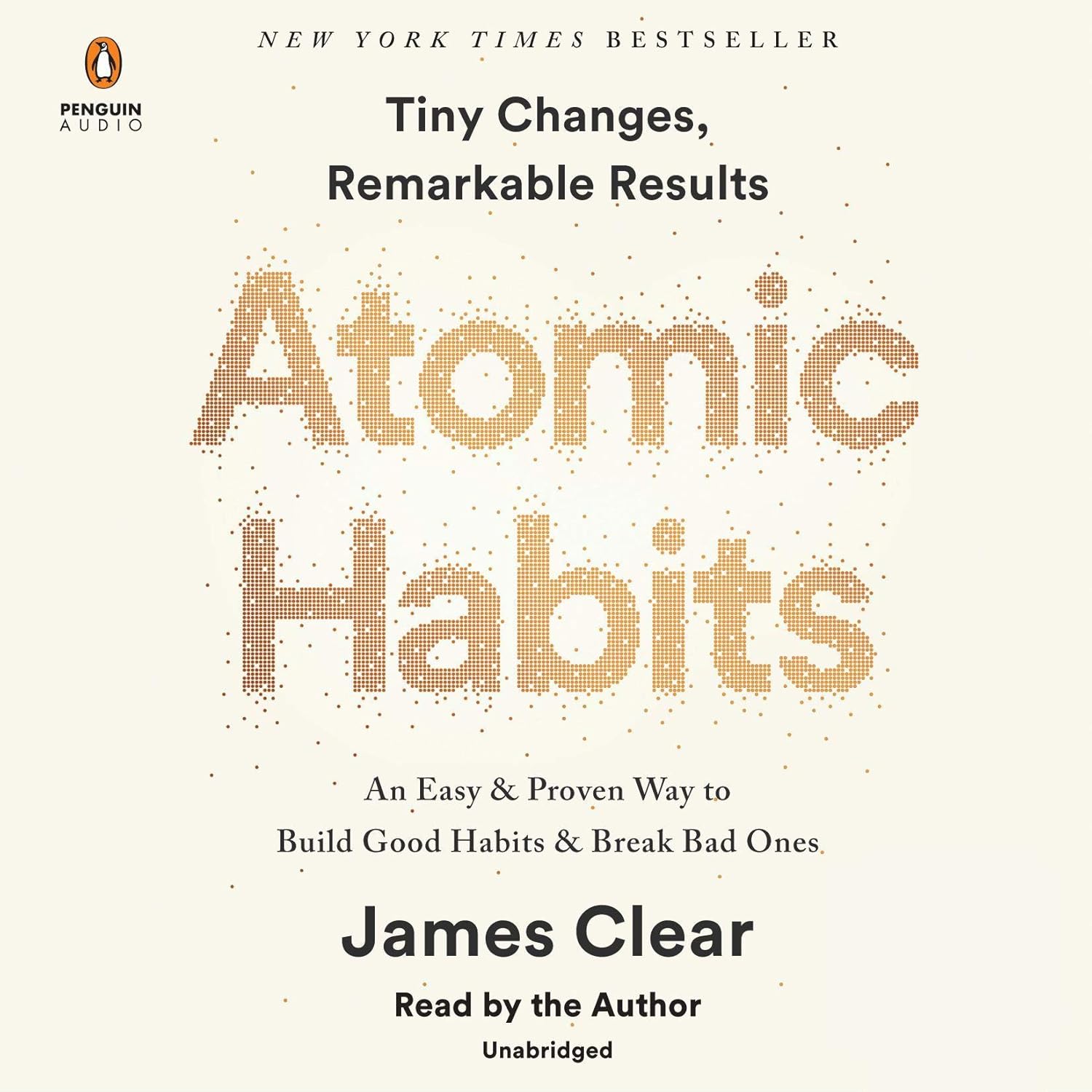
About this book
Unlock the extraordinary power of tiny changes with Atomic Habits, a groundbreaking book by James Clear. Forget about sweeping transformations; real change comes from the compound effect of hundreds of small improvements—atomic habits. This book offers a practical and proven framework for building good habits and breaking bad ones, one tiny step at a time.
Drawing on proven research and real-world examples, Clear reveals a simple yet comprehensive system for mastering the art of habit formation. He distills complex topics into easy-to-understand concepts and actionable strategies. Learn how to make time for new habits, overcome a lack of motivation, design your environment for success, and get back on track when you fall off course.
Atomic Habits will reshape the way you think about progress and give you the tools you need to transform your life. Whether you’re a team looking to win a championship, an organization hoping to redefine an industry, or simply an individual who wishes to quit smoking, lose weight, reduce stress, or achieve any other goal, this book will empower you to achieve remarkable results by making small changes, consistently.
Summary of Key Ideas
- •
The Power of Tiny Gains: 1% Better Every Day
The core concept of 'Atomic Habits' revolves around the idea that significant changes are achieved through small, incremental improvements. Clear emphasizes that habits are the compound interest of self-improvement, where tiny gains accumulate over time to produce remarkable results. He argues that focusing on improving by just 1% each day leads to exponential growth in the long run. This key idea encourages readers to shift their focus from setting ambitious goals to mastering the art of continuous, small-scale progress. It's about recognizing the power of consistency and the compounding effect of seemingly insignificant actions, transforming the way we approach self-improvement and habit formation.
- •
The Four Laws of Behavior Change
Clear introduces a straightforward yet profound framework for understanding and building habits, known as the Four Laws of Behavior Change. These laws provide a practical guide for designing good habits and breaking bad ones. The first law, 'Cue,' involves making the desired habit obvious and visible. The second law, 'Craving,' focuses on making the habit attractive and appealing. The third law, 'Response,' emphasizes making the habit easy and convenient to perform. Finally, the fourth law, 'Reward,' highlights the importance of making the habit satisfying and rewarding. By applying these four laws, individuals can systematically engineer their environment and behavior to foster positive habits and eliminate negative ones.
- •
Identity-Based Habits: Becoming Who You Wish to Be
Identity-based habits emphasize the critical role of beliefs and self-image in shaping our habits. Clear argues that true behavior change is about becoming the type of person who embodies the desired habit. Instead of focusing solely on what you want to achieve, you should focus on who you wish to become. For example, instead of aiming to run a marathon, focus on becoming a runner. This shift in perspective transforms habit formation from a goal-oriented process to an identity-driven one, making it more sustainable and meaningful. Aligning your habits with your desired identity reinforces your self-image and increases the likelihood of long-term success.
- •
The Power of Habit Tracking
Habit tracking is presented as a powerful tool for monitoring and reinforcing desired behaviors. By visually tracking habits, individuals gain awareness of their progress and are more likely to stay consistent. Habit tracking provides a tangible measure of success, making the habit more rewarding and motivating. Clear suggests using simple methods like marking a calendar or using a habit tracking app to monitor progress. The act of tracking itself serves as a cue to perform the habit, while the visual record provides evidence of achievement, reinforcing the behavior and fostering a sense of accomplishment.
- •
Environment Design: Shaping Your Surroundings for Success
Clear underscores the importance of designing an environment that supports the desired habits. By strategically modifying the physical and social surroundings, individuals can make it easier to adopt good habits and avoid bad ones. This involves minimizing exposure to triggers that lead to unwanted behaviors and maximizing exposure to cues that promote positive habits. For example, if you want to read more, place books in visible locations; if you want to eat healthier, remove unhealthy snacks from your kitchen. By carefully curating the environment, individuals can shape their behavior and increase the likelihood of success.
- •
The Two-Minute Rule: Mastering the Art of Getting Started
The Two-Minute Rule is a technique designed to simplify the initiation of new habits by breaking them down into smaller, more manageable steps. Clear suggests that any new habit should be started by doing it for only two minutes. This approach reduces the initial friction and makes it easier to overcome procrastination. The idea is that once you start the habit, it becomes easier to continue and gradually increase the duration or intensity. The Two-Minute Rule is particularly effective for overcoming inertia and building momentum, making it a valuable strategy for habit formation.
Chapter Recap

About The Author
James Clear
Main Quotes
"Habits are the compound interest of self-improvement."
"You do not rise to the level of your goals. You fall to the level of your systems."
"An atomic habit is a little habit that is part of a larger system."
"It is so easy to overestimate the importance of one defining moment and underestimate the value of making small improvements on a daily basis."
"Your outcomes are a lagging measure of your habits."
"Every action you take is a vote for the type of person you wish to become."
"The most effective way to change your habits is to focus not on what you want to achieve, but on who you wish to become."
"Environment is the invisible hand that shapes human behavior."
"The people with the best self-control are typically the ones who need to use it the least."
"You don't have to be the victim of your environment. You can also be the architect of it."
Who Should Read This Book
- Individuals seeking self-improvement
- People struggling with forming new habits or breaking bad ones
- Readers interested in psychology and behavioral science
- Professionals looking to improve productivity and efficiency
- Students aiming to enhance their study habits
- Athletes seeking to optimize performance
- Entrepreneurs and business leaders wanting to build effective teams and organizations
- Anyone interested in personal development and achieving their goals
Book Summaries Like
Atomic Habits
FAQ

Free Access to LitNotes