




 DISCORD
Being Mortal
Atul Gawande


 Amazon Best Sellers
 Apple Books


 54 Min Reading Time
 Audio Version Available
About this book
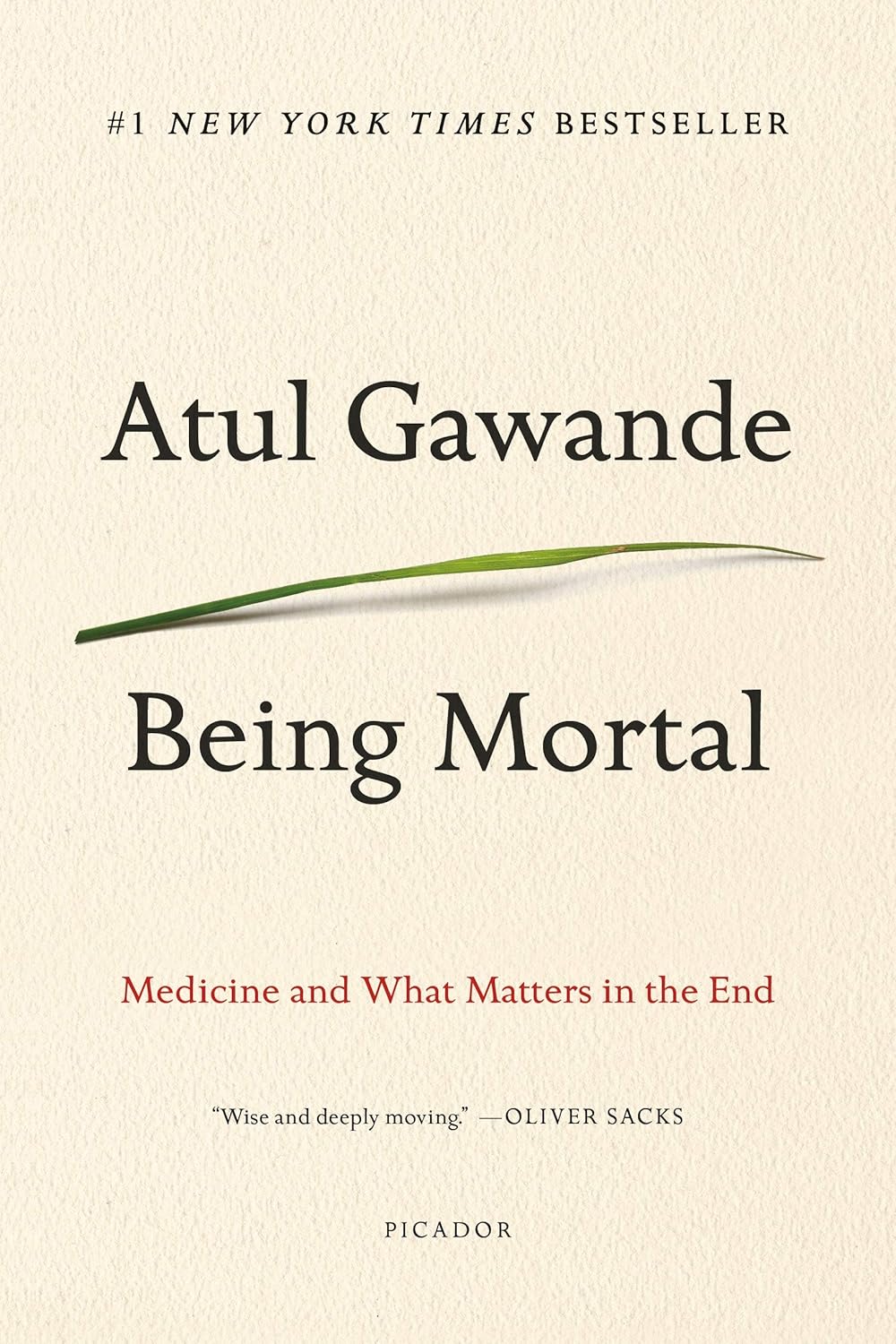
In Being Mortal, #1 New York Times bestselling author and practicing surgeon Atul Gawande confronts the modern challenge of aging and mortality in a world where medical advancements often overshadow the human spirit. Gawande explores how medicine, while conquering diseases and extending lives, sometimes fails to address what matters most to the aging and the dying: quality of life.
Through eye-opening research and poignant stories of patients and his own family, he reveals the limitations and failures within his profession as he seeks a better path forward. Gawande questions the systems in place—nursing homes focused on safety over autonomy, hospitals isolating the dying, and doctors prolonging suffering with aggressive treatments.
Being Mortal is a compassionate exploration of what it means to grow old and face our finite existence. Gawande argues that by shifting the focus from mere survival to well-being, medicine can offer comfort and dignity, allowing individuals to live richly and fully until the very end. It is a call to rethink our approach to end-of-life care, urging us to prioritize a good life over simply avoiding death.
Summary of Key Ideas
- •
Redefining Success: Quality of Life Over Quantity
The central argument of 'Being Mortal' revolves around the medical community's overemphasis on extending life at all costs, often neglecting the quality of life for the aging and terminally ill. Gawande critiques the modern healthcare system for prioritizing aggressive medical interventions over comfort, dignity, and patient autonomy. He argues that the medical profession often fails to adequately address the needs and desires of individuals as they approach the end of their lives, leading to unnecessary suffering and a diminished sense of well-being. This perspective challenges healthcare providers to reconsider their approach and prioritize patient-centered care that values quality of life over mere survival.
- •
The Primacy of Autonomy: Maintaining Control and Dignity
Gawande emphasizes the importance of autonomy for elderly and terminally ill individuals. He argues that maintaining a sense of control over one's life, even in the face of declining health, is crucial for overall well-being. The book explores how institutional settings like nursing homes can strip individuals of their independence and dignity by imposing rigid routines and limiting choices. Gawande advocates for alternative models of care that prioritize patient autonomy, allowing individuals to make decisions about their daily lives and medical treatment, thereby preserving their sense of self and control.
- •
The Power of Conversation: Talking About End-of-Life Wishes
A key theme in 'Being Mortal' is the necessity of having open and honest conversations about end-of-life care. Gawande points out that both doctors and families often avoid discussing death and dying, leading to unrealistic expectations and poor decision-making. He stresses the importance of addressing difficult questions about treatment preferences, palliative care options, and personal values. By engaging in these conversations, individuals can make informed choices that align with their wishes, ensuring a more peaceful and meaningful end-of-life experience. These discussions also help families to understand and respect the patient's choices, reducing potential conflict and regret.
- •
Reimagining Elder Care: Lessons from the Past
Gawande contrasts the modern approach to aging and death with historical perspectives, highlighting how societies once valued the wisdom and experience of elders. He explores how traditional communities often integrated the elderly into daily life, providing them with meaningful roles and social connections. In contrast, modern society often marginalizes and isolates the elderly, leading to feelings of loneliness and worthlessness. Gawande suggests that by reintegrating the elderly into our communities and valuing their contributions, we can improve their quality of life and create a more supportive and compassionate society.
- •
Medicine's Limits: Prioritizing Comfort and Care
The book explores the limitations of modern medicine in addressing the challenges of aging and mortality. Gawande acknowledges the remarkable advances in medical technology but cautions against relying solely on medical interventions to solve problems that are fundamentally human and existential. He argues that medicine should focus on alleviating suffering and improving quality of life rather than simply prolonging life at all costs. This involves embracing palliative care, hospice services, and other approaches that prioritize comfort, dignity, and emotional well-being.
- •
Embracing Palliative Care and Hospice
Gawande champions the adoption of palliative care and hospice services as integral components of end-of-life care. He explains how these approaches focus on relieving pain and other symptoms, providing emotional support, and enhancing overall quality of life for individuals facing serious illness. Palliative care can be integrated alongside curative treatments, while hospice provides comprehensive care for those nearing the end of life. By embracing these services, healthcare providers can offer a more compassionate and holistic approach to end-of-life care, ensuring that individuals can live as comfortably and meaningfully as possible.
- •
Honoring Individual Values: Patient-Centered Care
Throughout 'Being Mortal,' Gawande emphasizes the importance of understanding and respecting individual values and priorities when making decisions about end-of-life care. He argues that healthcare providers should actively listen to patients and their families to understand their goals, preferences, and cultural beliefs. This information should then be used to guide treatment decisions and create a care plan that aligns with the individual's wishes. By prioritizing patient values, healthcare providers can ensure that individuals receive care that is truly patient-centered and respectful of their autonomy.
- •
Reimagining Assisted Living: Creating Supportive Environments
Gawande examines the evolution of assisted living facilities and nursing homes, highlighting both their benefits and drawbacks. He acknowledges that these facilities can provide necessary care and support for individuals who are no longer able to live independently. However, he also critiques the institutional nature of many facilities, which can lead to a loss of autonomy, privacy, and social connection. Gawande advocates for innovative models of care that prioritize resident well-being, such as the Green House Project, which aims to create smaller, more homelike environments that foster independence and community.
- •
Accepting Mortality: Finding Meaning in Life's Final Chapter
One of the book's underlying messages is the importance of accepting mortality as a natural part of life. Gawande encourages readers to confront their fears and anxieties about death, and to recognize that it is an inevitable part of the human experience. By accepting mortality, individuals can focus on living more fully in the present and making meaningful choices about how they want to spend their remaining time. This acceptance can also lead to a greater appreciation for life and a deeper sense of purpose.
Chapter Recap

About The Author
Atul Gawande
Main Quotes
"Being mortal is about the struggle to cope with the constraints of our biology, with the limits set by genes and cells and flesh and bone."
"Our ultimate goal, after all, is not a good death but a good life to the very end."
"We want autonomy. We want to be in charge of our own lives. For most of us, this is non-negotiable."
"The battle of being mortal is the battle to maintain the integrity of one's life—to avoid becoming so diminished or enfeebled or incapacitated that it is, in fact, no longer worth living."
"You may not control life's circumstances, but getting to be the author of your life means getting to control what you do with them."
"What people want, more than anything, is to be active participants in their lives."
"The waning days of our lives are given over to treatment that adds no days to our lives and steals from them the days that remain."
"We've been wrong about what our job is in medicine. We think our job is to ensure health and survival. But really it is larger than that. It is to enable well-being."
"Medicine has triumphed in modern times, transforming birth, pain, injury, and infectious disease. But in the process, it has left us unprepared for the ultimate challenge—managing mortality."
"Mortality is the problem, not the cure."
Who Should Read This Book
Individuals interested in healthcare, aging, and end-of-life care
Healthcare professionals (doctors, nurses, social workers, therapists)
Family members and caregivers of elderly or terminally ill individuals
Individuals interested in medical ethics and the role of medicine in society
Readers of non-fiction books on medicine, science, and social issues
Individuals contemplating their own mortality or the mortality of loved ones
People interested in Atul Gawande's other works and his perspective on medicine
Those involved in healthcare policy and administration
Individuals seeking guidance on how to have conversations about end-of-life wishes
Book clubs and discussion groups focused on relevant social and ethical issues
Book Summaries Like
Being Mortal

FAQ

Free Access to LitNotes