




 DISCORD
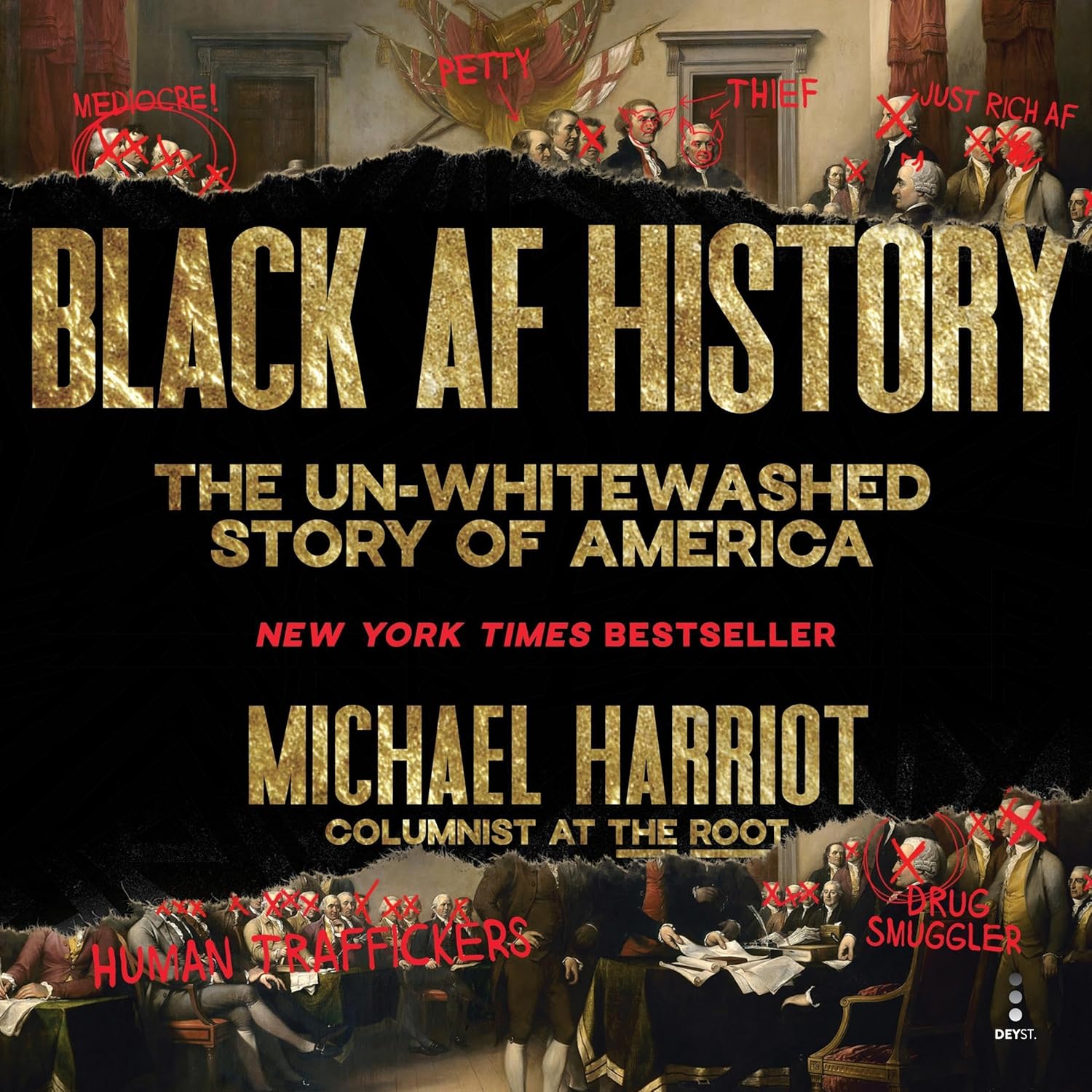
Black AF History
Michael Harriot


 Goodreads Choice Awards
 The New York Times Best Sellers


 61 Min Reading Time
 Audio Version Available
About this book
America's history: a sugarcoated legend written by white men. Now, acclaimed columnist Michael Harriot delivers a searingly smart and hilariously Black AF corrective. Unapologetically provocative and meticulously researched, Black AF History reclaims the narrative, placing Black voices squarely at the center. From pre-1619 arrivals to the bandit who inspired America's first police force, Harriot dismantles whitewashed mythology with incisive wit, revealing the uncomfortable, essential truths of our past. Prepare to have your understanding of American history irrevocably transformed.
Summary of Key Ideas
- •
Re-Centering Blackness in American History
“Black AF History” aims to center Black people within the narrative of American history, challenging the traditional whitewashed version. It seeks to provide a more accurate and complete understanding of America's past by highlighting the experiences, contributions, and struggles of Black individuals and communities, which have often been marginalized or omitted from mainstream historical accounts. The book challenges readers to reconsider their understanding of American history by presenting it through a Black-centric lens, thus offering a fresh and compelling perspective.
- •
Exposing the Brutality and Legacy of Slavery
The book meticulously exposes the brutal realities of slavery and its enduring legacy, presenting it not merely as a labor system but as a form of human trafficking and exploitation. Harriot elucidates how slavery's profound impact continues to shape contemporary issues such as racial inequality, economic disparities, and social injustices. This unflinching examination serves as a crucial reminder of the horrors endured by enslaved Africans and their descendants, urging readers to confront the uncomfortable truths of America's past and present.
- •
Unmasking Systemic Racism
Harriot addresses the systemic racism embedded within American institutions and policies, from the Jim Crow era to contemporary discriminatory practices. He connects historical injustices to present-day inequalities, demonstrating how these systems perpetuate racial disparities in areas such as education, housing, criminal justice, and healthcare. By unveiling these patterns of discrimination, the book calls for a critical examination of the structures that uphold racial inequality and advocates for systemic change to dismantle them.
- •
Celebrating Black Resilience and Cultural Contributions
The book emphasizes the resilience, creativity, and cultural contributions of Black people throughout American history. It highlights how Black communities have not only survived but thrived in the face of adversity, enriching American society with their music, art, literature, and innovations. By showcasing these achievements, the book celebrates Black excellence and challenges stereotypes, portraying Black individuals as active agents of change and creators of culture.
- •
Centering Black Women's Experiences
“Black AF History” recognizes and amplifies the often-overlooked roles of Black women in shaping American history and freedom struggles. It acknowledges the unique challenges and contributions of figures like Ida B. Wells, highlighting their activism, leadership, and intellectual contributions. By centering Black women's experiences, the book challenges patriarchal narratives and provides a more inclusive understanding of the fight for racial and social justice.
- •
Using Humor as a Tool for Education and Engagement
Employing humor and wit, Harriot makes the exploration of difficult historical topics more accessible and engaging. This approach allows him to connect with a wider audience while maintaining the seriousness and gravity of the subject matter. The use of humor serves as a tool to disarm readers, challenge preconceived notions, and encourage critical reflection on American history and race relations. It makes the book both informative and entertaining, fostering a deeper understanding of complex issues.
- •
Confronting the Whitewashing of History
The book directly confronts the whitewashing of American history, which has historically minimized or ignored the contributions and experiences of Black people. By presenting an unvarnished account of the past, Harriot challenges conventional historical narratives and aims to correct the record. This involves re-examining key events, figures, and movements from a Black perspective, thus providing a more accurate and nuanced understanding of American history.
- •
Inspiring Action Towards a More Equitable Future
“Black AF History” ultimately serves as a call to action, urging readers to become more informed and engaged citizens. It encourages them to challenge injustice, advocate for equality, and work towards a more inclusive and equitable society. By fostering a deeper understanding of the past, the book inspires readers to take responsibility for shaping a better future and to actively participate in the ongoing struggle for racial justice and social change.
Chapter Recap

About The Author
Michael Harriot
Main Quotes
"In this book, there is no America."
"The world that Black Americans inhabit is not a reflection of the world others see; it is a place where history twists and turns to create unseen landscapes and unheard echoes."
"White people always say they want to move on, but moving on requires that you acknowledge what you’re moving on from."
"The story of America is not a story of good versus evil. It is the story of evil versus good, which is why whiteness always tries to hide its villainy."
"As long as the white men kept their distance, the chief of chiefs believed the two groups could coexist peacefully."
"If white people had been as ingenious at freedom as they were at enslavement, America would be a different place."
"Perhaps that’s why white people are so obsessed with patriotism. They need the world to believe in something that never existed."
"You can’t just stick the word diversity on a document and declare racism over."
"But Black people don’t want revenge. We want what we built."
"To be Black in America is to be born into a fight you did not start, against an enemy that never sleeps."
Who Should Read This Book
Readers interested in African American history and culture
Individuals seeking a non-traditional, un-whitewashed perspective on American history
Readers who appreciate provocative and unapologetic storytelling
Those interested in social justice and racial issues
Readers of Black literature and non-fiction
People looking for books that challenge conventional narratives
Readers familiar with Michael Harriot's work and voice
Book clubs and discussion groups focused on history and social issues
Educators and students interested in supplementary historical material
Book Summaries Like
Black AF History


FAQ

Free Access to LitNotes