




 DISCORD
Blueberries for Sal
Robert McCloskey

 Indie Bestsellers


 5 Min Reading Time
 Audio Version Available
About this book
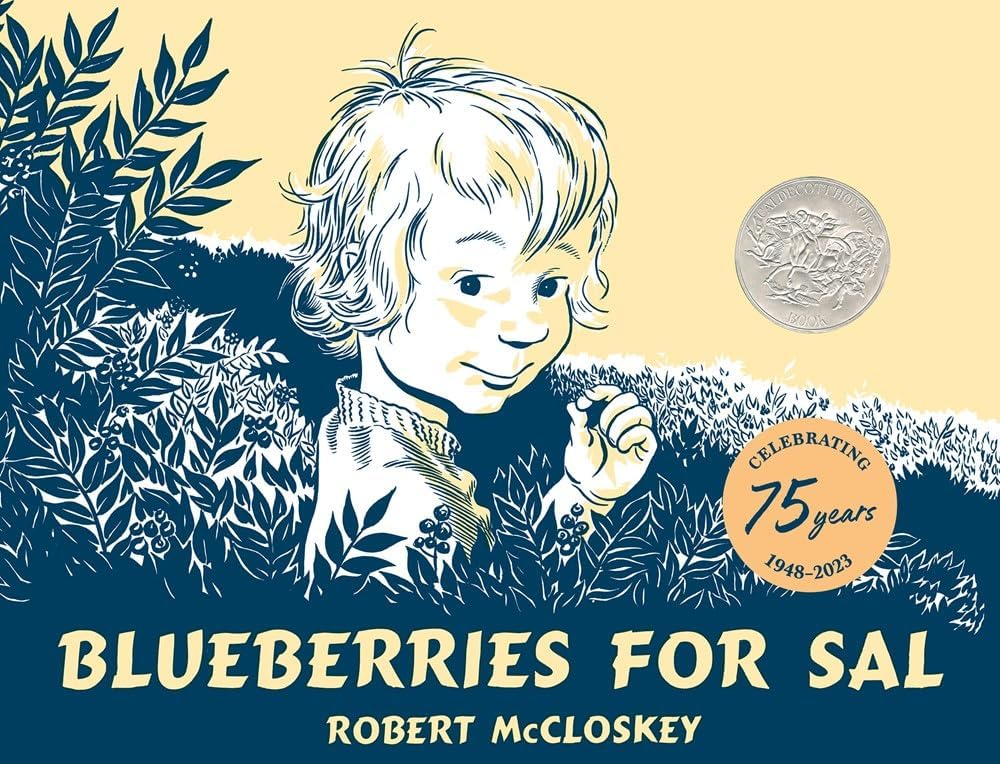
Join Little Sal and her mother on Blueberry Hill as they set out to gather plump, juicy blueberries for the winter. Across the hill, a curious little bear and his mother have the same idea! In a whimsical mix-up, the two little ones wander off, each following the sound of a familiar "Ker-plunk, ker-plunk, ker-plunk." What happens when Sal finds herself face-to-face with a big, furry bear, and Little Bear stumbles upon a human mother?
Robert McCloskey's timeless classic, with its charming illustrations and gentle humor, celebrates the simple joys of nature, family, and the surprising connections that can be found in the most unexpected places. "Blueberries for Sal" is a heartwarming tale that will enchant readers of all ages, reminding us of the wonder and excitement of childhood adventures.
Summary of Key Ideas
- •
Finding Joy in Nature's Simplicity
The story celebrates the simple joys of spending time in nature. Sal and her mother venture to Blueberry Hill, a place abundant with natural resources, to gather blueberries. This setting emphasizes the beauty and tranquility of the natural world, highlighting the importance of experiencing and appreciating the environment. The act of picking blueberries becomes a shared activity that strengthens their bond and creates lasting memories in a serene, natural backdrop. This theme encourages readers to connect with nature and find joy in its simplicity.
- •
The Enduring Bond of Mother and Child
A central theme of "Blueberries for Sal" is the bond between mother and child. The story depicts the close relationship between Sal and her mother as they embark on a blueberry-picking adventure together. Similarly, the relationship between the mother bear and her cub, Little Bear, emphasizes maternal care and protection. Despite a brief mix-up, the mothers' instincts to nurture and protect their young remain unwavering. This theme reinforces the importance of familial bonds and the unconditional love that exists between a parent and child, whether human or animal.
- •
The Call of Independence and Exploration
The narrative subtly explores the theme of independence and exploration. Sal, driven by curiosity, wanders away from her mother while picking blueberries. Likewise, Little Bear also ventures off on his own. This exploration allows them to discover new things and test their boundaries. While their independence leads to a temporary mix-up, it also highlights their growing self-reliance and courage. The story suggests that exploring one's surroundings is a natural part of growing up, even with the potential for minor mishaps.
- •
Shared Instincts: Humans and Animals Alike
The story highlights the inherent similarities between humans and animals, particularly in their maternal instincts and nurturing behaviors. Both Sal's mother and the mother bear are engaged in the same activity – gathering food for the winter and teaching their young essential skills. The mix-up between Sal and Little Bear underscores the shared experiences and instincts that connect all living beings. This theme promotes empathy and understanding towards animals, suggesting that despite our differences, we share fundamental needs and emotions.
- •
The Value of Preparedness and Resourcefulness
The book emphasizes the importance of preparedness and resourcefulness. Sal and her mother are picking blueberries to can them for the winter, ensuring they have a food supply when resources are scarce. Similarly, the mother bear is teaching Little Bear how to forage for food in preparation for hibernation. This theme highlights the value of planning ahead and utilizing available resources to secure one's well-being. It subtly introduces young readers to the concept of sustainability and the importance of preparing for the future.
- •
A Gentle Narrative: Finding Peace in Simplicity
"Blueberries for Sal" is characterized by its gentle, calming tone, creating a sense of peace and tranquility throughout the story. The simple, rhythmic text and McCloskey's detailed illustrations contribute to this soothing atmosphere. The absence of conflict or danger further enhances the story's calming effect, making it a comforting and enjoyable read for young children. The book's gentle nature reinforces the idea that simple, everyday experiences can be filled with joy and contentment.
Chapter Recap

About The Author
Robert McCloskey
Main Quotes
"One day Little Sal went with her mother to Blueberry Hill to pick blueberries."
"Little Sal brought along her small tin pail and her mother brought her large pail to put berries in."
""Ku-plink, ku-plank, ku-plunk," went the blueberries into Sal's little pail."
"She picked three berries and dropped them in her pail... ku-plink, ku-plank, ku-plunk."
"Then she picked three more berries and ate them all."
""Ku-plink, ku-plank, ku-plunk." Little Sal watched them fall into her mother's pail."
""Munch, munch, munch," said Little Bear with his mouth full."
"Little Bear's mother was eating berries right off the bushes, because she hadn't brought any lunch."
"But when Little Sal wandered around to the other side of the mother bear, she saw something else."
"She patted her mother on the nose to make her move faster."
Who Should Read This Book
Preschool children (ages 3-5)
Kindergarten to 3rd grade students
Parents reading aloud to their children
Early childhood educators
Readers interested in classic children's literature
People who appreciate stories about nature, family, and simple adventures
Fans of Robert McCloskey's work
Those seeking nostalgic picture books from their own childhoods
Gift-givers looking for a sweet and gentle story for young children
Readers interested in stories set in Maine or with a focus on blueberry picking
Book Summaries Like
Blueberries for Sal

FAQ

Free Access to LitNotes