




 DISCORD
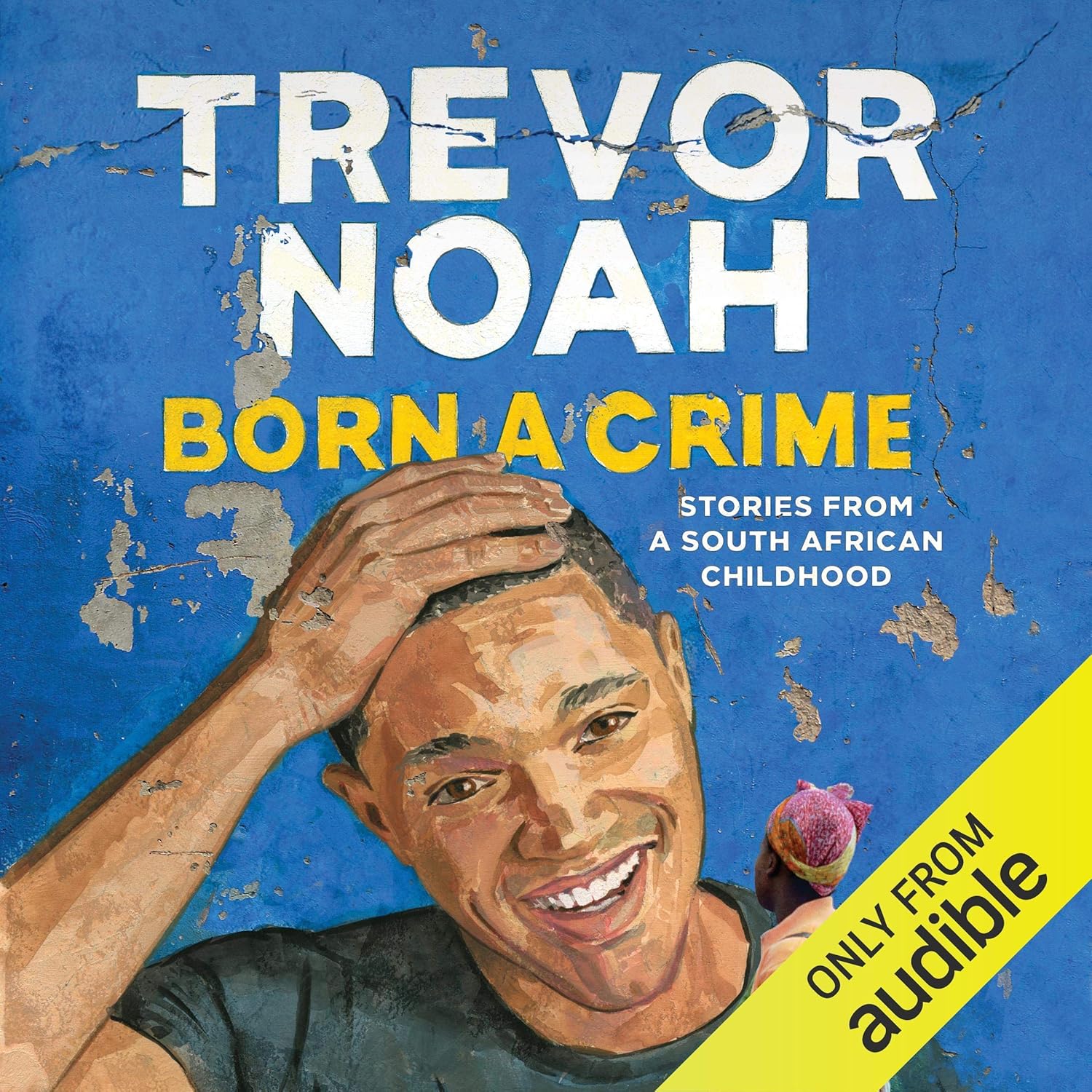
Born a Crime
Trevor Noah


 The New York Times Best Sellers


 57 Min Reading Time
 Audio Version Available
About this book
Trevor Noah's journey from the fringes of apartheid South Africa to the host's chair of The Daily Show began with an act deemed criminal: his very existence. Born to a white Swiss father and a black Xhosa mother, a union then punishable by imprisonment, Trevor's early years were shrouded in secrecy and circumscribed by his mother's ingenious efforts to conceal him from a merciless government.
Born a Crime is a collection of unflinchingly honest and hilariously poignant essays. Noah recounts his mischievous childhood and his transition into a young man navigating a world where he was never meant to be. More than a coming-of-age story, this is a deeply moving tribute to his fearless, rebellious, and devoutly religious mother—his constant ally. She was a woman determined to shield her son from the cycles of poverty, violence, and abuse that ultimately threatened her own life.
From dining on caterpillars during times of hardship to surviving a kidnapping attempt, and facing the gauntlet of teenage romance, Noah illuminates his experiences with sharp wit and unflinching candor. These stories form a tapestry of a boy's journey through a fractured world in a perilous era, armed with an irrepressible sense of humor and the extraordinary love of his mother.
Summary of Key Ideas
- •
Deconstructing Apartheid Through Personal Narrative
Apartheid's Absurdity and Inhumanity: The book vividly portrays the bizarre and cruel realities of apartheid in South Africa. Noah uses anecdotes from his childhood to illustrate how race determined every aspect of life, from where people could live and who they could marry to what opportunities were available. This exploration of apartheid highlights the system's inherent injustice and its lasting impact on individuals and society.
- •
Navigating the Labyrinth of Racial Identity
The Complexities of Racial Identity: As a mixed-race child (a 'coloured' person born to a Black Xhosa mother and a white Swiss father) under apartheid, Noah's very existence was illegal. He explores the challenges of navigating a society rigidly divided by race, never quite fitting in and constantly having to adapt his identity to different situations. This theme underscores the artificiality of racial categories and the personal cost of enforced segregation.
- •
Language as a Bridge Across Cultures
The Power of Language: Noah's multilingual ability (he speaks English, Xhosa, Zulu, Tswana, Sotho, Afrikaans, and German) proved to be a powerful tool for navigating South Africa's diverse social landscape. He demonstrates how language facilitated connection, allowed him to cross racial and cultural boundaries, and provided a means of understanding and empathizing with others. His fluency enabled him to move between different worlds and gain unique perspectives.
- •
Finding Strength in the Struggle
Resilience in the Face of Adversity: "Born a Crime" is a testament to the human spirit's capacity to overcome hardship. Noah recounts numerous challenges, including poverty, violence, and social exclusion, but his story is ultimately one of resilience and determination. He emphasizes the importance of finding humor in difficult situations and maintaining a positive outlook despite the odds.
- •
A Mother's Unwavering Love and Guidance
The Unconditional Love of a Mother: Noah's mother, Patricia Nombuyiselo Noah, is a central figure in the book, and her unwavering love and support are instrumental in shaping his life. She is portrayed as a strong, independent woman who instilled in him a sense of self-worth and a thirst for knowledge. Her unconventional parenting style, which often involved tough love and a willingness to challenge societal norms, helped him develop the skills and resilience he needed to succeed.
- •
The Transformative Power of Education
Education as a Pathway to Freedom: Patricia prioritizes education, viewing it as the key to unlocking opportunities and escaping the limitations imposed by apartheid and poverty. She enrolled Trevor in private schools and instilled a love of learning in him. This emphasis on education demonstrates its transformative power and its ability to empower individuals to create a better future for themselves.
- •
Finding Levity Through Laughter
Humor as a Coping Mechanism: Noah uses humor throughout the book to make difficult topics more accessible and to provide moments of levity amidst the harsh realities of his childhood. His comedic perspective allows him to reflect on his experiences with honesty and insight, while also engaging readers and making them laugh. Humor becomes a tool for processing trauma and finding joy in unexpected places.
- •
Embracing Rebellion and Individuality
Questioning Authority and Breaking Boundaries: From a young age, Noah demonstrated a rebellious streak and a willingness to challenge authority. He questioned societal norms, pushed boundaries, and refused to conform to expectations. This spirit of independence and critical thinking ultimately served him well, enabling him to navigate complex situations and forge his own path in life.
Chapter Recap

About The Author
Trevor Noah
Main Quotes
"Language brings with it an identity and a culture, or at least the perception of it."
"The genius of apartheid was convincing people who were the overwhelming majority to turn on each other."
"We tell people to follow their dreams, but you can only dream of what you can imagine."
"You separate people into groups. You give them names. That is how you control them."
"I became a chameleon. My color didn't change, but I could change who I was."
"The world doesn’t love you like your own mother."
"Crime succeeds because crime does the one thing the government doesn’t do: crime cares."
"Love is a creative act. When you love someone you create a new world for them."
"Being chosen is the greatest gift you can give to another human being."
"Learn from your past and be better because of your mistakes."
Who Should Read This Book
Readers interested in memoirs and autobiographies
Individuals interested in South African history and Apartheid
Fans of Trevor Noah and his comedy
Readers interested in stories about race, identity, and belonging
Young adults and high school students
Adults interested in a humorous and engaging non-fiction read
Readers who enjoy stories about overcoming adversity
Individuals interested in social justice issues
People looking for a book that offers both personal narrative and historical context
Readers interested in family relationships, especially mother-son dynamics
Book Summaries Like
Born a Crime


FAQ

Free Access to LitNotes