




 DISCORD
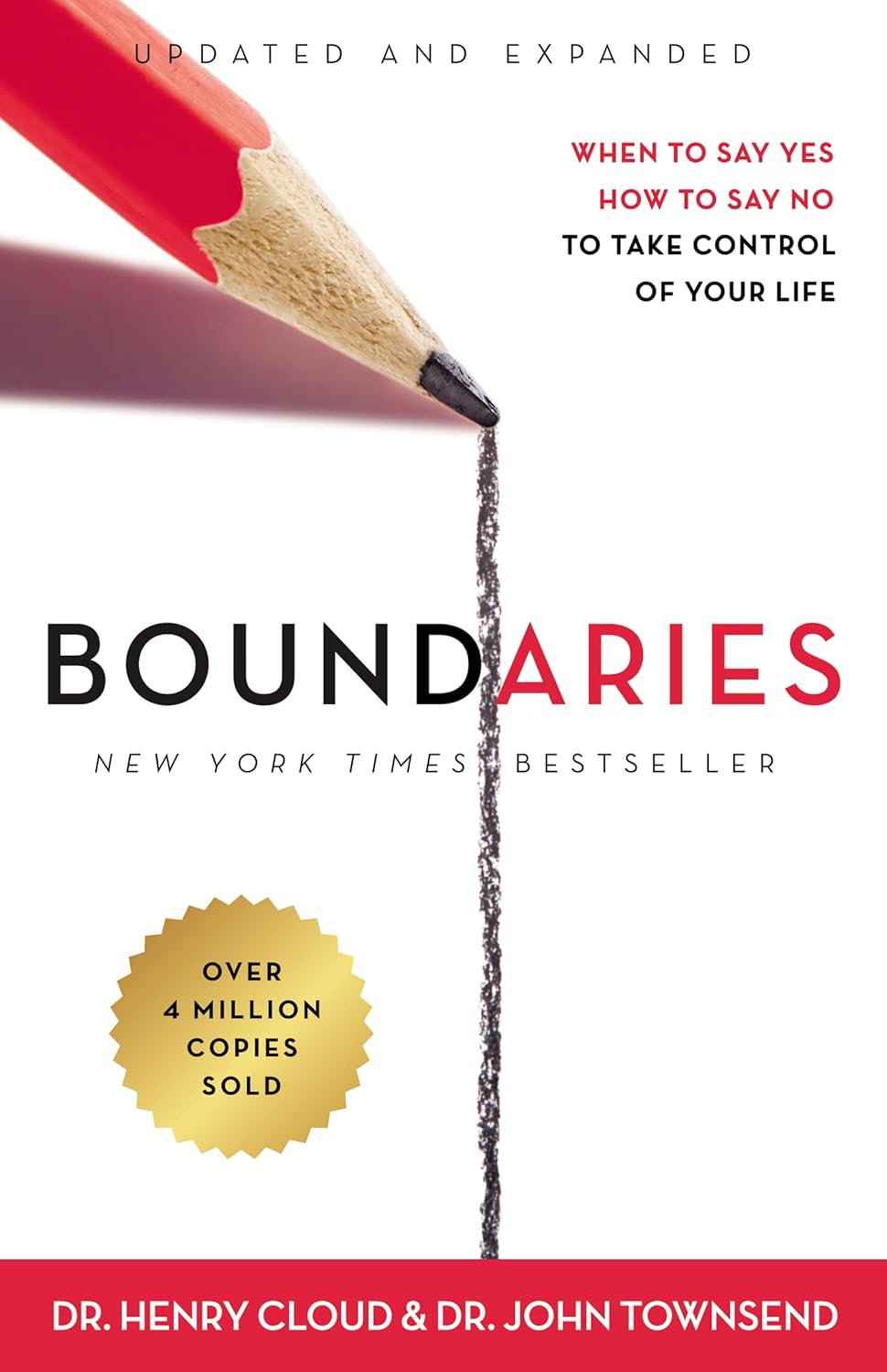
Boundaries Updated and Expanded Edition
Henry Cloud, John Sims Townsend


 Apple Books


 63 Min Reading Time
 Audio Version Available
About this book
Is your life spiraling out of control? Do you struggle to say "no," constantly sacrificing your own needs for others? Are you exhausted from taking responsibility for everyone else's problems? In this updated and expanded edition of Boundaries, Drs. Henry Cloud and John Townsend, draw upon years of clinical experience and biblical wisdom to guide you towards taking control of your life.
Discover how to set healthy, loving boundaries with your spouse, children, friends, parents, co-workers, and even yourself. Learn to answer tough questions like:
- Can I set limits and still be a loving person?
- What are legitimate boundaries?
- How do I effectively manage my digital life?
- What if someone is upset by my boundaries?
- How do I respond to constant demands on my time and energy?
- Why do I feel guilty when I consider setting boundaries?
Join the millions who have found freedom and balance through the power of boundaries. Reclaim your life and discover the countless ways that Boundaries can change your relationships, your well-being, and your future.
Summary of Key Ideas
- •
Defining Personal Boundaries
Boundaries are essential for healthy relationships and personal well-being. They define where one person ends and another begins, establishing personal property lines that delineate responsibility. Understanding these limits allows individuals to take ownership of their thoughts, feelings, and behaviors, while also recognizing that they are not responsible for the actions of others. Without boundaries, people risk becoming enmeshed, leading to resentment, burnout, and a loss of individual identity. Healthy boundaries create space for genuine connection and mutual respect.
- •
Embracing Responsibility
Taking responsibility for oneself is a cornerstone of boundary setting. This includes owning one's emotions, choices, and actions. It means acknowledging personal limitations and avoiding blaming others for one's own feelings or circumstances. When individuals take responsibility, they empower themselves to make positive changes and avoid perpetuating unhealthy patterns in relationships. This principle emphasizes self-awareness and accountability as crucial components of personal growth and healthy interactions.
- •
The Power of 'No'
Saying 'no' is a critical skill for maintaining healthy boundaries. It's about asserting one's limits and protecting one's time, energy, and resources. Saying 'no' doesn't have to be confrontational; it can be done assertively and respectfully. Many people struggle with saying 'no' due to fear of rejection or guilt, but it's essential for preventing overcommitment and maintaining a sense of personal control. Learning to say 'no' is an act of self-care and a way to prioritize one's own needs and values.
- •
Allowing Consequences
Experiencing consequences is a natural part of life and a vital learning tool. Allowing others to experience the consequences of their actions, without interference or rescue, can be a powerful way to encourage responsibility and growth. Shielding people from the results of their choices can enable unhealthy behaviors and prevent them from learning valuable lessons. Enabling behaviors ultimately hinder personal development and damage relationships. Allowing natural consequences promotes accountability and fosters resilience.
- •
Navigating Conflict
Setting boundaries inevitably involves conflict, as others may resist changes to established patterns. However, managing conflict constructively is crucial for maintaining healthy relationships. This involves communicating assertively, expressing needs and expectations clearly, and being willing to negotiate and compromise. Avoiding conflict altogether can lead to resentment and passive-aggressive behavior. Facing conflict head-on, with empathy and respect, strengthens relationships and reinforces personal boundaries.
- •
The Importance of Forgiveness
Forgiveness is essential for moving forward after boundary violations. Holding onto resentment and bitterness harms the forgiver more than the forgiven. Forgiveness doesn't excuse the offender's behavior, but it releases the individual from the emotional burden of anger and resentment. It's a process that takes time and effort, and it may require setting new boundaries to prevent future harm. Forgiveness is ultimately an act of self-care that promotes healing and allows for the possibility of reconciliation.
- •
Grieving Losses
Loss is an inevitable part of life, and learning to grieve is crucial for healing and moving forward. Setting boundaries often involves experiencing loss, whether it's the loss of a relationship, a role, or a dream. Acknowledging and processing these losses allows individuals to let go of the past and embrace new possibilities. Suppressing grief can lead to emotional stagnation and prevent personal growth. Healthy grieving involves allowing oneself to feel the pain, seeking support from others, and finding meaning in the experience.
- •
Boundaries in the Digital Age
The digital age presents unique challenges to boundary setting. The constant connectivity and blurring of lines between work and personal life can make it difficult to disconnect and protect one's time and energy. Establishing digital boundaries involves setting limits on screen time, managing social media use, and creating designated periods for unplugging. It's about consciously choosing how technology fits into one's life, rather than allowing it to control one's attention and behavior. Healthy digital boundaries are essential for maintaining mental well-being and fostering genuine connections.
Chapter Recap

About The Author
Henry Cloud
Main Quotes
"A boundary is a personal property line that marks those things for which we are responsible."
"Boundaries define who I am and who I am not."
"We are responsible to each other, but we are not responsible for each other."
"Loving people sometimes need to say no."
"Just as fear is a reality, so is courage."
"Guilt is a gift. Use it."
"Having limits is good; it protects you."
"You are free to choose, but you are not free from the consequence of the choice."
"Many people do not let God’s love in because they misperceive what love is."
"The Law of Responsibility says that we are responsible to others and for ourselves."
Who Should Read This Book
Individuals struggling with setting and maintaining healthy boundaries in relationships.
People who feel overwhelmed, taken advantage of, or responsible for others' problems.
Those seeking personal growth and improved self-esteem.
Individuals in codependent relationships.
People in ministry or leadership positions who need to establish healthy boundaries.
Couples seeking to improve communication and establish healthier relationship dynamics.
Parents who want to teach their children about boundaries.
Individuals seeking guidance on how to say "no" assertively and respectfully.
Readers interested in Christian perspectives on psychology and relationships.
People recovering from trauma or abuse who need to establish healthy boundaries for healing.
Marriage and family therapists, counselors, and other mental health professionals.
Individuals seeking to improve their relationships with family members, friends, and colleagues.
People wanting to take control of their lives and improve their overall well-being.
Book Summaries Like
Boundaries Updated and Expanded Edition




FAQ

Free Access to LitNotes