




 DISCORD
Braiding Sweetgrass
Robin Wall Kimmerer, David Muñoz Mateos


 The New York Times Best Sellers


 115 Min Reading Time
 Audio Version Available
About this book
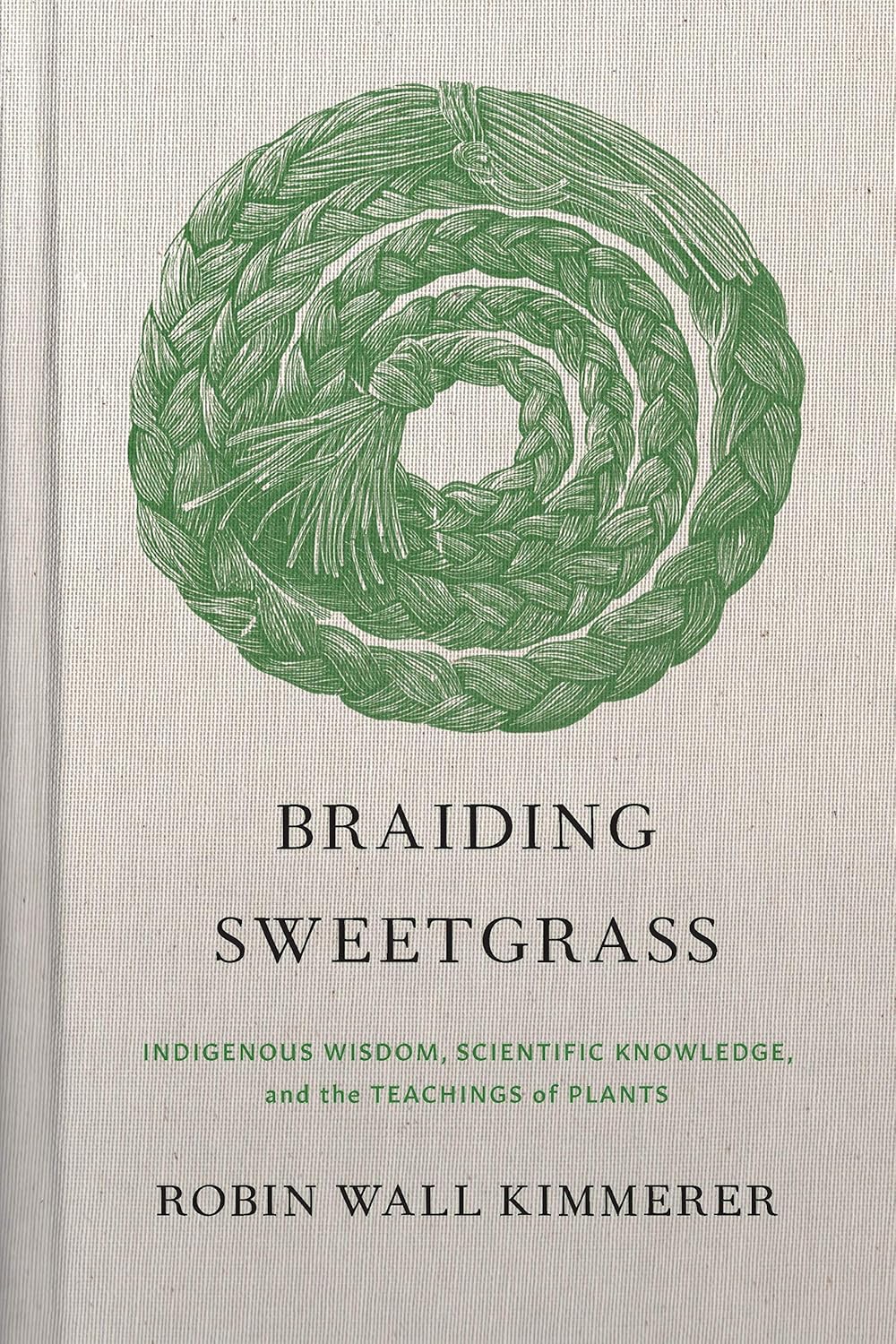
Robin Wall Kimmerer, a botanist and member of the Citizen Potawatomi Nation, intertwines indigenous wisdom with scientific knowledge in Braiding Sweetgrass. Through her unique lens, Kimmerer reveals how understanding and celebrating our reciprocal relationship with the natural world is the key to unlocking ecological consciousness. From asters and goldenrod to strawberries and sweetgrass, she illuminates the gifts and lessons offered by other living beings, urging us to listen to the languages of the earth and reciprocate its generosity. Journey with Kimmerer as she explores the creation of Turtle Island and the forces threatening its flourishing, offering a path towards understanding, gratitude, and a deeper connection to the world around us.
Summary of Key Ideas
- •
The Honorable Harvest: A Guide to Sustainable Interaction
The Honorable Harvest is a set of guidelines that dictate how humans should take from the earth, emphasizing respect, moderation, and reciprocity. It suggests only taking what is needed, never taking the first or last of anything, and ensuring that what is taken is used respectfully and completely. This concept challenges the extractive mindset prevalent in modern society, advocating for a relationship with nature based on gratitude and responsibility. By adhering to the Honorable Harvest, humans can minimize their impact on the environment and promote sustainability, ensuring that resources are available for future generations. This approach fosters a deeper connection with the natural world, acknowledging its inherent value and promoting a more harmonious coexistence.
- •
Reciprocity: Giving Back to the Earth
Kimmerer explores the concept of reciprocity, highlighting the importance of giving back to the Earth in exchange for its gifts. She argues that humans have a responsibility to care for the environment and ensure its well-being, just as the Earth provides for human needs. This involves practices like restoring degraded ecosystems, planting trees, and cleaning up pollution. Reciprocity extends beyond mere sustainability; it's about actively contributing to the health and vitality of the natural world. By engaging in reciprocal relationships with nature, humans can move away from a mindset of exploitation and towards one of partnership, fostering a deeper sense of connection and responsibility.
- •
Integrating Indigenous and Scientific Knowledge
The book emphasizes the value of Indigenous knowledge and traditional ecological knowledge (TEK) in understanding and caring for the environment. Kimmerer, a botanist and member of the Citizen Potawatomi Nation, weaves together scientific and Indigenous perspectives to offer a more holistic understanding of the natural world. TEK encompasses generations of accumulated knowledge about local ecosystems, sustainable practices, and the interconnectedness of all living things. By integrating TEK with scientific knowledge, humans can develop more effective and culturally appropriate approaches to conservation and environmental management, recognizing the wisdom of those who have lived in close relationship with the land for centuries.
- •
The Animacy of the Natural World
Braiding Sweetgrass underscores the idea that the natural world is animate and possesses inherent value, deserving of respect and consideration. Kimmerer challenges the Western worldview that often treats nature as a collection of resources to be exploited. She advocates for recognizing the agency and intelligence of plants, animals, and ecosystems, suggesting that they have their own stories to tell and lessons to teach. This perspective encourages a shift in human attitudes towards nature, fostering a sense of kinship and responsibility. By acknowledging the inherent value of the natural world, humans can move away from anthropocentrism and embrace a more biocentric or ecocentric worldview.
- •
Gratitude: A Pathway to Respect and Responsibility
Kimmerer reflects on the concept of gratitude as a fundamental element in fostering a healthy relationship with the natural world. She suggests that expressing gratitude for the gifts of the Earth can transform human perceptions and behaviors, leading to greater respect and care. Gratitude involves acknowledging the source of our sustenance and recognizing the interconnectedness of all living things. By cultivating a sense of gratitude, humans can move away from a sense of entitlement and towards a sense of responsibility. This, in turn, can inspire more sustainable and ethical practices, ensuring that future generations can also enjoy the bounty of the Earth.
- •
The Language of Reciprocity: Re-imagining our Dialogue with Nature
The book explores the power of language in shaping human perceptions of the natural world. Kimmerer contrasts the grammar of English, which often treats nature as inanimate and passive, with the grammar of Indigenous languages, which often imbue natural entities with agency and personhood. She argues that language can either reinforce or challenge anthropocentric worldviews. By adopting a more relational language, humans can cultivate a deeper sense of connection with nature and recognize its inherent value. This involves using language that acknowledges the agency and intelligence of plants, animals, and ecosystems, and that emphasizes the interconnectedness of all living things.
- •
The Power of Storytelling: Passing on Wisdom
Braiding Sweetgrass delves into the importance of storytelling as a means of transmitting knowledge, values, and cultural practices across generations. Kimmerer weaves together personal anecdotes, traditional Indigenous stories, and scientific observations to create a compelling narrative that engages readers on multiple levels. Storytelling serves as a powerful tool for fostering empathy, promoting understanding, and inspiring action. By sharing stories about the natural world, humans can cultivate a deeper appreciation for its beauty, complexity, and resilience. This, in turn, can motivate individuals to become stewards of the environment and to work towards a more sustainable future.
- •
Healing Our Relationship with the Earth
Kimmerer argues that healing the relationship between humans and the natural world is essential for addressing the environmental crisis. She suggests that this healing process involves acknowledging the historical injustices inflicted upon Indigenous peoples and the environment, as well as adopting more sustainable and ethical practices. Healing also requires a shift in human consciousness, from a mindset of domination to one of partnership. By fostering reconciliation between humans and nature, we can create a more just and sustainable world for all living things. This involves embracing Indigenous knowledge, practicing reciprocity, and recognizing the inherent value of the natural world.
Chapter Recap

About The Author
Robin Wall Kimmerer
Dr. Robin Wall Kimmerer (also credited as Robin W. Kimmerer) (born 1953) is Associate Professor of Environmental and Forest Biology at the State University of New York College of Environmental Science and Forestry (SUNY-ESF). She is the author of numerous scientific articles and books, including her most famous book, Braiding Sweetgrass. She is Potawatomi and combines her heritage with her scientific and environmental passions.
Main Quotes
"Knowing that you love the earth changes you, activates you to defend and protect and celebrate."
"We need acts of restoration, not only for damaged ecosystems, but also for damaged relationships."
"What if we acknowledged that the land knows us, even when we are lost?"
"All flourishing is mutual."
"In the Western tradition, there is a recognized hierarchy of beings, with humans at the top—the pinnacle of evolution—and nature at the bottom. But in Native ways of knowing, humans are but one species among many."
"Action on behalf of life transforms. Because the relationship between self and world is reciprocal, it is not a question of first getting enlightened or saved and then acting. As we work to heal the earth, the earth heals us."
"This is how you heal the land, by calling it by name."
"Our indigenous worldview recognizes that people are not the only ones who need to give thanks. Everything has a life and everything has to give thanks."
"The land is the real teacher. All we need is to quiet our minds so we can hear."
"Gratitude is a currency that can be used to purchase secret wisdom."
Who Should Read This Book
Readers interested in indigenous knowledge and perspectives
Environmentalists and conservationists
Individuals seeking a deeper connection with nature
Readers interested in botany and plant life
Those interested in the intersection of science and traditional ecological knowledge
People exploring themes of reciprocity, gratitude, and sustainability
Readers of nature writing and environmental literature
Individuals interested in Native American culture and history
Students and educators in environmental studies, Native American studies, and related fields
Those seeking spiritual or philosophical insights related to nature
Young adults interested in environmental issues and indigenous perspectives
Book Summaries Like
Braiding Sweetgrass



FAQ

Free Access to LitNotes