




 DISCORD
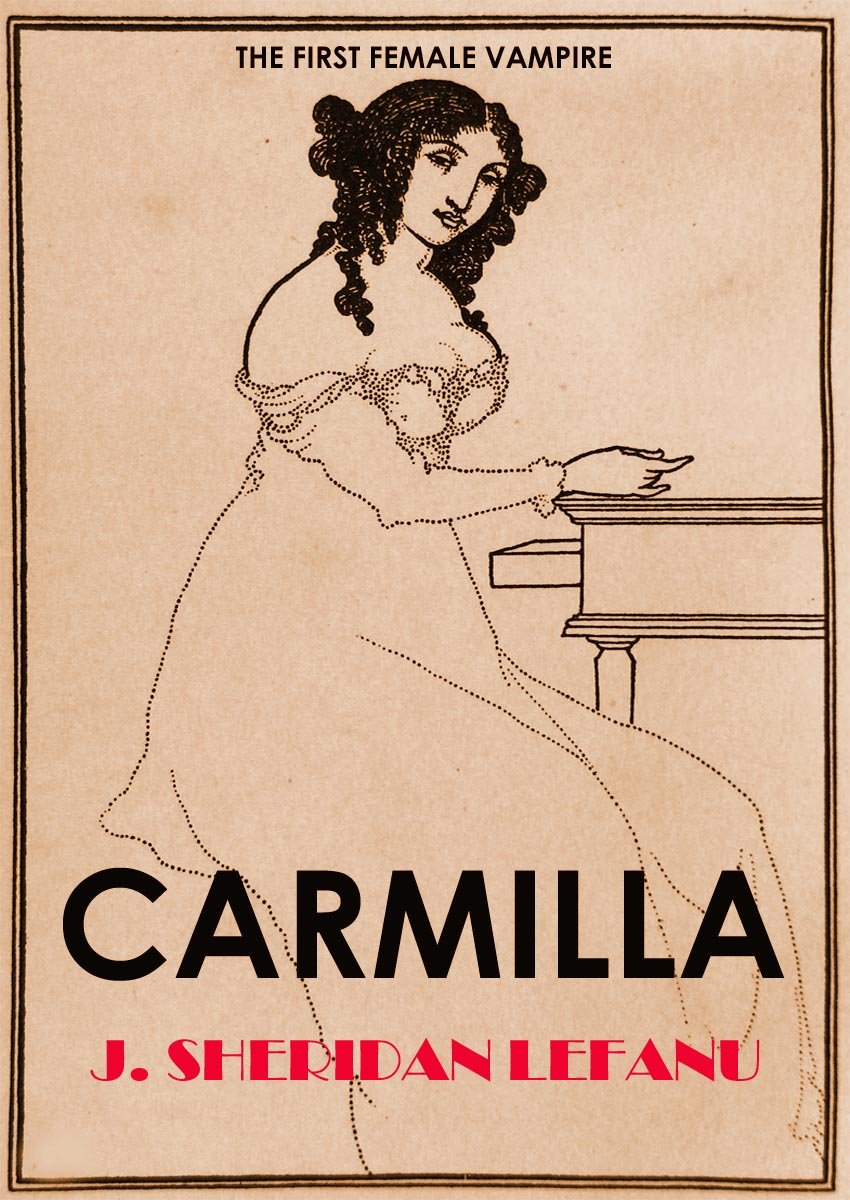
Carmilla by Joseph Sheridan Le Fanu
Joseph Sheridan Le Fanu


 USA Today Best Sellers


 21 Min Reading Time
 Audio Version Available
About this book
In a solitary castle nestled deep within the Austrian forest, young Laura yearns for companionship. Her isolated existence is shattered when a mysterious carriage crashes nearby, bringing with it the enigmatic Carmilla. Drawn to Carmilla's beauty and charm, Laura quickly finds herself entangled in an intense friendship, one laced with unsettling tension and gothic allure.
But as Carmilla's behavior grows increasingly secretive and erratic, Laura is plagued by disturbing nightmares and a strange, debilitating illness. Her health fading, Laura and her father embark on a desperate quest to uncover the truth behind Carmilla's identity, a journey that leads them to a terrifying revelation.
A chilling tale of seduction and the supernatural, Joseph Sheridan Le Fanu's Carmilla predates Bram Stoker's Dracula by decades and is a haunting exploration of desire, fear, and the darkness that lurks beneath the surface. Prepare to be captivated by this groundbreaking vampire novella, a cornerstone of gothic horror that continues to influence and inspire.
Summary of Key Ideas
- •
The Allure of Female Companionship
The story is narrated by Laura, a young woman living in isolation in a secluded castle in Styria. Her idyllic existence is shattered by the arrival of Carmilla, a mysterious and alluring young woman who becomes her guest after a bizarre carriage accident. Carmilla's presence is immediately captivating, and Laura finds herself drawn to her in a way she doesn't fully understand. This sets the stage for a narrative deeply entwined with themes of female companionship and burgeoning attraction, challenging the conventional Victorian notions of female relationships.
- •
Vampirism as a Metaphor for Predatory Relationships
Carmilla's arrival coincides with a series of mysterious deaths in the surrounding villages, all young women who waste away with similar symptoms. As Laura's health begins to decline, she discovers Carmilla's true nature: she is a vampire, preying on the vitality of young women to sustain her immortal existence. This revelation introduces the element of gothic horror, blending the romantic and the macabre, and exploring the darker aspects of human nature and the supernatural.
- •
Forbidden Desire and Transgressive Sexuality
The story explores the emerging themes of female same-sex desire, presenting a relationship between Laura and Carmilla that transcends simple friendship. The intense emotional and physical attraction between the two women, coupled with the era's restrictive social norms, creates a palpable sense of forbidden love. Carmilla embodies a transgressive sexuality that challenges the Victorian ideals of female purity and submission.
- •
Aristocratic Decadence and Corruption
Carmilla embodies the characteristics of the aristocratic class, showcasing its potential for corruption and decadence. She is portrayed as manipulative, self-serving, and ultimately destructive, preying on the innocent and vulnerable. This portrayal serves as a critique of the aristocracy, suggesting that their privileged position can lead to moral decay and a disregard for the well-being of others. This theme highlights the social commentary present within the gothic narrative.
- •
Challenging Patriarchal Norms
The novella can be interpreted as a critique of patriarchal structures and the limited roles available to women in Victorian society. Carmilla, as a powerful and independent female figure, defies these constraints and exerts control over her own destiny, albeit through villainous means. Laura, initially passive and naive, gradually gains awareness and ultimately participates in Carmilla's destruction, representing a subtle shift in female agency.
- •
The Clash Between the Supernatural and the Rational
The story incorporates elements of the supernatural and the rational, creating a tension between belief and skepticism. The characters grapple with the inexplicable events surrounding Carmilla's presence, struggling to reconcile their understanding of the world with the undeniable reality of the supernatural. This tension highlights the limitations of reason in the face of the unknown and explores the power of superstition and folklore.
- •
The Loss of Innocence and the Darker Side of Experience
Throughout the story, Laura undergoes a transformation from innocence to experience. Her encounter with Carmilla shatters her naive worldview and exposes her to the darker aspects of human nature and the supernatural. This loss of innocence is a central theme, highlighting the destructive power of forbidden desires and the complexities of human relationships.
- •
The Motif of Doubles and Shifting Identities
The recurring motif of doubles, exemplified by Carmilla's multiple identities and her connection to the Karnstein family, contributes to the atmosphere of mystery and unease. These doubles create confusion and blur the lines between reality and illusion, further emphasizing the story's exploration of identity and deception. This mirroring effect also emphasizes the cyclical nature of history and the persistence of evil.
Chapter Recap

About The Author
Joseph Sheridan Le Fanu
Joseph Thomas Sheridan Le Fanu (28 August 1814 – 7 February 1873), best known as Sheridan Le Fanu, was an Irish writer of Gothic tales, mystery novels, and horror fiction. He was a leading ghost story writer of the nineteenth century and was central to the development of the genre in the Victorian era. M. R. James described Le Fanu as "absolutely in the first rank as a writer of ghost stories". Three of his best-known works are *Uncle Silas*, *Carmilla*, and *The House by the Churchyard*. **Source**: [Sheridan Le Fanu](https://en.wikipedia.org/wiki/Sheridan_Le_Fanu) on Wikipedia.
Main Quotes
"You will think me cruel, very selfish, but love is always selfish; the more ardent the more selfish. How jealous I am you cannot know."
"Sometimes the blood of a vampire is to be purchased at the price of its extinction."
"I have been in love with no one, and never shall,” I whispered, “unless it should be with you."
"I live in your warm life, and you shall die – die, sweetly die – into mine."
"There is a poison sweeter than honey."
"I felt indescribably drawn towards her."
"We are all liable to be deceived."
"I watched her pretty lips, and her eyes that sometimes flashed with fire, and sometimes were languid and full of softness."
"It is like a shadow of something not present."
"I used to wish to be a boy, because they are masterful."
Who Should Read This Book
Readers of classic gothic horror
Fans of vampire fiction
Readers interested in LGBTQ+ themes in literature
Those interested in Victorian-era literature and social commentary
Readers of feminist literature
Scholars of gothic literature
Fans of stories with strong female characters
Young adult readers interested in classic literature
Book Summaries Like
Carmilla by Joseph Sheridan Le Fanu
FAQ

Free Access to LitNotes