




 DISCORD
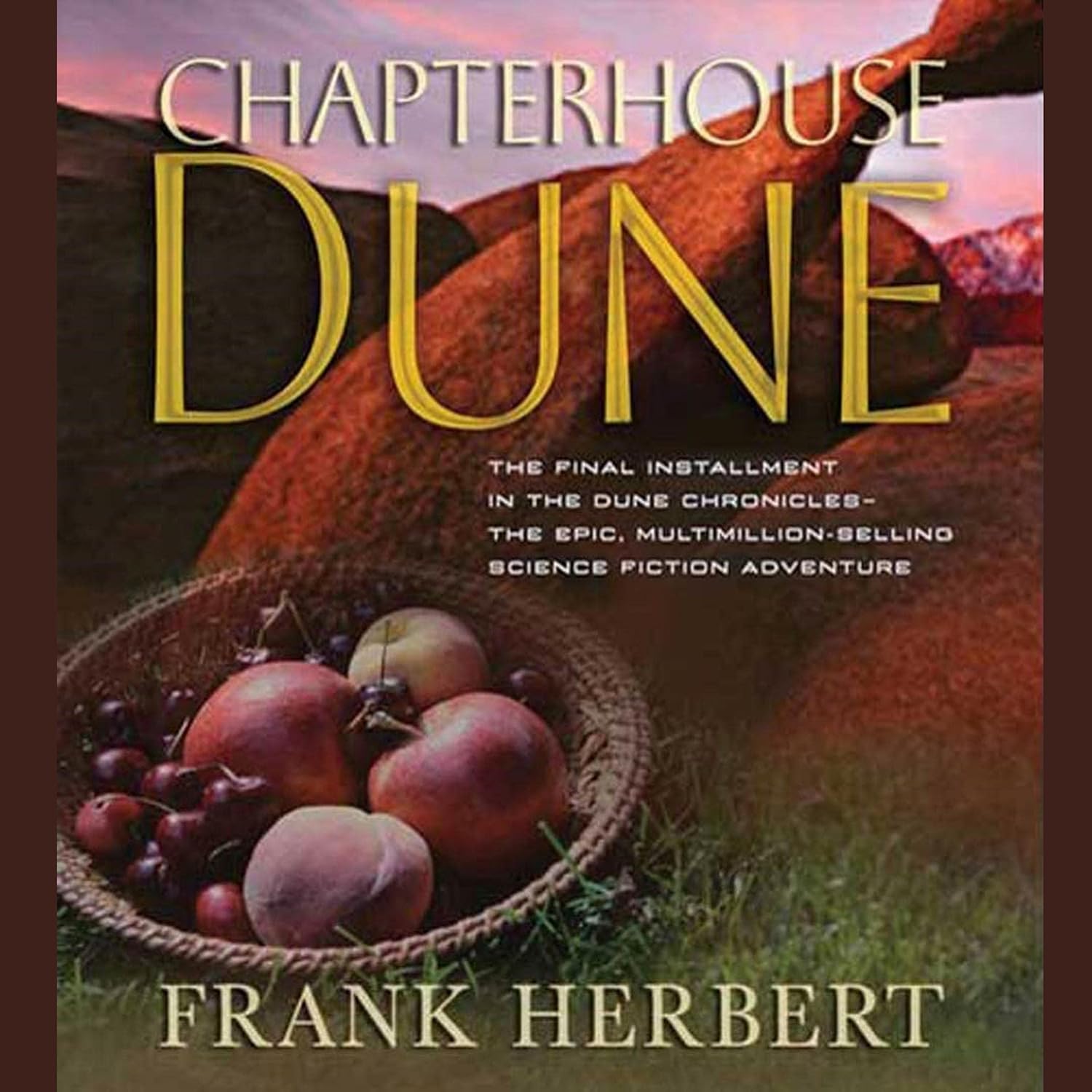
Chapterhouse: Dune
Frank Herbert


 Amazon Best Sellers
 Indie Bestsellers


 199 Min Reading Time
 Audio Version Available
About this book
The sands of Arrakis are gone, but the battle for the future rages on. The Honored Matres, a ruthless matriarchal force, have obliterated Dune and now threaten to consume the remnants of the Old Empire. Only the Bene Gesserit, the heirs to Dune's ancient power, stand in their way.
On the green world of Chapterhouse, Mother Superior Darwi Odrade leads the Sisterhood in a desperate gamble. They terraform the planet, scorching it into a desert in a bid to resurrect the sandworms and control the all-important spice, melange. But their ultimate weapon lies dormant within a man who has lived countless lifetimes, a man who once served the God Emperor, Paul Muad'Dib.
As the Bene Gesserit prepare for a new Scattering, Chapterhouse faces a cataclysmic transformation, destined to become the new Dune. In this final chapter of Frank Herbert's magnificent saga, the fate of the galaxy hangs in the balance, poised on the edge of ecological devastation and the enduring power of human will.
Summary of Key Ideas
- •
Bene Gesserit's Fight for Survival
The Bene Gesserit's struggle for survival is paramount. After the destruction of Arrakis, the Bene Gesserit face extinction at the hands of the Honored Matres. They dedicate Chapterhouse to becoming a new Dune, a source of spice and a refuge for their order. This reflects the theme of adaptation and resilience, as the sisterhood must evolve and innovate to ensure their continued existence in a hostile universe. Their meticulous planning and long-term strategies are essential to their survival against a seemingly superior enemy. This key idea highlights the Bene Gesserit's commitment to their order's preservation, even at the cost of significant sacrifice and transformation.
- •
The Rise of the Honored Matres
The Honored Matres represent a formidable and violent force, emerging from the Scattering as a new, dominant power. Their culture is defined by aggression, sexual dominance, and a rejection of traditional values. They are a stark contrast to the Bene Gesserit, presenting a challenge to the established order of the universe. This conflict between the two matriarchal orders drives much of the novel's plot and explores themes of power, control, and the nature of female leadership. The Honored Matres' origins and motivations add complexity to the Dune universe, prompting questions about the consequences of unchecked power and the cyclical nature of history.
- •
Chapterhouse as a Symbol of Renewal
Chapterhouse itself becomes a symbol of transformation and renewal. As the Bene Gesserit terraform the planet, it represents their ability to adapt and create new possibilities even in the face of destruction. The process of turning Chapterhouse into a desert world mirrors the cyclical nature of life and death, destruction and rebirth, which is a recurring theme throughout the Dune series. This terraforming effort demonstrates the Bene Gesserit's mastery of biological manipulation and their deep understanding of the interconnectedness of ecology and culture. Chapterhouse's transformation is not merely physical, but also a spiritual and symbolic rebirth for the Bene Gesserit.
- •
The Significance of No-Ships
The concept of 'no-ships' introduces a new level of technological advancement and strategic advantage. These ships, undetectable by conventional means, provide the Bene Gesserit with mobility and secrecy. The no-ships symbolize the constant innovation and adaptation required to survive in a universe filled with threats. They also represent the potential for humanity to overcome limitations through technological ingenuity. The no-ships are crucial for the Bene Gesserit's plans and provide them with a means to escape potential defeat and continue their long-term goals. This technological advancement becomes a critical factor in the power dynamics of the Dune universe.
- •
The Role of Gholas and Genetic Memory
Gholas, or resurrected individuals, play a central role in the Bene Gesserit's plans to preserve valuable knowledge and skills. The gholas represent the potential for genetic memory and the ability to cheat death, albeit with inherent risks and ethical considerations. Duncan Idaho, a recurring ghola, embodies the ongoing struggle between free will and predetermination. The Bene Gesserit's use of gholas raises questions about identity, memory, and the essence of what it means to be human. The gholas are crucial for maintaining continuity and preserving the legacy of important figures from the past.
- •
Convergence of Bene Gesserit and Honored Matres
The merging and evolution of the Bene Gesserit and Honored Matres hint at a potential synthesis of power and philosophies. The Bene Gesserit seek to understand and integrate aspects of the Honored Matres' strength and aggression, while the Honored Matres are drawn to the Bene Gesserit's discipline and long-term vision. This potential convergence suggests a path toward a more unified and powerful force in the universe. However, it also raises concerns about the potential loss of unique identities and the risks of compromising core values. This blending of cultures and ideologies is a key theme in the book.
- •
Memory, Identity, and the Burden of the Past
The theme of memory and identity is central to the narrative, particularly concerning the gholas and the Bene Gesserit's Other Memory. The ability to access ancestral knowledge and past lives shapes individual identities and informs decisions. However, it also raises questions about the nature of self and the potential for manipulation. Characters grapple with the burden of inherited memories and the challenge of forging their own paths. The exploration of memory highlights the complexities of human consciousness and the enduring impact of the past on the present.
- •
The Impact of the Scattering
The 'Scattering' and its consequences are a major backdrop to the events in Chapterhouse: Dune. The Scattering refers to the diaspora following Leto II's reign, which sent people fleeing into the unknown reaches of space. The Honored Matres are a product of this Scattering, returning with new technologies and a hunger for power. This event highlights the potential dangers of stagnation and the need for humanity to explore and adapt. The Scattering also underscores the cyclical nature of history, as old conflicts and power struggles resurface in new forms.
- •
Unresolved Endings and the Uncertainty of the Future
The ending of *Chapterhouse: Dune* leaves the series on a cliffhanger, with unanswered questions about the future of the Bene Gesserit, the Honored Matres, and the escaped no-ship. This open ending invites speculation and reflects Herbert's broader exploration of the uncertainty of the future and the ongoing evolution of humanity. The lack of a definitive resolution underscores the complex and cyclical nature of the Dune universe, where power struggles and philosophical debates continue endlessly. The ambiguity encourages readers to contemplate the themes and ideas presented throughout the series.
Chapter Recap

About The Author
Frank Herbert
Main Quotes
"Seek freedom and become captive of your desires. Seek discipline and find your liberty."
"A stone is heavy and the sand is weighty; but a fool's provocation is heavier than both."
"Survival is the ability to swim in strange water."
"The mystery of life isn't a problem to solve, but a reality to experience."
"Ideas are cheap. It's the execution that is the difficult thing."
"Anything you can acquire can be taken away. Only the truth in your heart remains."
"Do actions agree with words? There's your measure of reliability. Never confine yourself to the words."
"The best weapon is one you never have to fire."
"You can’t always see clearly the path ahead, but you must believe that it’s there nonetheless."
"Power attracts the corruptible. Suspect all who seek it. We should grant power over our affairs only to those who are reluctant to hold it."
Who Should Read This Book
Readers of science fiction, particularly those interested in complex world-building and philosophical themes.
Fans of the "Dune" series familiar with the previous books and their intricate plotlines.
Readers interested in themes of religion, politics, and the evolution of human societies.
Individuals who appreciate strong female characters and exploration of gender dynamics.
Readers who enjoy thought-provoking narratives with ecological and social commentary.
Academics and students studying science fiction, literature, or political science.
Readers interested in themes of survival, adaptation, and the future of humanity.
Readers familiar with Frank Herbert's writing style and his exploration of consciousness and human potential.
Book Summaries Like
Chapterhouse: Dune




FAQ

Free Access to LitNotes