




 DISCORD
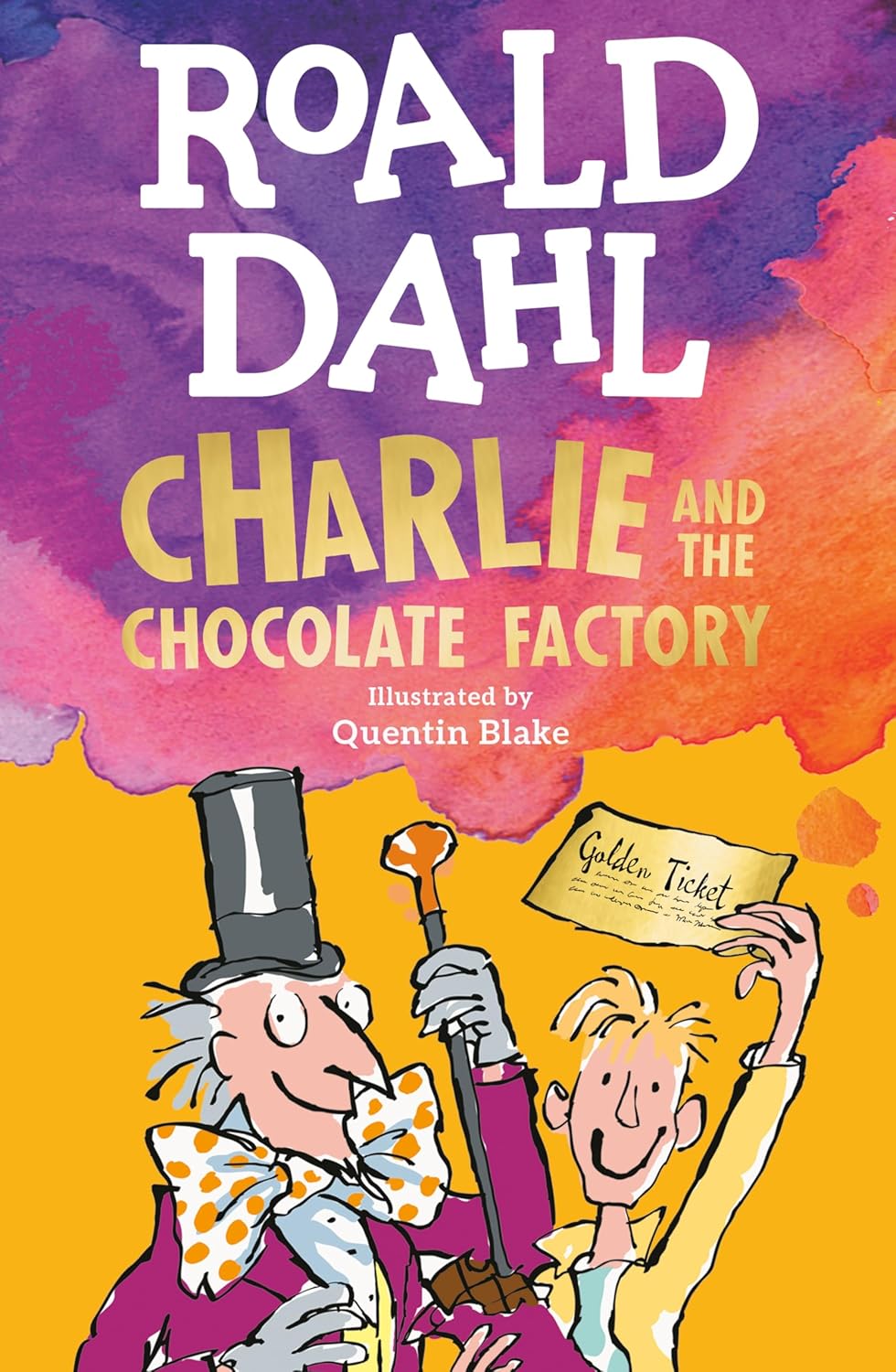
Charlie and the Chocolate Factory
Roald Dahl


 Apple Books


 19 Min Reading Time
 Audio Version Available
About this book
Step inside the gates of Willy Wonka's chocolate factory, where dazzling delights and delicious dangers await! Only five lucky children hold a Golden Ticket to this extraordinary world, including Charlie Bucket, a boy with nothing to lose and everything to gain.
Join Charlie as he embarks on a tour beyond his wildest dreams, encountering a river of chocolate, ओompa-Loompas, and inventions sweeter than imagination. But beware! Alongside Augustus Gloop, Veruca Salt, Violet Beauregarde, and Mike Teavee, Charlie must navigate the temptations and tests of Wonka's whimsical wonderland. Will his kindness and honesty lead him to a prize beyond measure, or will he succumb to the factory's scrumdiddlyumptious—and sometimes perilous—charms?
Prepare for a timeless adventure where dreams come true, lessons are learned, and the magic of Roald Dahl's storytelling will leave you craving more.
Summary of Key Ideas
- •
The Power of Kindness
Kindness and Humility Triumph: Charlie's defining trait is his kindness. Despite living in poverty and facing daily hunger, he remains selfless and considerate. This virtue is ultimately what sets him apart from the other children and earns him Wonka's favor. His humility prevents him from becoming arrogant or entitled, even when he finds the golden ticket. This reinforces the idea that genuine goodness is more valuable than material wealth or special talents.
- •
A Cautionary Tale of Excess
The Dangers of Excess: Each of the children besides Charlie embodies a particular vice: greed (Augustus Gloop), spoiled entitlement (Veruca Salt), gum-chewing obsession (Violet Beauregarde), and television addiction (Mike Teavee). Their flaws lead to their respective downfalls within the factory, serving as cautionary tales about the consequences of unchecked desires and poor behavior. Dahl uses these characters to satirize societal excesses and highlight the importance of moderation.
- •
Imagination Unleashed
The Allure and Wonder of Imagination: Willy Wonka's factory is a realm of pure imagination, where the impossible becomes reality. The chocolate river, the everlasting gobstoppers, and the fizzy lifting drinks showcase the boundless possibilities of creativity and innovation. The factory represents a space where dreams can come to life, emphasizing the importance of wonder and the power of thinking outside the box. It encourages readers to embrace their own creativity and to never stop imagining.
- •
The Role of Good Parenting
Critique of Bad Parenting: The unpleasant children's negative traits are often attributed to their parents' poor parenting styles. Augustus's mother enables his overeating, Veruca's father spoils her rotten, Violet's mother encourages her gum obsession, and Mike's father is oblivious to his television addiction. Dahl subtly critiques these parenting failures, suggesting that nurturing positive character traits is essential for raising well-rounded individuals. The story implicitly advocates for balanced parenting that emphasizes discipline and values alongside love and support.
- •
The Value of Simplicity
Good Things Come in Small Packages: The Bucket family lives in poverty, but they are rich in love and family values. Charlie's simple pleasures, like a single chocolate bar on his birthday, highlight that happiness doesn't depend on material possessions. The story suggests that the most valuable things in life are often the simplest: family, kindness, and contentment. Charlie's eventual inheritance of the factory underscores the idea that inner goodness is more rewarding than external wealth.
- •
Actions and Consequences
Justice and Just Deserts: Each of the misbehaving children experiences a fitting consequence for their actions within the factory. Augustus gets sucked up the chocolate pipe, Veruca is deemed a 'bad nut' and tossed down the garbage chute, Violet turns into a giant blueberry, and Mike shrinks to a minuscule size. This element of karmic justice reinforces the moral message that actions have consequences and that negative behavior will ultimately be punished. This satisfies the reader's sense of fairness and reinforces the importance of ethical conduct.
- •
Beyond Material Wealth
Poverty vs. Wealth: The stark contrast between the Bucket family's poverty and the immense wealth of Willy Wonka and the other children highlights the inequalities in society. Despite their circumstances, the Buckets maintain their integrity and kindness, demonstrating that character is not determined by socioeconomic status. Charlie's triumph over the spoiled, wealthy children suggests that true worth lies in moral virtue rather than material possessions. The story subtly critiques the excesses of wealth and celebrates the resilience of those living in poverty.
- •
Don't Judge a Book by its Cover
Appearances Can Be Deceiving: The initial image of Willy Wonka as eccentric and perhaps unreliable hides a complex and ultimately benevolent character. Similarly, the glittering spectacle of the Chocolate Factory masks potential dangers and the true test of character that awaits the children. Dahl uses these deceptive appearances to remind readers not to judge a book by its cover and to look beyond superficial impressions to discover the true nature of people and situations.
Chapter Recap

About The Author
Roald Dahl
Main Quotes
"“A little nonsense now and then, is relished by the wisest men.”"
"“You should never, never doubt something that no one is sure of.”"
""So shines a good deed in a weary world.""
"“However small the chance might be of striking lucky, the chance was there.”"
"“I am a chocolate maker by trade. I am an inventor. I am an experimenter.”"
"“Everything in this room is eatable, even I'm eatable! But that is called cannibalism, my dear children, and is in fact frowned upon in most societies.”"
""Don't argue, my dear child, please don't argue!""
"“Candy is dandy, but liquor is quicker.”"
"“We are the music makers, and we are the dreamers of dreams.”"
"“If you’re sensible, you won’t risk everything for one thing.”"
Who Should Read This Book
Children aged 8-12
Parents and grandparents looking for a nostalgic read-aloud book
Educators seeking engaging classroom literature for elementary and middle school students
Fans of Roald Dahl's other works
Readers who enjoy humorous and imaginative stories
People interested in stories with moral lessons about greed, honesty, and kindness
Individuals who appreciate classic children's literature
Families looking for a book to enjoy together
Book Summaries Like
Charlie and the Chocolate Factory
FAQ

Free Access to LitNotes