




 DISCORD
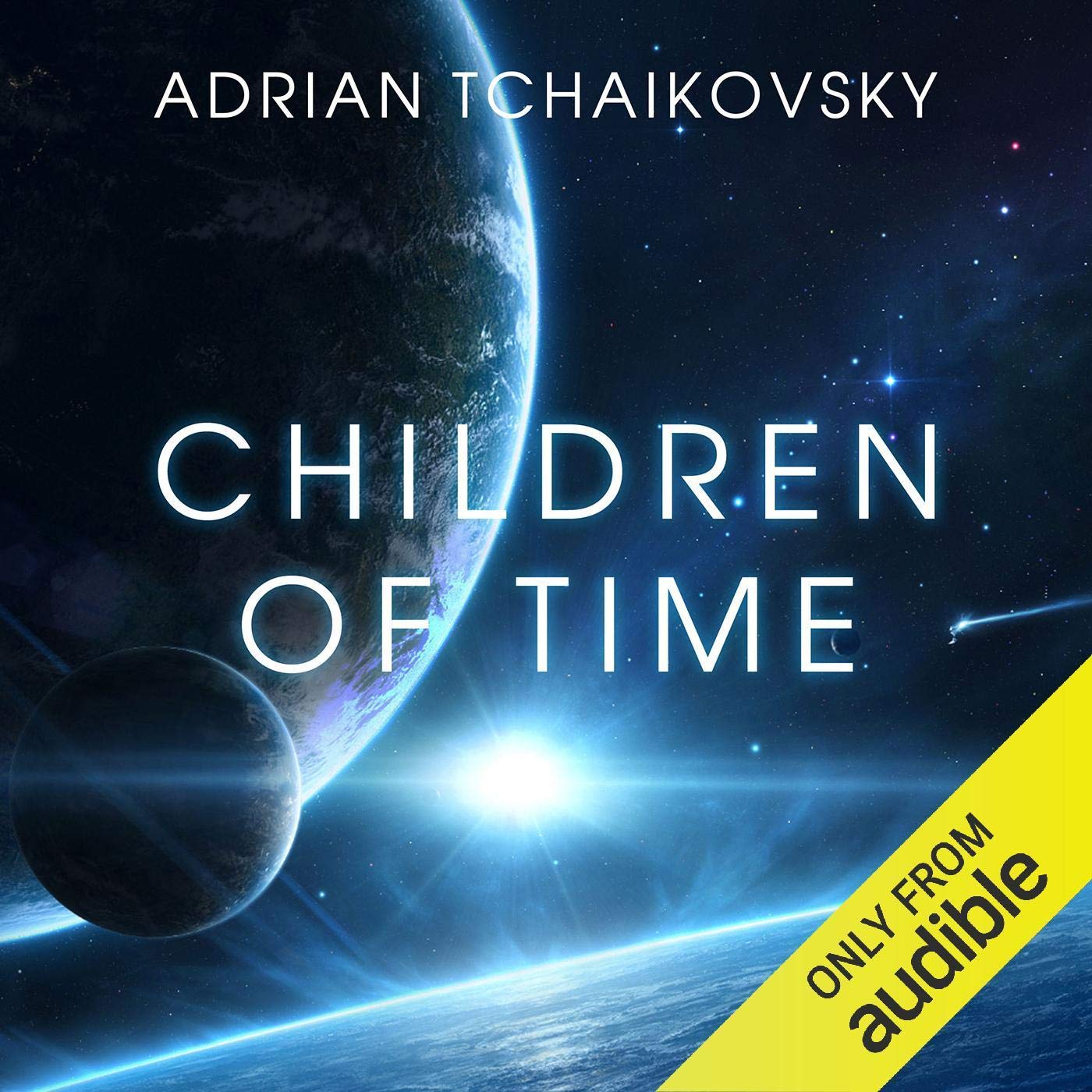
Children of Time
Adrian Tchaikovsky


 Apple Books


 178 Min Reading Time
 Audio Version Available
About this book
The last remnants of humanity flee a dying Earth, desperate to find a new home among the stars. They discover a planet perfect for terraforming, a second chance to build a civilization. But in their haste, they unwittingly unleash a terrifying rival.
On this new world, a rogue experiment has given rise to a species unlike any other – intelligent spiders. As they rapidly evolve and develop their own complex society, they view the approaching human ship as a threat.
Millennia pass, and two civilizations clash in the cold void of space, each struggling for survival. Who will inherit the future? Children of Time is a sweeping epic of evolution, technology, and the ultimate battle for dominance, challenging our understanding of what it means to be human.
Summary of Key Ideas
- •
The Tapestry of Accelerated Evolution
Evolutionary Divergence and Adaptation: The novel explores how different species evolve and adapt under vastly different environmental pressures. The spiders on the terraformed planet, through the influence of the nanovirus, undergo accelerated evolution, developing intelligence, societies, and technologies at an astonishing rate. This contrasts with humanity's stagnant state, clinging to old ideologies and struggling to adapt to a changing universe. The spiders' journey highlights the power of adaptation and the diverse paths evolution can take, challenging anthropocentric views of intelligence and civilization.
- •
Redefining Civilization: Beyond Humanity's Mirror
The Nature of Civilization and Intelligence: 'Children of Time' questions what truly defines civilization and intelligence. Is it technology, social structure, or something more profound? The spiders, initially seen as mere creatures, develop complex societies, religions, and scientific understandings, mirroring and sometimes surpassing human achievements. This forces the reader to confront their own biases and assumptions about what constitutes a 'civilized' species and to consider the potential for intelligence to arise in unexpected forms.
- •
Bridging the Divide: The Power of Interspecies Communication
Communication and Understanding Across Species: A major theme revolves around the challenges and possibilities of communication between vastly different species. The initial inability of humans and spiders to understand each other leads to conflict and misunderstanding. As both species evolve, they gradually develop methods of communication, highlighting the importance of empathy, patience, and a willingness to bridge seemingly insurmountable divides. The eventual cooperation between humans and spiders underscores the potential for mutual understanding and benefit, even between radically different intelligences.
- •
The Price of Arrogance: A Cautionary Tale for Humanity
Humanity's Hubris and its Consequences: The novel critiques humanity's arrogance and its destructive tendencies. Dr. Avrana Kern's zealous pursuit of her terraforming project, blinded by her own ambition, leads to unforeseen consequences and the near-extinction of humanity. The remnants of humanity, clinging to outdated ideologies and prone to infighting, struggle to learn from their past mistakes. 'Children of Time' serves as a cautionary tale about the dangers of unchecked ambition, the importance of humility, and the need for humanity to confront its own flaws to ensure its survival.
- •
Breaking the Cycle: Learning from the Past to Shape the Future
The Cycle of History and the Potential for Change: The book explores the cyclical nature of history, with both humans and spiders repeating patterns of conflict, dominance, and societal collapse. However, it also suggests the possibility of breaking free from these cycles through learning, adaptation, and a willingness to embrace change. The eventual alliance between humans and spiders represents a departure from past mistakes and a hopeful vision for a future where different species can coexist and thrive together, challenging the inevitability of historical repetition.
- •
Playing God: Creation, Control, and Unintended Consequences
The Blurring Lines Between Creator and Creation: Dr. Kern acts as a god-like figure, initiating the spiders' evolutionary ascent, but her control is limited, and the spiders evolve in unexpected ways. The novel examines the ethical implications of playing God and the responsibility that comes with creating new forms of life. It questions the extent to which creators can control their creations and the potential for unintended consequences when meddling with the natural order, highlighting the complex relationship between creator and creation.
Chapter Recap

About The Author
Adrian Tchaikovsky
Main Quotes
"The greatest conceit of all, the one that drives us to destroy everything around us, is the belief that we are separate."
"We are made from starstuff, but that is the least interesting thing about us. The starstuff makes us possible, but the matter of us is not what matters."
"Life is not perfect, individuals will always be flawed, but empathy – the sheer inability to see those around them as anything other than people too – conquers all."
"The thing about hope, though, is that it doesn't need to be reasonable."
"This will be the first of a thousand worlds that we will give life to. For we are gods, and we are lonely, so we shall create."
"Bickering primates, the lot of them. Progress is what matters. Fulfilling the potential of humanity, and of all other life."
"The universe doesn't much care what you believe."
"Perhaps the greatest trick of intelligence is that it can always justify itself."
"You will fail, they'd said, and here he was, failing."
"They had been set up as gods, and had naturally begun to act like them."
Who Should Read This Book
Readers of hard science fiction
Readers interested in evolutionary biology and speculative evolution
Readers who enjoy stories with complex world-building and unique alien civilizations
Readers who appreciate thought-provoking themes about humanity, consciousness, and artificial intelligence
Readers of Arthur C. Clarke and Kim Stanley Robinson
Readers who enjoy stories that span long periods of time and explore societal development
Adult and older teen readers
Book Summaries Like
Children of Time

FAQ

Free Access to LitNotes