




 DISCORD
Coraline
Neil Gaiman, Neil Gaiman


 Apple Books


 39 Min Reading Time
 Audio Version Available
About this book
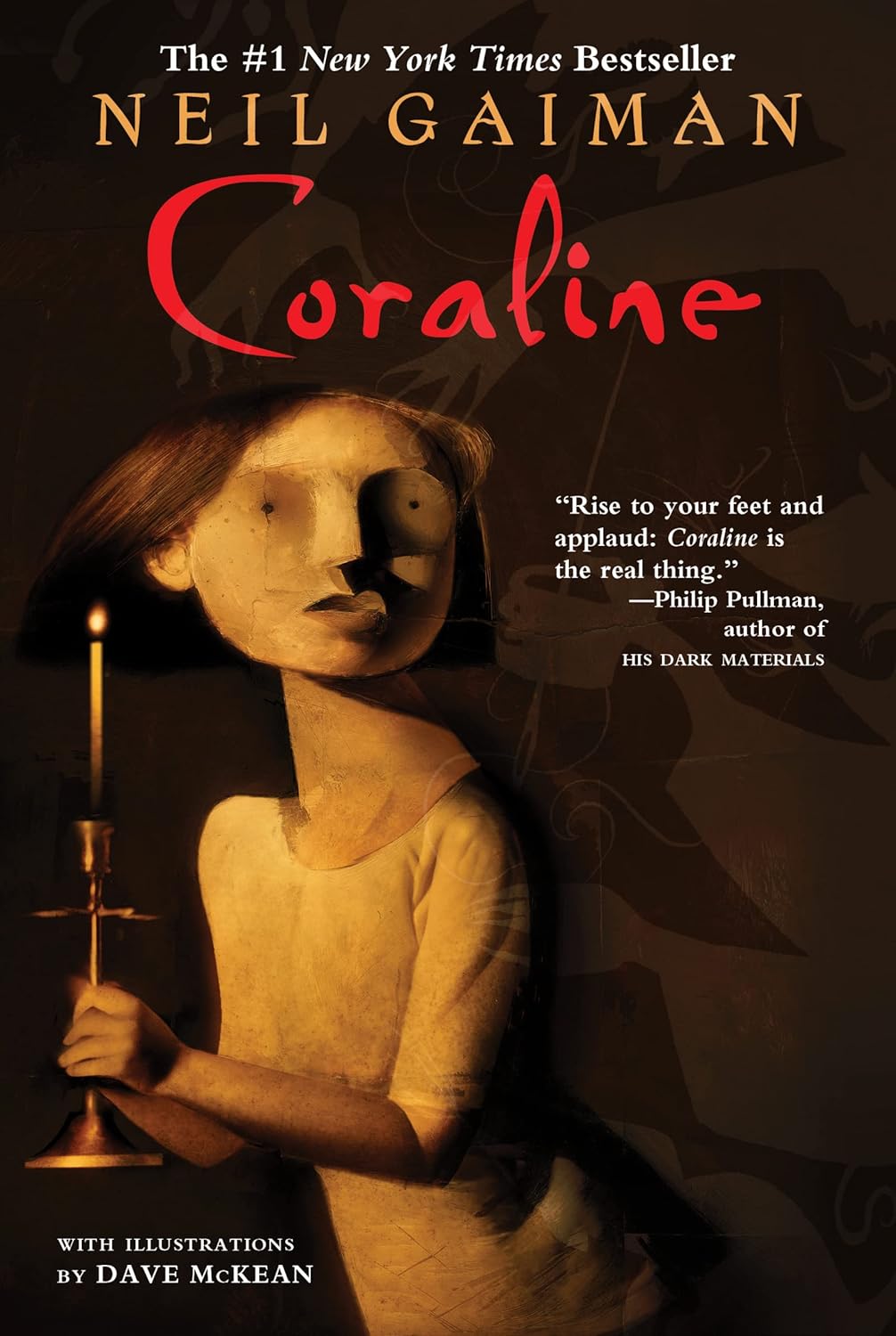
Behind a mysterious door in Coraline's new house lies a world that's eerily similar, yet unsettlingly twisted. At first, this parallel existence seems marvelous: the food is exquisite, the toys are enchanting, and the Other Mother and Father are endlessly attentive. But beneath the surface of this dreamlike reality lurks a sinister secret.
These button-eyed doppelgangers want Coraline to stay, to become their perfect, unchanging daughter. Trapped in their web of illusion, Coraline must summon all her courage, wit, and resourcefulness to unravel their dark designs. To save herself, her real parents, and the lost souls imprisoned within this mirrored world, she'll face a chilling battle against a love that suffocates and a home that imprisons. Dare to step through the door and discover a haunting tale where bravery is her only weapon and reclaiming her life is the ultimate adventure.
Summary of Key Ideas
- •
The Danger of Idealized Illusions
The allure of the idealized world represents the temptation to escape from the mundane realities of life. Coraline is initially drawn to the Other World because it seems to offer everything she lacks in her own: attentive parents, exciting adventures, and delicious food. However, this idealized facade hides a sinister truth: the Other Mother's obsessive desire to control and possess Coraline, ultimately robbing her of her individuality and freedom. The story warns against seeking perfection at the expense of authenticity and emphasizes the importance of appreciating the imperfections that make life unique and meaningful. This theme resonates with readers of all ages, as it highlights the dangers of superficiality and the value of genuine connection.
- •
Finding Bravery in the Face of Fear
Coraline's journey is a coming-of-age story where she learns to confront her fears and develop inner strength. Initially, she is portrayed as a somewhat bored and neglected child, but as she navigates the terrifying challenges in the Other World, she discovers her courage and resourcefulness. Coraline's bravery is not the absence of fear, but rather the ability to act despite it. She faces her anxieties head-on, relying on her wit and determination to outsmart the Other Mother and rescue her parents. This theme underscores the idea that true bravery is born from adversity and that even the smallest individuals can possess extraordinary strength.
- •
The Value of Real Family Bonds
The novel explores the importance of family and the complexities of parental relationships. Coraline feels neglected by her busy parents, which makes her vulnerable to the Other Mother's false promises of love and attention. However, through her experiences in the Other World, Coraline comes to appreciate the genuine love and care her real parents provide, even if it's not always expressed perfectly. The story highlights the significance of communication, understanding, and acceptance within families, reminding readers that true connection lies in embracing imperfections and supporting one another through challenges. Ultimately, Coraline learns that her real parents, despite their flaws, are her true source of strength and security.
- •
Preserving Individuality and Identity
Identity is a central theme in "Coraline", exploring the importance of individuality and resisting attempts to be controlled or changed by others. The Other Mother seeks to remake Coraline in her image, wanting her to stay in the Other World forever, complete with button eyes. Coraline's refusal to succumb to this pressure demonstrates her strong sense of self and her determination to maintain her own identity. The story celebrates the uniqueness of each individual and warns against the dangers of conformity and losing oneself in the desires of others. Coraline's journey reinforces the idea that true happiness lies in embracing one's authentic self.
- •
The Power and Peril of Imagination
Imagination serves as both a source of comfort and a tool for survival in "Coraline". Coraline's active imagination initially leads her to explore the mysterious door and discover the Other World. However, it is also her imagination and creativity that help her to navigate the dangers she encounters and ultimately outsmart the Other Mother. The story celebrates the power of imagination as a means of coping with difficult situations, finding solutions, and maintaining hope in the face of adversity. It encourages readers to embrace their own creativity and to recognize the potential of their imaginations to shape their realities.
- •
Unmasking Deception and Manipulation
Deception and manipulation are key elements in the Other Mother's strategy to lure Coraline into her world. She presents an idealized version of Coraline's life, promising endless attention and entertainment. However, this facade quickly crumbles, revealing the Other Mother's true nature as a possessive and controlling figure. The story warns against the dangers of appearances and the importance of looking beyond the surface to discern true intentions. Coraline's ability to recognize the deception and resist the Other Mother's manipulation is crucial to her survival and underscores the value of critical thinking and skepticism.
- •
Appreciating the Real Over the Artificial
The story contrasts the familiar, albeit imperfect, real world with the superficially appealing but ultimately dangerous Other World. Coraline initially seeks escape from the perceived boredom and neglect of her everyday life. However, she soon discovers that the allure of the Other World is a trap, and that true happiness lies in appreciating the genuine connections and experiences of her own reality. The story encourages readers to value the authenticity of their own lives and to resist the temptation to seek fulfillment in artificial or illusory environments. It emphasizes that true contentment comes from within and from embracing the imperfections that make life real.
Chapter Recap

About The Author
Neil Gaiman
Main Quotes
"“Fairy tales are more than true: not because they tell us that dragons exist, but because they tell us that dragons can be beaten.”"
"“I don't want whatever I want. Nobody does. Not really. What kind of fun would it be if I just got everything I ever wanted just like that, and it didn't mean anything? What then?”"
"“Being brave doesn't mean you aren't scared. Being brave means you are scared, really scared, badly scared, and you do the right thing anyway.”"
"“When you're scared but you still do it anyway, that's brave.”"
"“If you look too closely at the form, then you'll miss the essence.”"
"“You know I love you,” said the other mother flatly."
"“The expression of delight on her face was a very bad thing to see.”"
"It was true: the other mother loved her. But she loved Coraline as a miser loves money, or a dragon loves its gold."
"“All alone, in the middle of the night, Coraline began to cry. There was no other sound in the empty flat.”"
"“Names are important. They have to be right.”"
Who Should Read This Book
Middle grade readers (ages 8-12)
Young adult readers
Adults who enjoy dark fantasy
Readers who appreciate children's literature with deeper themes
Fans of Neil Gaiman's writing style
Readers interested in stories about courage, identity, and overcoming fears
Readers who enjoy spooky or slightly scary stories
Parents looking for a book to read with their children
Readers who appreciate allegory
Book Summaries Like
Coraline
FAQ

Free Access to LitNotes