




 DISCORD
Crucial Conversations
Kerry Patterson, Joseph Grenny


 Amazon Best Sellers
 Apple Books


 38 Min Reading Time
 Audio Version Available
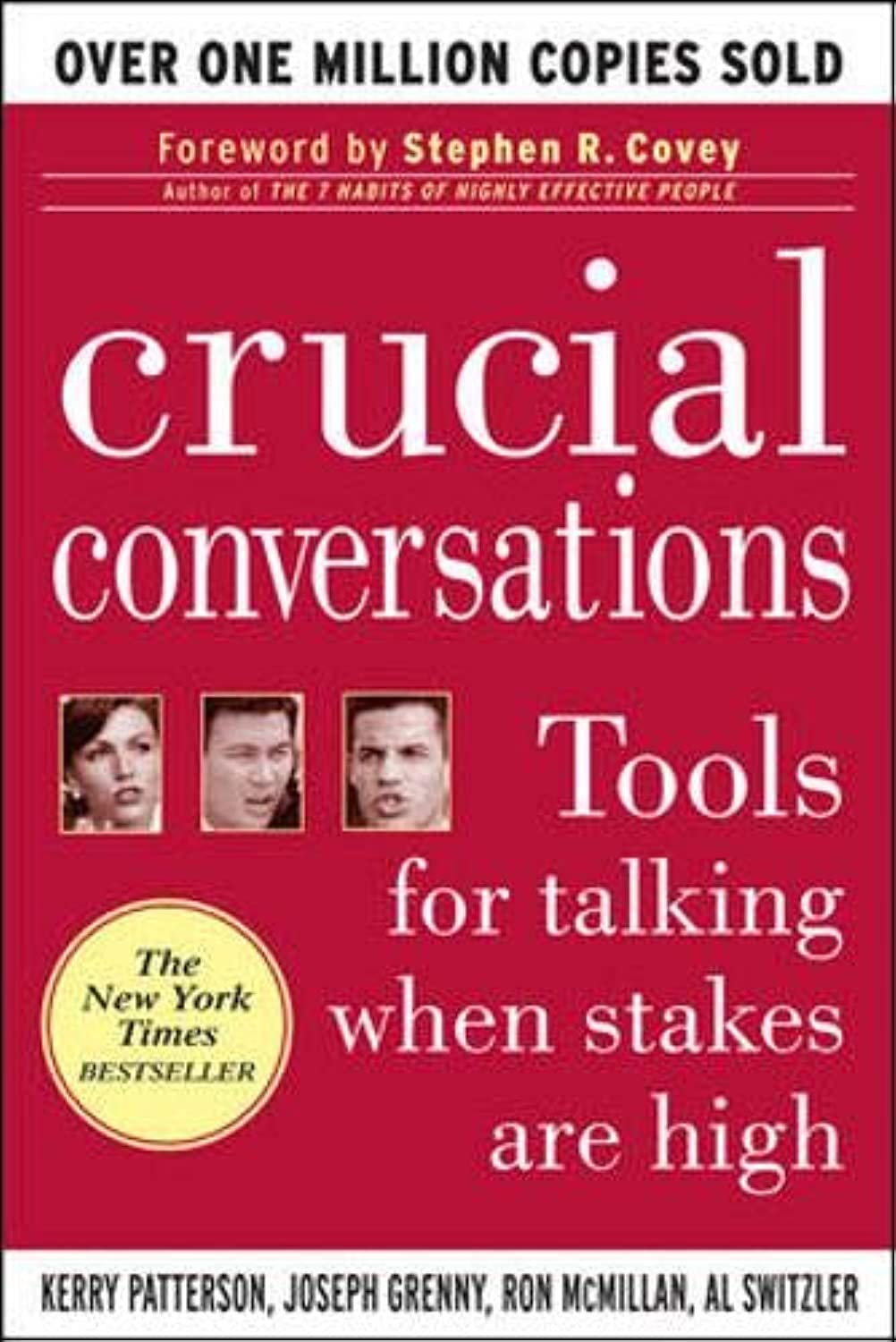
About this book
When stakes are high, opinions clash, and emotions surge, are you ready? In Crucial Conversations, unlock the secrets to navigating life's most challenging dialogues. Avoid the fallout of silence or mishandling, and discover how to communicate effectively when it matters most.
This book equips you with the tools to confidently address difficult conversations, express yourself openly, and achieve positive outcomes. Master a proven seven-step approach that fosters mutual respect, encourages open expression, and transforms conflict into collaboration.
Inside, you'll learn how to:
- Prepare for high-impact situations using a six-minute mastery technique.
- Create a safe space to discuss virtually anything.
- Be persuasive, not abrasive.
- Stay present and listen, even when others become defensive.
- Turn crucial conversations into positive action and lasting results.
Whether at work, home, or in the community, mastering crucial conversations can profoundly impact your career, relationships, and overall well-being. Gain the skills to approach any conversation with confidence, and transform conflict into opportunity.
Summary of Key Ideas
- •
Recognizing Crucial Conversations
Defining Crucial Conversations: The book begins by defining crucial conversations as discussions where stakes are high, opinions vary, and emotions run strong. These conversations often determine the quality of relationships and results in various aspects of life, both personal and professional. Recognizing these conversations is the first step toward handling them effectively. The authors emphasize the importance of not avoiding these difficult discussions but approaching them with skill and forethought to achieve positive outcomes.
- •
Start with Heart: Focus on What You Really Want
Starting with Heart: Before engaging in a crucial conversation, it’s vital to examine your own motives and ensure they are aligned with positive outcomes. This involves focusing on what you truly want for yourself, others, and the relationship. By clarifying your purpose and aligning your actions with your values, you can approach the conversation with a constructive mindset, reducing defensiveness and increasing the likelihood of a mutually beneficial resolution. Starting with heart sets the tone for a more open and honest exchange.
- •
Master Your Stories: The Path to Taking Control
Learn to Look: This key idea stresses the importance of monitoring both the content of the conversation and the conditions surrounding it. Pay attention to your own and others’ behavior, especially signs of silence (withholding information) or violence (verbal aggression). Recognizing when a conversation is becoming unsafe allows you to step back, address the underlying issues, and restore a safe environment for open dialogue. This awareness is crucial for preventing escalation and promoting productive communication.
- •
Make it Safe: Restore Dialogue When It Matters Most
Make it Safe: Safety is paramount for productive dialogue. People disengage or become defensive when they don't feel safe. To foster safety, establish mutual respect and mutual purpose. Mutual respect means valuing the other person, even when you disagree. Mutual purpose means ensuring that everyone involved believes you’re working toward a shared outcome. When safety is compromised, use contrasting to clarify your intentions: state what you don’t want, then what you do want. This helps rebuild trust and encourages open participation.
- •
Learn to Look: Monitoring Conditions and Safety
Master My Stories: Our interpretations of events drive our emotions and actions. By questioning our stories and considering alternative explanations, we can choose more constructive responses. The book introduces the STATE skills (Share your facts, Tell your story, Ask for others' paths, Talk tentatively, Encourage testing) to help express your views without escalating conflict, fostering an environment of curiosity and collaboration.
- •
STATE Your Path: Sharing Persuasively, Not Abrasively
STATE Your Path: This acronym provides a structured approach to sharing your perspective in a way that encourages dialogue rather than defensiveness. 'Share your facts' involves presenting the objective data that led to your conclusions. 'Tell your story' means explaining your interpretation of those facts. 'Ask for others' paths' invites others to share their perspectives. 'Talk tentatively' involves expressing your views as opinions rather than absolute truths. 'Encourage testing' means inviting opposing viewpoints and being open to changing your own perspective. This method ensures clarity and reduces emotional reactions.
- •
Explore Others' Paths: Active Listening and Understanding
Explore Others' Paths: Understanding others' viewpoints is essential for finding common ground. Use the AMPP skills (Ask, Mirror, Paraphrase, Prime) to actively listen and encourage others to share their thoughts and feelings. Asking open-ended questions, mirroring their emotions, paraphrasing their words to confirm understanding, and priming when they’re hesitant creates a safe space for them to express themselves fully. This empathetic approach helps bridge the gap between differing opinions and fosters collaboration.
- •
Move to Action: Turning Dialogue into Results
Move to Action: Conversations are only effective if they lead to clear actions and follow-up. Decide how decisions will be made (command, consult, vote, consensus) and assign specific tasks with deadlines. Document these decisions and follow up to ensure accountability. By turning dialogue into concrete actions, you ensure that the conversation translates into tangible results, improving outcomes and strengthening relationships.
Chapter Recap

About The Author
Kerry Patterson
Main Quotes
"Stay focused on what you really want."
"We create our own emotions."
"The only person you can directly control is yourself."
"Start with Heart."
"Learn to Look."
"Make it Safe."
"Master My Stories."
"State My Path."
"Explore Others' Paths."
"Move to Action."
Who Should Read This Book
Managers and business leaders
Individuals seeking to improve their communication skills
People in conflict resolution roles
Anyone wanting to improve their relationships, both personally and professionally
Individuals interested in self-help and personal development, especially regarding communication and conflict management
Teams looking to improve collaboration and communication
HR professionals and trainers
Negotiators and mediators
Those in customer service roles
Anyone who frequently engages in difficult or high-stakes conversations
Book Summaries Like
Crucial Conversations

FAQ

Free Access to LitNotes