




 DISCORD
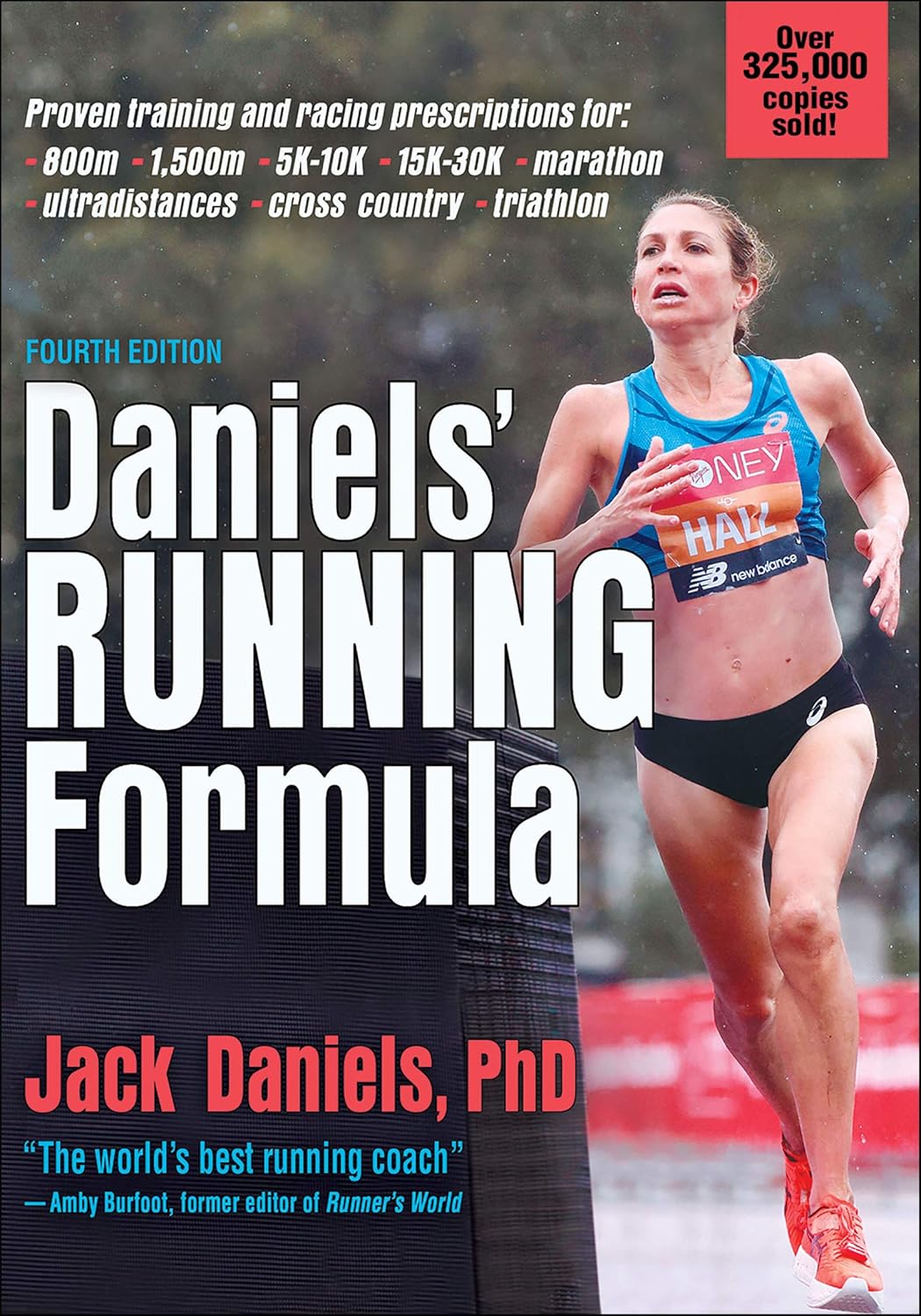
Daniels' Running Formula
Jack Daniels


 Apple Books


 57 Min Reading Time
 Audio Version Available
About this book
Unlock your peak running potential with Daniels' Running Formula, the definitive guide by legendary coach Jack Daniels, hailed by Runner's World as "the world's best running coach." With over 55 years of experience mentoring elite athletes like Jim Ryun and Magdalena Lewy-Boulet, Daniels shares his revolutionary VDOT system, now refined in this updated edition.
Whether you're a novice or a seasoned marathoner, discover tailored training plans for distances from 800 meters to ultramarathons and triathlons. Benefit from expert advice on altitude, treadmill, and seasonal training, alongside age-related modifications for runners of all ages. Choose from 31 proven training schedules, including fitness plans for injury recovery.
Run stronger, faster, and more efficiently. Daniels' Running Formula is your blueprint for achieving the results you seek, every time you train and race.
Summary of Key Ideas
- •
VDOT: Personalized Training Intensity
VDOT as a Measure of Fitness: Daniels champions VDOT as a superior metric for gauging running fitness compared to traditional methods. VDOT considers race performance to estimate an individual's current running capacity, allowing for personalized training paces that adapt as fitness improves. This personalized approach ensures workouts are neither too easy nor excessively challenging, optimizing training benefits. VDOT values are derived from race results and factored into training paces, creating a feedback loop that refines training intensity and promotes continuous improvement.
- •
Targeted Training Zones
Training Zones for Specific Physiological Adaptations: The book emphasizes training at different intensities to target specific physiological systems. Easy runs build aerobic endurance and promote recovery, while threshold runs improve lactate threshold and running economy. Interval training enhances VO2 max, and repetition training boosts speed and anaerobic capacity. By understanding how each training zone impacts the body, runners can strategically design their workouts to achieve specific performance goals.
- •
Structured and Adaptable Plans
Structured Training Plans: Daniels provides detailed training plans for various race distances and ability levels. These plans incorporate a mix of training intensities, strategically sequenced to maximize performance gains and minimize the risk of overtraining. The plans also include guidelines for adjusting training based on individual responses and external factors like weather and travel. By following a structured plan, runners can ensure they are consistently challenging themselves while allowing for adequate recovery and adaptation.
- •
Easy Runs and Recovery
Importance of Easy Runs and Recovery: While high-intensity workouts are crucial for improvement, Daniels stresses the significance of easy runs and recovery. Easy runs build aerobic base, promote blood flow, and aid in muscle repair. Recovery days allow the body to adapt to the stress of training, reducing the risk of injury and burnout. The book provides guidelines for determining appropriate easy run paces and incorporating rest days into the training schedule, ensuring a balanced and sustainable approach to training.
- •
Gradual Progression
Gradual Progression and Avoiding Overtraining: Daniels emphasizes the importance of gradual progression in training to avoid overtraining and injury. Increasing mileage and intensity too quickly can overwhelm the body's ability to adapt, leading to setbacks. The book provides guidelines for gradually increasing training volume and intensity, allowing the body to adapt and become stronger over time. By following a progressive approach, runners can minimize the risk of injury and maximize long-term performance gains.
- •
Individualization
The Role of Individualization: Daniels recognizes that every runner is unique and responds differently to training. The book encourages runners to monitor their body's response to training and adjust their plans accordingly. Factors such as age, experience, and injury history can influence training adaptations, so it's essential to personalize the training plan to suit individual needs. By understanding their unique physiology and adapting their training accordingly, runners can optimize their performance and minimize the risk of injury.
- •
Mental Fortitude and Strategy
Mental Aspects of Running: Beyond the physical elements, Daniels addresses the crucial role of mental preparation and strategy in successful running. Visualizing race scenarios, developing positive self-talk, and managing pre-race anxiety are discussed as integral components of a comprehensive training approach. The book also explores the importance of setting realistic goals and maintaining motivation throughout the training process. Recognizing and nurturing the mental side of running allows athletes to maximize their potential and perform at their best when it matters most.
Chapter Recap

About The Author
Jack Daniels
Main Quotes
"Don't waste your time wishing for things you don't have. Do your best with what you do have."
"Life is too narrow to walk it, you must learn to run."
"Running doesn't always jump out at you as the greatest thing since sliced bread. Eventually though, you realize it is."
"You must learn to run fast and still be in control of your mechanics; run fast and not strain; run fast and still feel you have another gear."
"Be cognizant of natural limits and know that training harder isn't better than training smarter."
"Every runner has specific individual abilities."
"A runner's focus should be on improvement and enjoyment."
"The body responds to training stimuli in predictable ways."
"Training should be tailored to individual needs and goals."
"Consistency is key to long-term success."
Who Should Read This Book
Competitive runners aiming to improve performance
Experienced runners with a track and field background
Coaches and trainers seeking structured training plans
Data-driven runners interested in scientifically based training methodologies
Runners preparing for races from 800m to marathon distances
Serious recreational runners looking to optimize their training
Book Summaries Like
Daniels' Running Formula




FAQ

Free Access to LitNotes