




 DISCORD
Dark Age
Pierce Brown


 Goodreads Choice Awards
 Apple Books


 20 Min Reading Time
 Audio Version Available
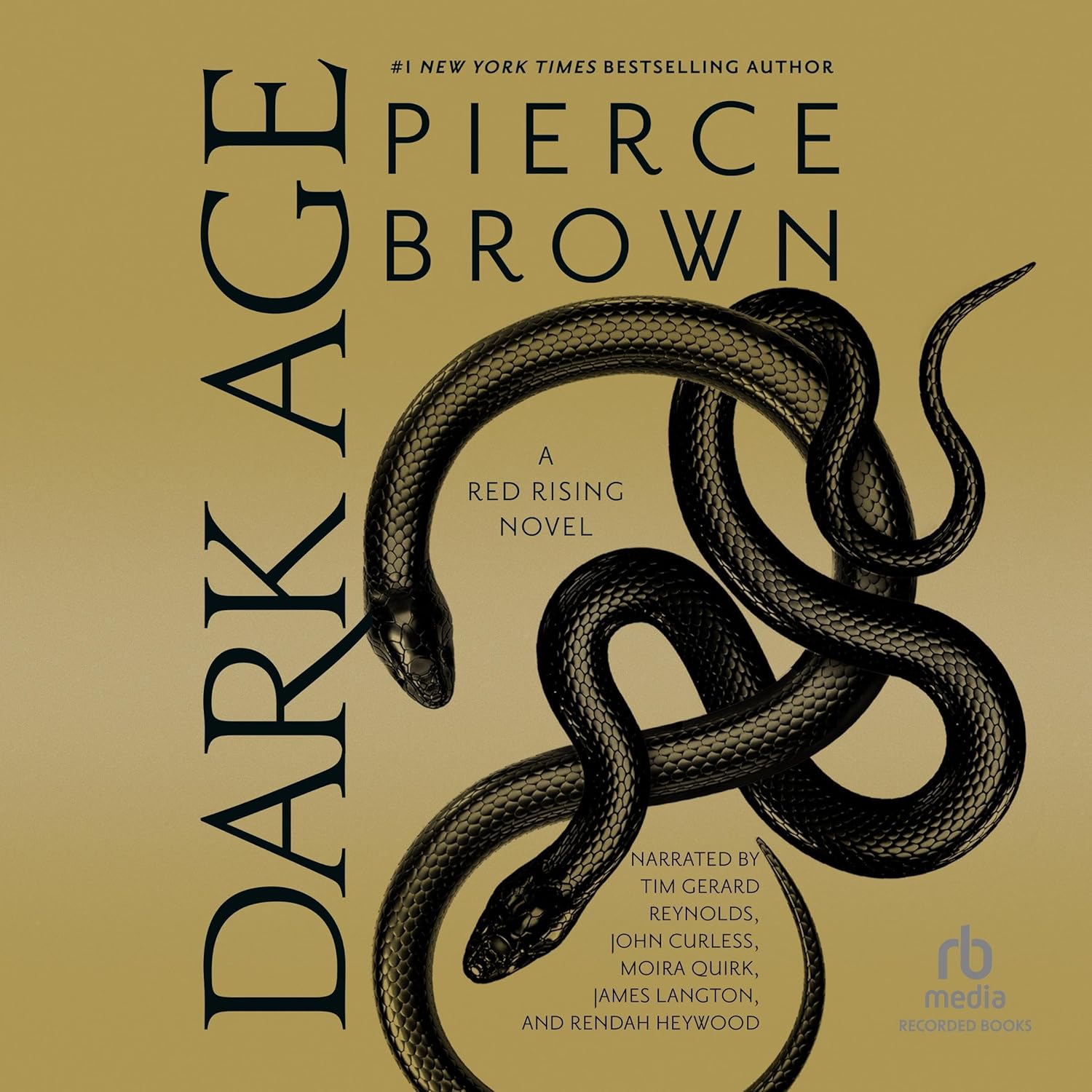
About this book
He shattered the chains of the tyrannical Society, but a decade later, Darrow finds himself an outlaw, exiled by the Republic he forged. Striking from the shadows of Mercury, he wages a desperate war, haunted by the ghosts of a dream he can no longer reach. Has the hero who ignited a revolution become the architect of its ruin?
As Darrow battles his inner demons and external foes, Lysander au Lune, heir to a fallen empire, emerges from exile, seeking to unite the fractured Golds and restore order with an iron fist. Their paths converge above Mercury's war-torn skies, where the fate of the Republic hangs in the balance.
Meanwhile, on Luna, Mustang, Sovereign of the Republic, fights a desperate political battle to protect her fragile democracy and the husband she loves. Across the solar system, a young Red refugee named Lyria is caught in a web of treachery, forced to forge unlikely alliances to survive. And when Darrow's children are kidnapped, their only hope lies with a disgraced thief seeking redemption.
In a galaxy consumed by shifting alliances and ruthless ambition, every player is a pawn in a deadly game. As power is seized and lost, the Rising teeters on the brink, threatening to plunge the solar system into a new Dark Age.
Summary of Key Ideas
- •
The Cost of Revolution
The Brutal Reality of Revolution: 'Dark Age' dismantles the romanticized view of revolution often present in earlier books. It showcases the messy, morally gray, and deeply traumatizing consequences of prolonged conflict. The initial idealism of the Rising is tested and fractured as characters grapple with the ethical compromises necessary for survival and achieving their goals. This theme highlights the human cost of war and the difficulty of maintaining moral purity in the face of extreme adversity, demonstrating how revolutionary fervor can devolve into brutal pragmatism.
- •
The Graying of Morality
Moral Ambiguity and the Erosion of Ideals: The book delves into the complex moral landscape of war, blurring the lines between right and wrong. Characters, once driven by clear-cut ideals, are forced to make difficult choices that challenge their beliefs. This erosion of moral certainty is a central theme, questioning the possibility of maintaining absolute principles in a world defined by violence and political maneuvering. The narrative explores the psychological toll of these compromises, revealing the internal struggles of characters as they grapple with the consequences of their actions and the sacrifices they make.
- •
A Shattered World
The Fragmentation of Society: 'Dark Age' depicts a society fractured along ideological, political, and geographical lines. The dream of a unified and just society is shattered, replaced by a chaotic landscape of warring factions and competing interests. This fragmentation extends beyond the political realm, impacting personal relationships and creating deep-seated distrust. The novel explores the challenges of rebuilding a cohesive society from the ashes of war, highlighting the need for reconciliation and the difficulty of overcoming deeply entrenched divisions.
- •
Scars of War
The Psychological Impact of Trauma: War leaves deep scars on the minds of those who experience it, and 'Dark Age' unflinchingly portrays the psychological consequences of trauma. Characters grapple with PTSD, grief, and moral injuries, struggling to cope with the horrors they have witnessed and the actions they have taken. The book explores the long-term effects of trauma on individuals and communities, highlighting the importance of healing and the challenges of reintegrating into a society marked by violence and loss. It emphasizes the need for empathy and understanding in a world where trauma is widespread.
- •
The Corrupting Influence
The Abuse of Power: 'Dark Age' exposes the corrupting influence of power, demonstrating how even those with noble intentions can succumb to its allure. Characters in positions of authority are tempted to abuse their power for personal gain or to achieve their goals, often at the expense of others. The book explores the dangers of unchecked power and the importance of accountability, highlighting the need for systems of checks and balances to prevent tyranny. It serves as a cautionary tale about the potential for even the most idealistic movements to be corrupted by the pursuit of power.
- •
Fallible Heroes
The Questioning of Leadership: The book challenges the notion of the infallible leader, portraying the flaws and vulnerabilities of those in positions of authority. Characters who were once revered as heroes are revealed to be flawed individuals capable of making mistakes and succumbing to their own personal demons. This questioning of leadership highlights the importance of critical thinking and the need to hold leaders accountable for their actions. It suggests that true leadership lies not in absolute power, but in the ability to inspire, empathize, and learn from one's mistakes.
Chapter Recap

About The Author
Pierce Brown
Main Quotes
"“Man cannot be freed by the chains of others.”"
"“The tragedy of the gifted is the belief they are entitled to greatness, Lysander. As a human, you are entitled only to death.”"
"“War is life stripped of its beautiful lies.”"
"“Life is meant to be felt. Else why live? Valleys make the mountains.”"
"“From a distance, death seems the end of a story. But when you are near, when you can smell the burning skin, see the entrails, you see death for what it is. A passage.”"
"“I would die for the truth that all men are created equal.”"
"“But in the kingdom of death, amidst ramparts of bodies and wind all of screams, there is a king, and his name is not Lune. It is Reaper.”"
"“We must light our own torches.”"
"“Love is a weapon. To be loved is to be disarmed.”"
"“Its nature is to consume. In time, it will consume us all. And the spheres will spin until they too.”"
Who Should Read This Book
Fans of the Red Rising saga
Readers of grimdark science fiction
Readers interested in military science fiction
Fans of epic and violent narratives
Adult readers of dystopian fiction
Readers who enjoy complex characters and political intrigue
Readers looking for morally grey characters and stories that challenge traditional hero narratives
Readers who appreciate fast-paced, action-packed stories
Readers who enjoy books with mature themes and graphic content
Book Summaries Like
Dark Age

FAQ

Free Access to LitNotes