




 DISCORD
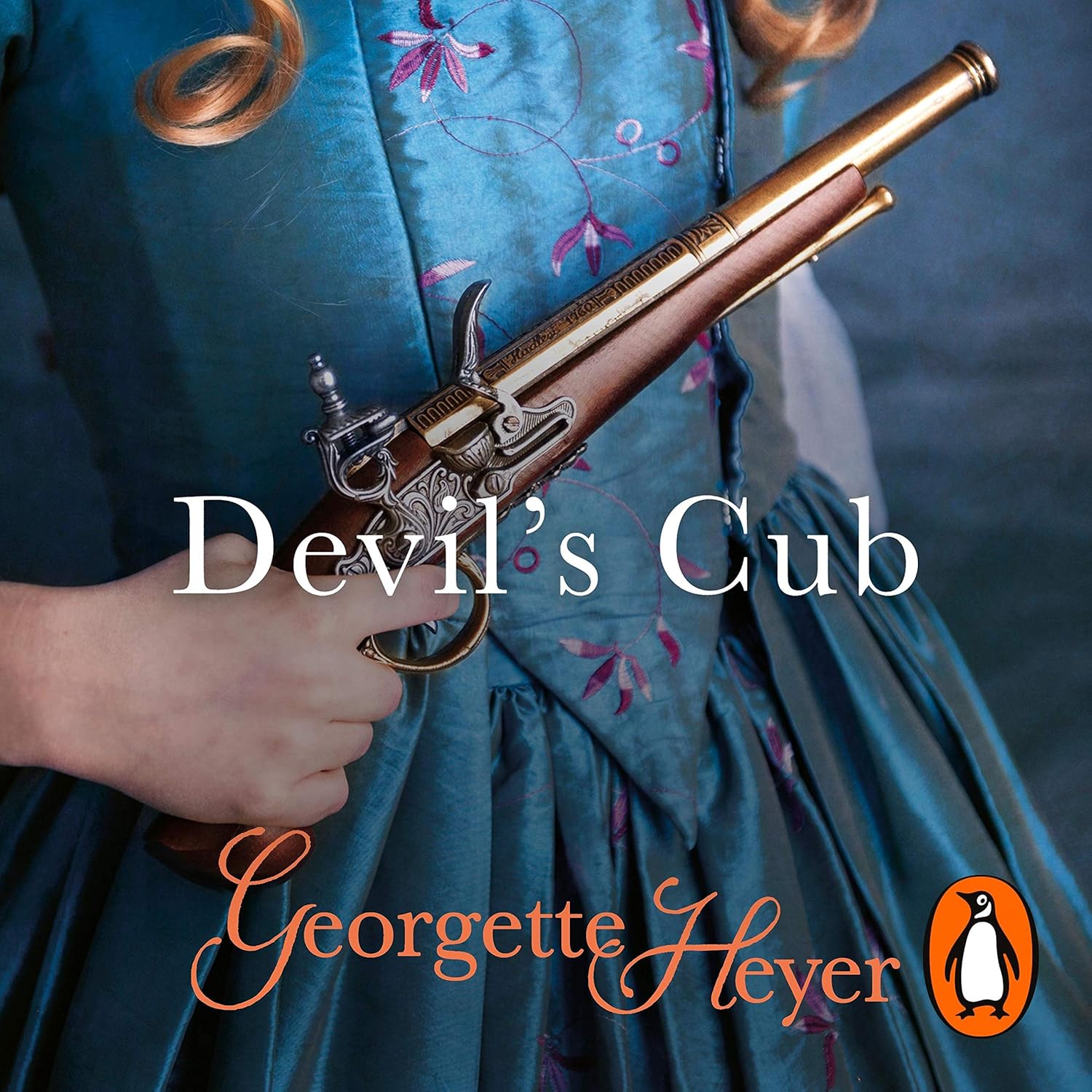
Devil's cub
Georgette Heyer


 Apple Books


 75 Min Reading Time
 Audio Version Available
About this book
To save her impetuous sister from scandal, Mary Challoner brazenly intercepts an elopement planned by the notorious Marquis of Vidal. But when Vidal discovers her deception, Mary finds herself caught in a perilous game with a rake whose reputation is as dangerous as his charm is irresistible. Kidnapped and swept away on a whirlwind adventure across Europe, Mary must outwit Vidal at every turn, even as her heart betrays her into falling for the Devil's Cub himself. Can she resist his dangerous allure, or will she surrender to a love that threatens to ruin them both?
Summary of Key Ideas
- •
Inheritance and Identity
The novel explores the complex dynamic between parents and children, specifically how the legacy of the parents—the Duke and Duchess of Avon from "These Old Shades"—shapes the life and actions of their son, Dominic, the Marquis of Vidal. Dominic struggles to live up to his parents' reputations while forging his own identity, often rebelling against expectations and societal norms. This theme highlights the challenges of inheriting a powerful legacy and finding one's own path.
- •
The Perils of Reputation
A central theme revolves around the concept of reputation and how easily it can be compromised, especially for women in the Georgian era. Mary Challoner's impulsive act to save her sister from a compromising situation leads to her own reputation being threatened. The story illustrates how societal judgments and gossip can impact a person's life and social standing, emphasizing the vulnerability of women to scandal.
- •
The Transforming Power of Love
The narrative portrays the transformative power of love. Initially, Dominic is depicted as a reckless and cynical rake, indifferent to the consequences of his actions. However, his growing affection for Mary and his eventual realization of her true character lead him to change his behavior and become a more responsible and caring person. Mary's unwavering goodness and strength of character inspire Dominic to reform, showcasing love's ability to inspire personal growth.
- •
Challenging Societal Norms
The book delves into the societal expectations and constraints placed upon individuals, particularly concerning marriage and social status. Mary is expected to make a suitable match to secure her family's future, while Dominic is pressured to uphold his aristocratic responsibilities. Their unconventional relationship challenges these expectations, suggesting that personal happiness and genuine affection are more important than adhering to rigid social norms. The narrative critiques the superficiality of the marriage market and the importance of individual agency.
- •
The Ripple Effect of Impulsive Actions
The plot is propelled by impulsive decisions and their far-reaching consequences. Dominic's hot-headed nature and Mary's spur-of-the-moment actions to protect her sister set off a chain of events that lead to elopement, mistaken identities, and perilous situations. The story highlights how hasty choices, driven by emotion, can lead to unexpected adventures and significant life changes. It serves as a reminder to consider the potential ramifications of one's actions.
- •
Female Agency and Resourcefulness
The novel showcases the importance of female agency and resourcefulness in a patriarchal society. Mary Challoner is not a passive damsel in distress; she actively takes control of her situation, making difficult choices and demonstrating courage in the face of adversity. She uses her intelligence and wit to navigate complex social situations and protect herself and her family. The story celebrates the strength and resilience of women in a time when their options were limited.
- •
Humor as a Vehicle for Social Commentary
The story employs humor and wit to explore serious themes. Heyer uses witty dialogue and comedic situations to lighten the tone and engage the reader while addressing issues of reputation, societal expectations, and personal growth. The humor is often used to satirize the manners and conventions of the Georgian era, providing social commentary in an entertaining way. This combination of humor and substance makes the novel both enjoyable and thought-provoking.
Chapter Recap

About The Author
Georgette Heyer
Main Quotes
"This is my cousin, by the way. I dare say you know of him. He is very wicked and kills people in duels."
"I am not in a heat at all. I am of a coolness quite remarkable, and I would like to kill that woman."
"Do you not know, mademoiselle, that to consider things impossible is the surest way of making them so?"
"He loved her - that was the answer, love was always the answer."
"Have you no sense of romance? I won't—no, I won't be proposed to with my hair falling down my back, a bandage round my head."
"She had common-sense too, and what man wanted the plainly matter-of-fact, when he could enjoy instead Sophia's delicious folly?"
"In real life tragedy and comedy are so intermingled that when one is most wretched ridiculous things happen to make one laugh in spite of oneself."
"I daresay Freddy might not be a great hand at slaying dragons, but you may depend upon it none of those knight-errants would be able to rescue damsels in distress half so elegantly."
"It’s the only way to be,’ I said. ‘There’s no comfort in going slower.’"
"You are too adorable to be parted from, one moment longer than is absolutely necessary."
Who Should Read This Book
Readers of historical romance, particularly Regency romance
Fans of Georgette Heyer's other novels
Readers interested in witty and comedic stories
Readers who enjoy character-driven narratives
Readers looking for light, entertaining reads
Those who appreciate classic literature and well-written prose
Readers interested in stories with strong female characters
Readers who enjoy a touch of adventure and intrigue in their romance
Book Summaries Like
Devil's cub

FAQ

Free Access to LitNotes