




 DISCORD
Don't Believe Everything You Think
Joseph Nguyen


 Amazon Best Sellers
 The New York Times Best Sellers


 14 Min Reading Time
 Audio Version Available
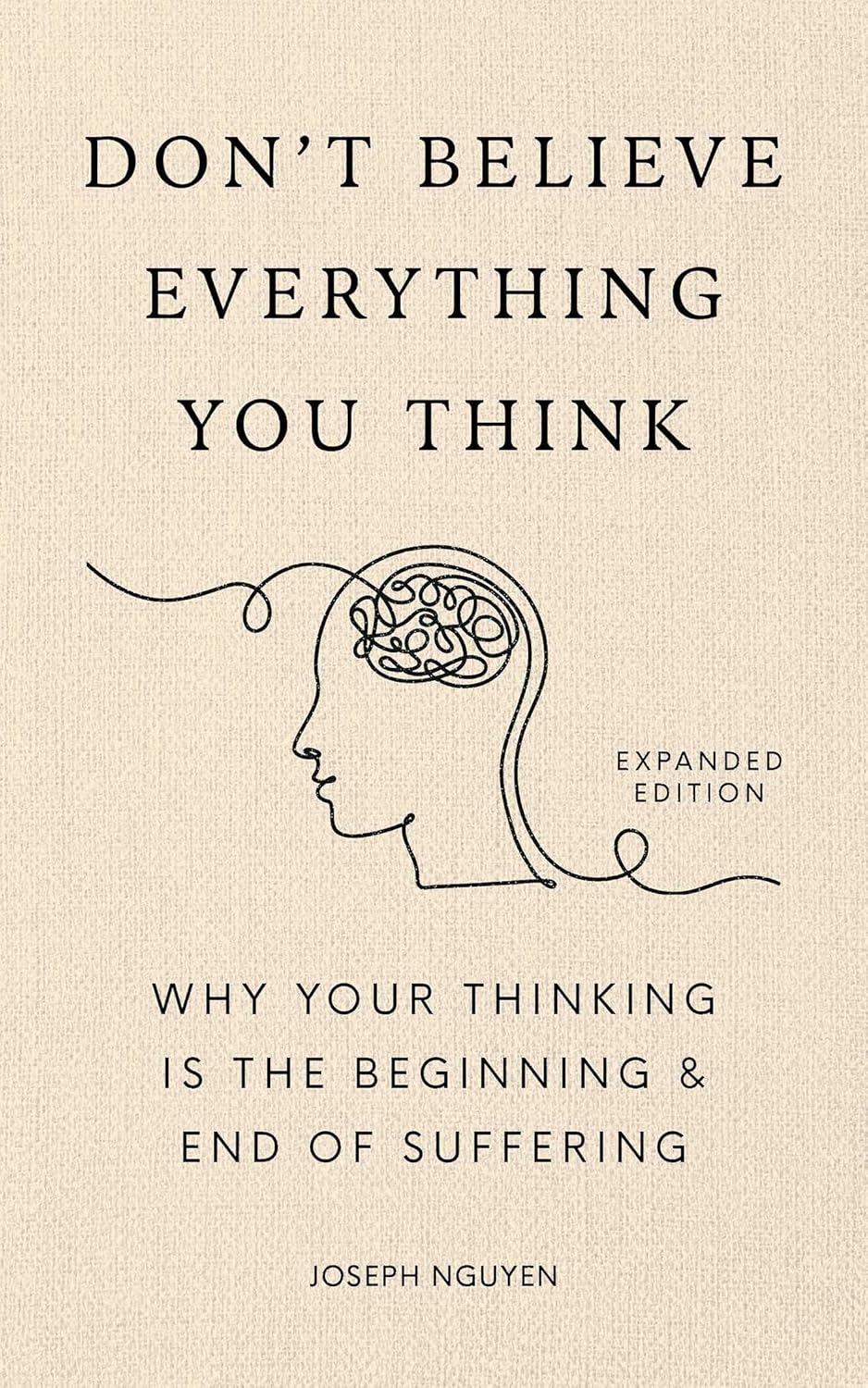
About this book
Tired of anxiety, self-doubt, and self-sabotage? Discover a revolutionary approach to achieving lasting freedom of mind—without relying on willpower or fleeting motivation.
In "Don't Believe Everything You Think," you'll uncover the root of psychological and emotional suffering and learn how to effortlessly create the life you've always desired. This book offers a groundbreaking understanding of the human experience, empowering you to end your suffering and consciously shape your reality.
Inside, you'll discover:
- The hidden source of all suffering and how to dissolve it.
- How to remain unshaken by negative thoughts and emotions.
- The key to experiencing unconditional love, peace, and joy, regardless of circumstances.
- A powerful technique to instantly transform your experience of life.
- How to break free from destructive thought patterns.
- How to unlock your intuition and inner wisdom.
Regardless of your past, peace, love, fulfillment, and joy are within your reach. "Don't Believe Everything You Think" offers timeless wisdom, revealing the infinite potential of your mind to create the life you truly want. This isn't about quick fixes or positive thinking; it's about a permanent expansion of consciousness that will guide you to the truth you already hold within.
Summary of Key Ideas
- •
Thoughts Aren't Facts
The core message of the book revolves around the idea that our thoughts are not necessarily truths and that believing everything we think leads to unnecessary suffering. Nguyen encourages readers to question their thoughts and recognize them as mere mental events rather than reflections of reality. This detachment creates space for peace and clarity, allowing individuals to respond to situations with greater awareness and less reactivity. By understanding that thoughts are transient and not inherently meaningful, readers can liberate themselves from the cycle of negative thinking and emotional distress.
- •
Suffering is Optional
Nguyen emphasizes the distinction between pain and suffering, asserting that while pain is an inevitable part of life, suffering is a choice stemming from our attachment to thoughts. Suffering arises when we resist or cling to our thoughts, especially negative ones, thereby amplifying their impact on our emotional state. By recognizing the optional nature of suffering, individuals can learn to accept pain without resistance, diminishing its power to disrupt their inner peace. This involves observing thoughts without judgment and allowing them to pass without getting caught up in their content.
- •
The Power of Non-Thinking
The book introduces the concept of 'non-thinking' as a state of awareness beyond the constant stream of thoughts. This doesn't imply ceasing to think altogether, but rather disengaging from the compulsive and often detrimental patterns of thinking. Non-thinking allows for a deeper connection to the present moment and a more intuitive understanding of reality. By quieting the mind, we create space for insights and wisdom to emerge, unclouded by the noise of incessant thought. This state of mental stillness is presented as a path to greater clarity, creativity, and overall well-being.
- •
Thoughts Shape Reality
Nguyen argues that we create our own reality through our thoughts. Our perceptions, beliefs, and interpretations shape our experiences and influence our emotions and behaviors. Recognizing this creative power allows us to take responsibility for our inner world and consciously choose thoughts that support our well-being. By shifting our focus from negative, limiting beliefs to more positive and empowering ones, we can transform our reality and cultivate a more fulfilling life. This involves actively challenging and reframing negative thought patterns and cultivating a mindset of possibility and optimism.
- •
Letting Go of Control
The book suggests that the relentless pursuit of control over our thoughts is futile and counterproductive. Instead of trying to suppress or manipulate our thoughts, Nguyen advocates for acceptance and observation. By allowing thoughts to arise and pass without resistance, we diminish their power to affect us. This approach cultivates a sense of detachment and inner peace, enabling us to respond to situations with greater equanimity. Letting go of the need to control our thoughts is a liberating practice that reduces anxiety and fosters a sense of inner freedom.
- •
The Importance of Presence
A key idea in the book is the importance of being present in the moment. Much of our suffering stems from dwelling on the past or worrying about the future, both of which are beyond our control. By focusing our attention on the present moment, we can experience life more fully and appreciate the beauty and wonder that surrounds us. Presence allows us to respond to situations with greater clarity and effectiveness, unburdened by the baggage of past experiences or future anxieties. Cultivating mindfulness and practicing presence are presented as essential tools for reducing suffering and enhancing overall well-being.
- •
Beyond Analysis
Nguyen challenges the notion that we need to constantly analyze and understand our thoughts. Overthinking and excessive analysis can lead to confusion and anxiety, hindering our ability to experience life directly. Instead of getting caught up in the content of our thoughts, the book encourages us to observe them from a distance, recognizing them as transient mental events. This detachment allows us to access a deeper level of wisdom and intuition, unclouded by the noise of incessant thinking. By reducing the need to analyze everything, we can free ourselves from mental clutter and experience greater clarity and peace.
Chapter Recap

About The Author
Joseph Nguyen
Main Quotes
"Thought is not reality; yet it is through thought that our realities are created."
"The mind is a powerful storyteller, but not all stories are true."
"You are not your thoughts; you are the awareness behind your thoughts."
"The greatest prison people live in is the fear of what other people think."
"The present moment is the only reality."
"Never forget your own divinity because it is only through our divinity that we have our humanity."
"The more you are present, the more you realize that life is already perfect as it is."
"Don't believe everything you think, have the courage to challenge your beliefs and see the truth beyond them."
"The mind is a wonderful servant, but a terrible master."
"Your value doesn't decrease based on someone's inability to see your worth."
Who Should Read This Book
Individuals seeking self-help and personal development resources
Readers interested in mindfulness and cognitive behavioral techniques
People struggling with anxiety, stress, and negative thought patterns
Those looking for practical tools to improve their mental well-being
Young adults and students seeking guidance on navigating their thoughts and emotions
Individuals interested in Eastern philosophy and mindfulness practices
Readers open to exploring the connection between thoughts and suffering
People seeking a more peaceful and fulfilling life
Book Summaries Like
Don't Believe Everything You Think
FAQ

Free Access to LitNotes