




 DISCORD
Drive Your Plow Over the Bones of the Dead
Olga Tokarczuk


 USA Today Best Sellers


 52 Min Reading Time
 Audio Version Available
About this book
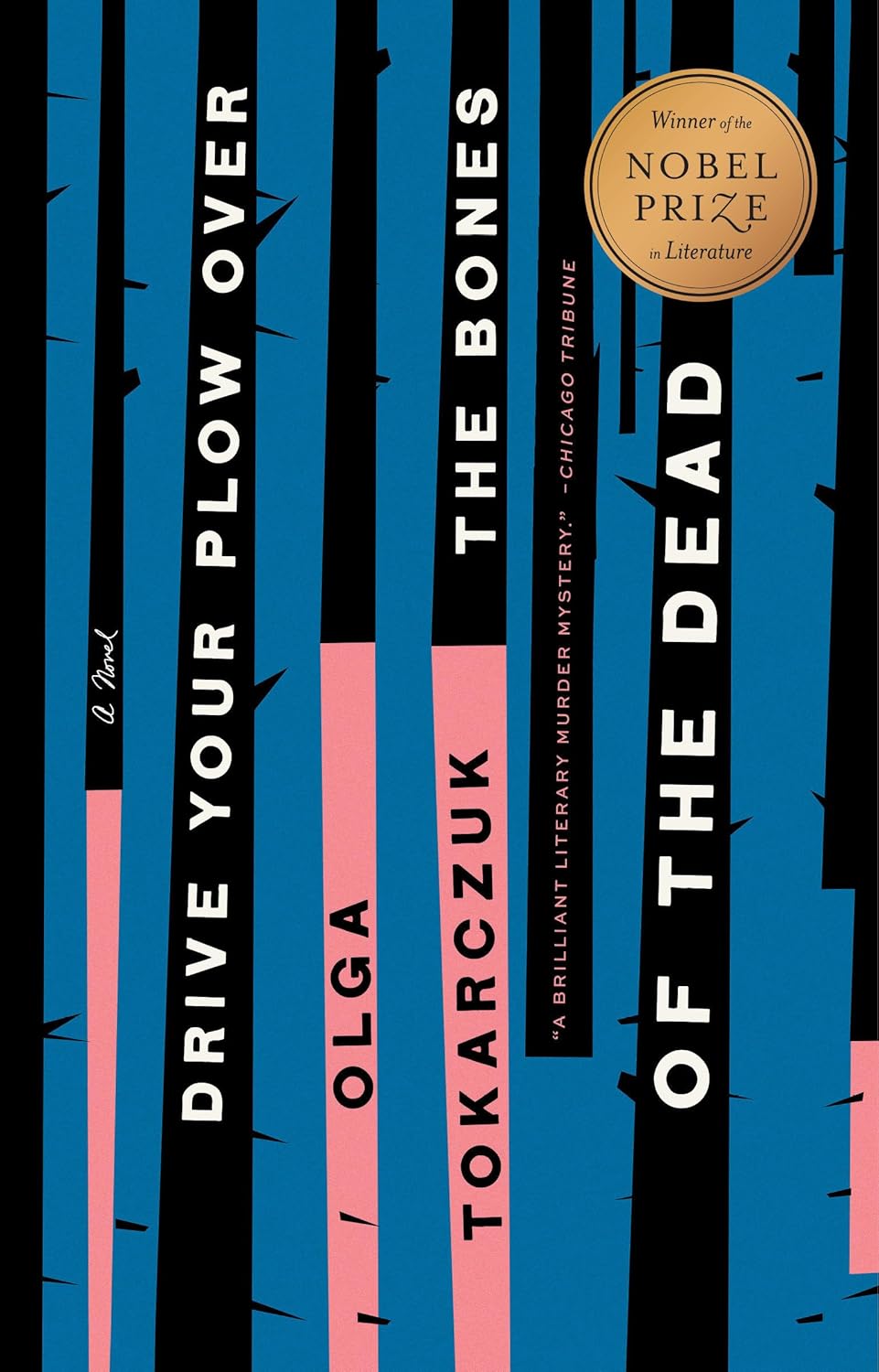
In a secluded Polish village, winter's darkness is Janina Duszejko's domain. This eccentric woman, a lover of astrology, William Blake, and the company of animals, finds herself an outsider among her neighbors. But when members of the local hunting club begin to turn up dead in mysterious ways, Janina sees a pattern that no one else does.
Dismissed as a crank, Janina embarks on her own investigation, convinced that she knows the truth. "Drive Your Plow Over the Bones of the Dead," a subversive and darkly humorous novel by Nobel Prize winner Olga Tokarczuk, transcends the boundaries of a conventional crime story. It's a thought-provoking exploration of sanity and madness, justice and hypocrisy, forcing us to confront profound questions about who has a voice and what it means to be human.
Summary of Key Ideas
- •
The Moral Imperative of Animal Rights
Animal Rights Advocacy: The novel passionately advocates for animal rights, portraying animals as sentient beings deserving of respect and moral consideration. Janina Duszejko, the protagonist, is a staunch defender of animals, viewing hunting as a cruel and unjust practice. Tokarczuk uses vivid descriptions of the animals and their suffering to evoke empathy in the reader, challenging anthropocentric views that prioritize human interests above all others. The mysterious deaths of hunters become a form of retribution, highlighting the ethical implications of humanity's relationship with the natural world and advocating for a more compassionate and balanced coexistence.
- •
Challenging Abuses of Power
Critique of Societal Power Structures: The book critiques societal power structures, particularly those that enable and perpetuate violence against marginalized groups, including animals. It exposes the hypocrisy and corruption within institutions such as the police force, the church, and local government, revealing how these entities often prioritize their own interests over justice and ethical conduct. Janina's outsider status allows her to see and challenge these abuses of power, offering a scathing commentary on the dynamics of control and oppression within society.
- •
Questioning Reality and Sanity
Sanity vs. Madness: The novel explores the line between sanity and madness, questioning societal norms and perceptions of reality. Janina, considered eccentric and possibly mad by the villagers, possesses a unique perspective that allows her to see truths others cannot or choose not to see. Her unconventional beliefs and actions challenge the reader to question their own assumptions about what is considered normal or rational. Tokarczuk blurs the boundaries between sanity and madness to suggest that true insight may lie outside the confines of conventional thinking.
- •
The Cosmic Web of Interdependence
Astrology and Interconnectedness: Astrology plays a significant role in the narrative, representing Janina's belief in the interconnectedness of all things. She uses astrological charts to interpret events and understand the motivations of others, suggesting a worldview in which everything is linked and influenced by cosmic forces. This emphasis on interconnectedness extends to the relationship between humans and nature, reinforcing the idea that our actions have far-reaching consequences and that we are all part of a larger, interdependent system.
- •
Embracing an Ecocentric Worldview
Environmentalism and Ecocentrism: The novel champions environmentalism and an ecocentric worldview, emphasizing the intrinsic value of nature and the importance of ecological balance. Tokarczuk critiques anthropocentric attitudes that place humans at the center of the universe, advocating for a shift towards a more holistic and sustainable way of living. The forest and its inhabitants are portrayed as vital and interconnected, highlighting the devastating impact of human activities, such as hunting and deforestation, on the natural world.
- •
The Labyrinth of Translation
Translation and Interpretation: The theme of translation appears both literally, with Janina working as a translator, and metaphorically, as she attempts to translate the language of nature and the motivations of others. The act of translation highlights the challenges of communication and understanding, emphasizing the potential for misinterpretation and the subjective nature of reality. Janina's struggles with translation reflect the broader difficulties of bridging the gap between different perspectives and worldviews.
- •
Seeking Justice, Delivering Revenge?
Justice and Revenge: The narrative grapples with the complex themes of justice and revenge, particularly in the context of animal rights. The mysterious deaths of the hunters raise questions about whether violence can ever be justified as a means of achieving justice for animals. Janina's actions and beliefs challenge the reader to consider the ethical implications of seeking revenge and the potential for violence to perpetuate cycles of suffering.
- •
Deconstructing Toxic Masculinity
Critique of Masculinity: The book presents a strong critique of traditional masculinity, associating it with violence, dominance, and a disregard for nature. The male characters in the novel often embody these negative traits, engaging in activities such as hunting and exploiting the environment for their own gain. Janina's rejection of these masculine ideals and her embrace of more feminine values, such as empathy and compassion, offer an alternative vision of human behavior.
Chapter Recap

About The Author
Olga Tokarczuk
Main Quotes
"You know what, sometimes it seems to me we're living in a world that we fabricate for ourselves. We decide what's good and what isn't, we draw maps of meanings for ourselves... And then we spend our whole lives struggling with what we have invented for ourselves."
"Anger always leaves a large void behind it, into which a flood of sorrow pours instantly, and keeps on flowing like a great river, without beginning or end."
"We live in a state of siege. If one takes a close look at each fragment of a moment, one might choke with terror. Within our bodies disintegration inexorably ..."
"It made me feel sad, horrified, for even someone as foul as he was did not deserve death."
"Now pay attention, there's something you're not seeing."
"We sang about the real Light that exists somewhere far away, imperceptible for now, but that we shall behold as soon as we die."
"In seed time learn, in harvest teach, in winter enjoy. Drive your cart and your plow over the bones of the dead. The road of excess leads to the ..."
"Our hamlet consists of a few houses…far from the rest of the world…In winter the wind becomes violent and shrill."
"For people of my age, the places that they truly loved and to which they once belonged are no longer there. The places of their childhood ..."
"Perhaps the purpose of certain prayers is not to be heard, but only to instill in the person who utters them the feeling that someone is listening."
Who Should Read This Book
Readers of literary fiction
Fans of mystery and thriller novels with philosophical themes
Individuals interested in ecological and animal rights issues
Readers who appreciate dark humor and unconventional protagonists
Those familiar with or interested in Central European literature and culture
Readers of feminist literature
Individuals interested in astrology and esoteric subjects
People who enjoy stories that challenge societal norms and authority
Book Summaries Like
Drive Your Plow Over the Bones of the Dead

FAQ

Free Access to LitNotes