




 DISCORD
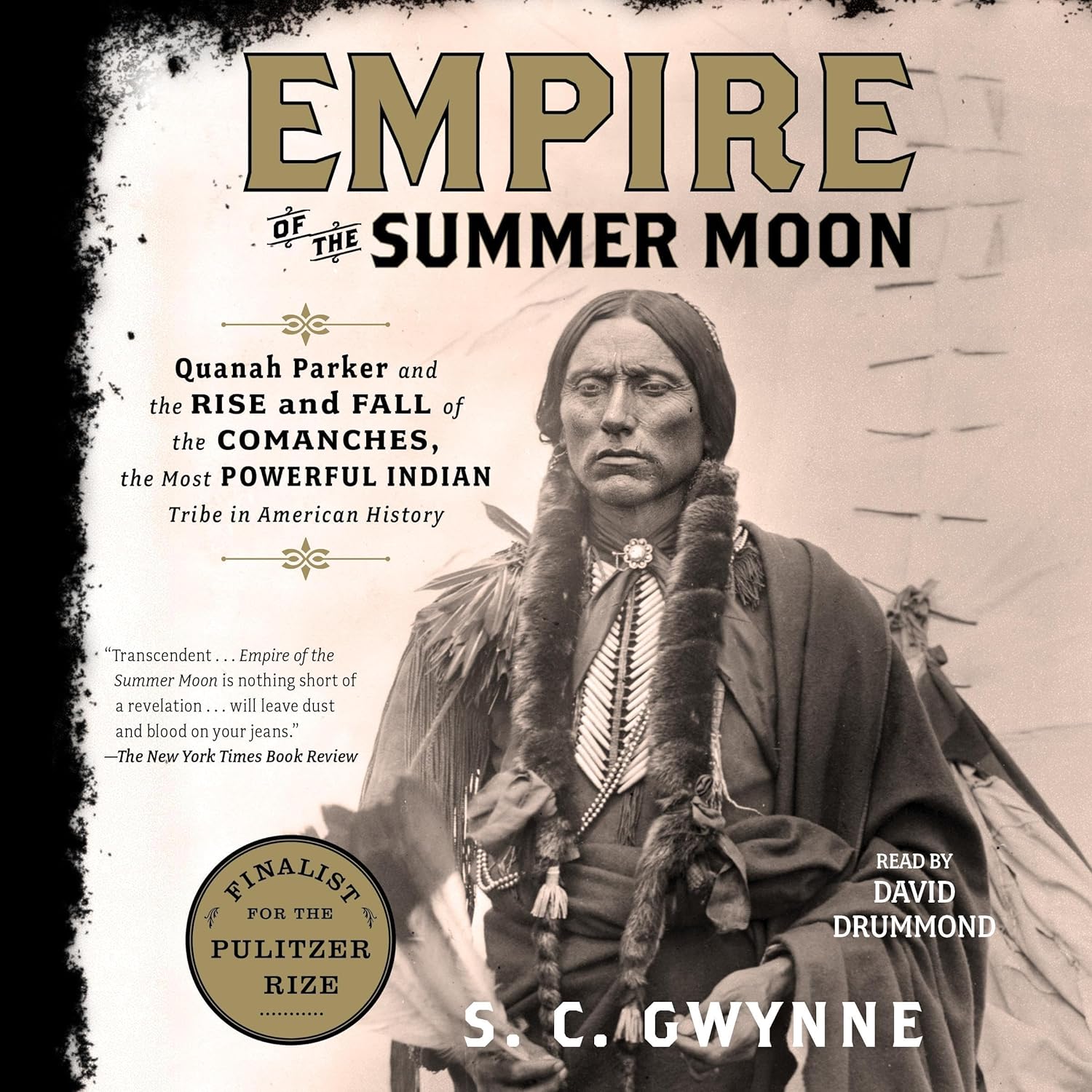
Empire of the Summer Moon
S. C. Gwynne


 The New York Times Best Sellers


 79 Min Reading Time
 Audio Version Available
About this book
A Pulitzer Prize finalist, Empire of the Summer Moon chronicles the epic forty-year battle for the American West between white settlers and the Comanche Indians, the most formidable tribe in American history. S.C. Gwynne weaves together two captivating narratives: the rise and fall of the Comanches, whose mastery of horsemanship and warfare halted Spanish and French expansion, and the remarkable story of Cynthia Ann Parker, a captured pioneer girl who became a Comanche woman, and her son Quanah, the last and greatest Comanche chief. More than a history of savage warfare, this is a sweeping account of colonialism, the Civil War, the destruction of the buffalo, and the railroads, revealing how the legendary Comanches shaped the destiny of the American West.
Summary of Key Ideas
- •
Comanche Mastery of Horsemanship and Warfare
The Comanches' unparalleled horsemanship and fighting skills were central to their dominance. Mastering mounted warfare, they became formidable warriors, capable of extraordinary feats of archery and agility on horseback. This prowess allowed them to control vast territories and resist encroachment from other tribes and, later, white settlers. Their deep understanding of the land, combined with their equestrian skills, made them a force to be reckoned with for over a century, shaping the history of the American West and instilling fear in their adversaries.
- •
The Brutality of Comanche Raids
The book highlights the brutal and relentless nature of the Comanche raids and their impact on settlers. These raids were characterized by extreme violence, including kidnapping, torture, and massacres. Gwynne does not shy away from depicting the horrors inflicted by both sides, emphasizing the cycle of violence and retribution that fueled the conflict. The Comanche raids instilled fear and terror among settlers, significantly shaping the narrative of the Wild West and the perception of Native Americans.
- •
Cynthia Ann Parker: A Life Between Two Worlds
Cynthia Ann Parker's story exemplifies the cultural clash between Comanches and white settlers. Abducted as a child and raised within the tribe, she fully assimilated into Comanche life, marrying a chief and bearing children, including Quanah Parker. Her eventual recapture and forced return to white society highlight the irreconcilable differences between the two cultures and the profound personal tragedies that resulted from the conflict. Cynthia Ann's life serves as a poignant symbol of divided loyalties and the human cost of westward expansion.
- •
Quanah Parker's Leadership and Adaptation
Quanah Parker emerged as a pivotal figure in Comanche history, leading his people through a period of immense change and conflict. As the son of Cynthia Ann Parker and Chief Peta Nocona, he embodied the fusion of two cultures. Quanah's leadership skills, strategic thinking, and ability to adapt to changing circumstances enabled him to negotiate with the U.S. government while preserving aspects of Comanche culture. His transition from warrior to negotiator underscores the complexities of Native American leadership during the era of westward expansion.
- •
The U.S. Army's Adaptation and the Buffalo's Demise
The book underscores the U.S. Army's struggle to effectively combat the Comanches, initially due to their superior horsemanship and knowledge of the terrain. Traditional military tactics proved ineffective against Comanche guerrilla warfare. The army's eventual success came through adopting new strategies, such as targeting the Comanches' food supply (specifically, the buffalo) and employing Native American scouts who understood Comanche tactics. This adaptation highlights the challenges faced by the U.S. military in unconventional warfare.
- •
The Destruction of the Buffalo and its Impact
The systematic destruction of the buffalo herds by white hunters played a crucial role in the subjugation of the Comanches. The buffalo were the Comanches' primary source of food, clothing, and shelter. By decimating the herds, the U.S. government effectively deprived the Comanches of their livelihood, forcing them to surrender and accept reservation life. This strategy highlights the devastating impact of environmental destruction as a tool of warfare and cultural destruction.
- •
Complex Motivations and Perspectives
The narrative explores the complex and often contradictory motivations of the individuals involved in the conflict, both Native American and white. It avoids simplistic portrayals of good versus evil, instead presenting a nuanced picture of people driven by survival, cultural loyalty, and personal ambition. By examining the perspectives of both sides, Gwynne provides a more complete understanding of the historical events and the human drama that unfolded on the Texas frontier.
- •
The Enduring Legacy of Conflict
The book examines the long-lasting effects of the Comanche wars on both Native American and white societies. For the Comanches, it meant the loss of their traditional way of life, their freedom, and their ancestral lands. For white settlers, it resulted in lasting trauma, fear, and a legacy of conflict that continues to shape perceptions of Native Americans. The book invites reflection on the consequences of westward expansion and the enduring impact of historical injustices.
Chapter Recap

About The Author
S. C. Gwynne
Main Quotes
"The Comanches were not like other Indians."
"The truth was, the Comanches were the finest light cavalry in the world."
"They were perhaps the most dangerous Indians on earth."
"Comanches were magnificent horsemen and arguably the most skilled warriors the North American continent ever produced."
"In one sense, the Parkers are the beginning and end of the Comanches in U.S. history."
"The horse was the most important thing in their lives."
"They could shoot twenty arrows a minute, accurately, from a galloping horse."
"His name was Quanah, and he was about to become the last war chief of the Quahadi Comanches."
"The Comanches had no government, no laws, no taxes, no priests, no chiefs except in time of war."
"The vanguard of the American push westward were simple farmers imbued with a fierce Calvinist work ethic, steely optimism, and a cold-eyed willingness to kill anyone who got in their way."
Who Should Read This Book
Readers interested in Native American history, particularly the Comanches
Readers of Western history and frontier narratives
Those interested in military history, especially conflicts between Native Americans and the U.S. Army
Readers who enjoy biographies, specifically of Quanah Parker
People fascinated by Texas history
Readers of non-fiction books that read like a novel
Individuals seeking a detailed account of the Comanche culture and their impact on American history
Readers who appreciate well-researched and engaging historical narratives
Book Summaries Like
Empire of the Summer Moon

FAQ

Free Access to LitNotes