




 DISCORD
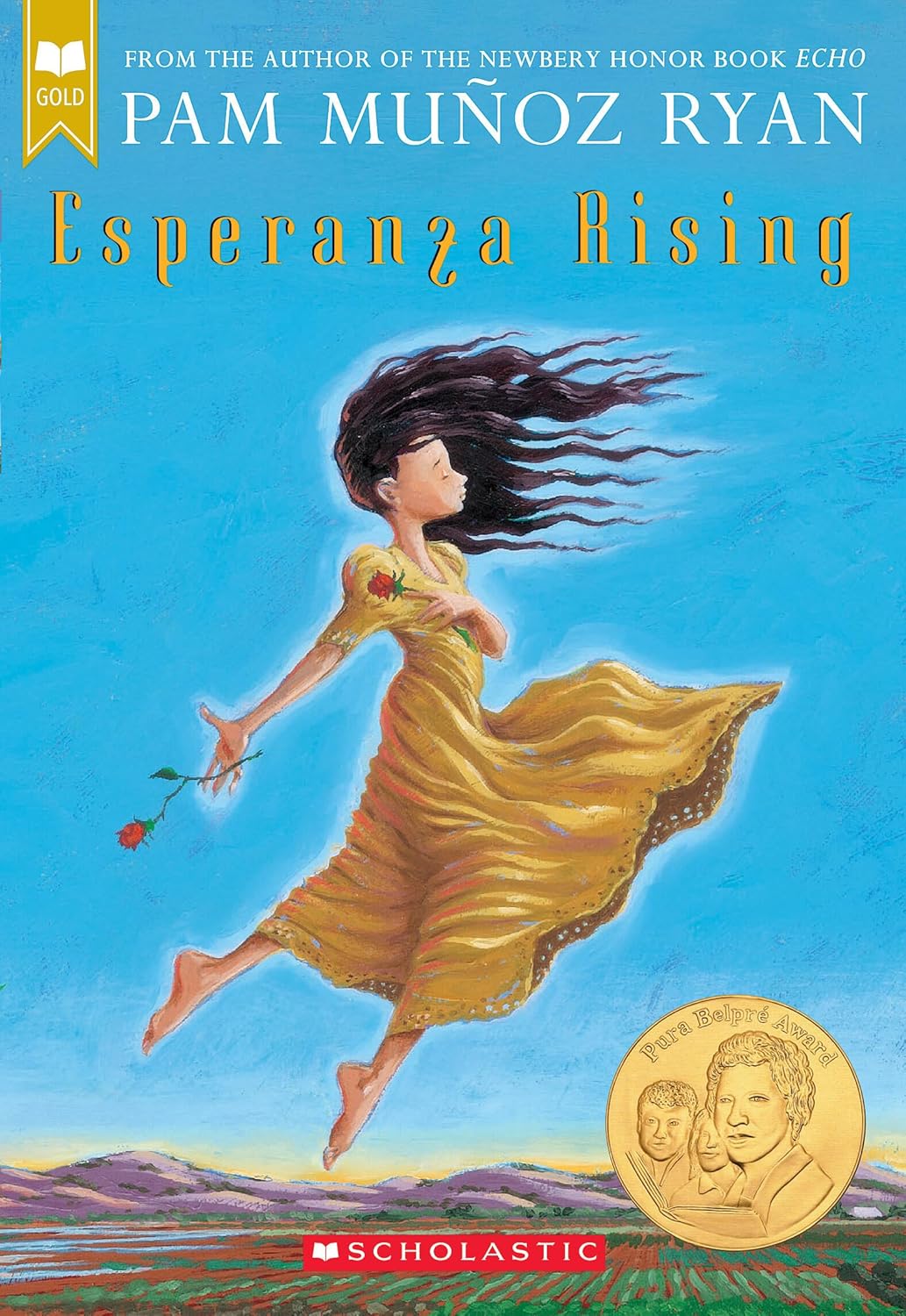
Esperanza Rising
Pam Muñoz Ryan


 Barnes & Noble Bestsellers


 42 Min Reading Time
 Audio Version Available
About this book
In Aguascalientes, Mexico, Esperanza Ortega believed she would always live a life of privilege on her family’s ranch: fancy dresses, a beautiful home, and servants to fulfill her every desire. But when tragedy strikes, Esperanza and her mother flee to California, where they are forced to work in a Mexican farm labor camp.
Suddenly immersed in a world of backbreaking work, financial hardship, and social prejudice during the Great Depression, Esperanza struggles to adapt. As her mother falls ill and a farmworkers' strike threatens to uproot their fragile existence, Esperanza must rise above her despair to find strength within herself. With her mother's life and her own future hanging in the balance, she discovers the true meaning of resilience, family, and the enduring power of hope.
Summary of Key Ideas
- •
Loss of Innocence and the Transition to Adulthood
From Riches to Resilience: Esperanza's journey begins in privilege on her family's prosperous ranch in Mexico. When tragedy strikes with her father's death, she and her mother are forced to flee to California and work as farm laborers. This drastic change strips her of her former status and forces her to confront the realities of poverty and hard labor, teaching her humility and the true value of hard work. The narrative explores how Esperanza adapts to this new life, shedding her dependence on material comforts and developing inner strength.
- •
Social Injustice and Economic Hardship
The Plight of Migrant Workers: The novel vividly portrays the harsh realities faced by Mexican migrant workers in California during the Great Depression. Esperanza witnesses firsthand the backbreaking labor, low wages, discrimination, and poor living conditions endured by these workers. Ryan highlights the exploitation and injustice prevalent in the agricultural system, emphasizing the importance of solidarity and collective action to fight for fair treatment. This theme serves as a powerful commentary on social inequality and the struggle for workers' rights.
- •
Family Bonds and Community Support
The Enduring Power of Family: Throughout the story, family serves as a source of strength and support for Esperanza. Despite the challenges they face, Esperanza, her mother, and Abuela maintain a deep bond, offering each other comfort and encouragement. Esperanza also develops a sense of community with other migrant workers, forming familial-like relationships that help them cope with the hardships of their lives. This theme underscores the importance of kinship and mutual support in overcoming adversity.
- •
The Persistence of Hope and Optimism
Finding Hope in Hardship: Despite the numerous obstacles Esperanza encounters, she never loses hope for a better future. Her hope is fueled by her love for her family, her determination to bring Abuela to California, and her belief in the possibility of a more just and equitable world. Esperanza’s resilience and unwavering optimism serve as an inspiration, demonstrating the power of hope to sustain individuals through even the darkest of times. The narrative suggests that hope is not merely wishful thinking but a proactive force that empowers individuals to persevere and strive for positive change.
- •
Confronting Prejudice and Seeking Equality
Overcoming Prejudice and Discrimination: Esperanza and her fellow migrant workers face constant prejudice and discrimination due to their ethnicity and economic status. They are often treated as second-class citizens, denied opportunities, and subjected to unfair treatment. The novel exposes the pervasive racism and xenophobia of the time, highlighting the importance of challenging prejudice and advocating for equality. Esperanza's growing awareness of these injustices motivates her to stand up for herself and others, demonstrating the transformative power of empathy and solidarity.
- •
Embracing Cultural Heritage and Identity
The Significance of Cultural Identity: Esperanza's Mexican heritage is an integral part of her identity, and she initially struggles to reconcile her privileged upbringing with the realities of her new life as a migrant worker. As she adapts to her surroundings, she learns to appreciate the traditions, values, and resilience of her culture. The novel celebrates the richness and diversity of Mexican culture, emphasizing the importance of preserving one's heritage while embracing new experiences and opportunities. Esperanza’s journey becomes a testament to the enduring strength and adaptability of cultural identity.
Chapter Recap

About The Author
Pam Muñoz Ryan
Main Quotes
""We are like the phoenix," said Abuelita. "Rising again, with a new life ahead of us.""
""There is more than one way to be strong.""
""Do not ever be afraid to start over.""
""My life is like aাঁর circle," Abuelita said. "I have lived many years, but I am back where I started.""
""Aguántate tantito y la fruta caerá en tu mano." (Wait a little while and the fruit will fall into your hand.)"
""We are in the United States now. And things aren't always the way we expect them to be.""
""Here, we have two choices. To be together and miserable or to be together and happy.""
""Mama, I miss being rich.""
""Sometimes, you must lose nearly everything to appreciate everything.""
""Esperanza thought hard. She couldn't imagine a life without maids or servants. Or without her fancy dresses and porcelain dolls.""
Who Should Read This Book
Children and young adults (ages 8-14)
Readers interested in historical fiction, particularly the Great Depression era
Individuals of Mexican or Mexican-American heritage seeking stories reflecting their culture
Readers interested in stories about immigration, family, and overcoming adversity
Educators looking for culturally relevant and age-appropriate literature for classroom use
Readers who enjoy coming-of-age stories and character development
Fans of Pam Muñoz Ryan's other works
Book Summaries Like
Esperanza Rising




FAQ

Free Access to LitNotes