




 DISCORD
Evicted
Matthew Desmond, Enrique Maldonado Roldn


 National Book Critics Circle Award
 Apple Books


 85 Min Reading Time
 Audio Version Available
About this book
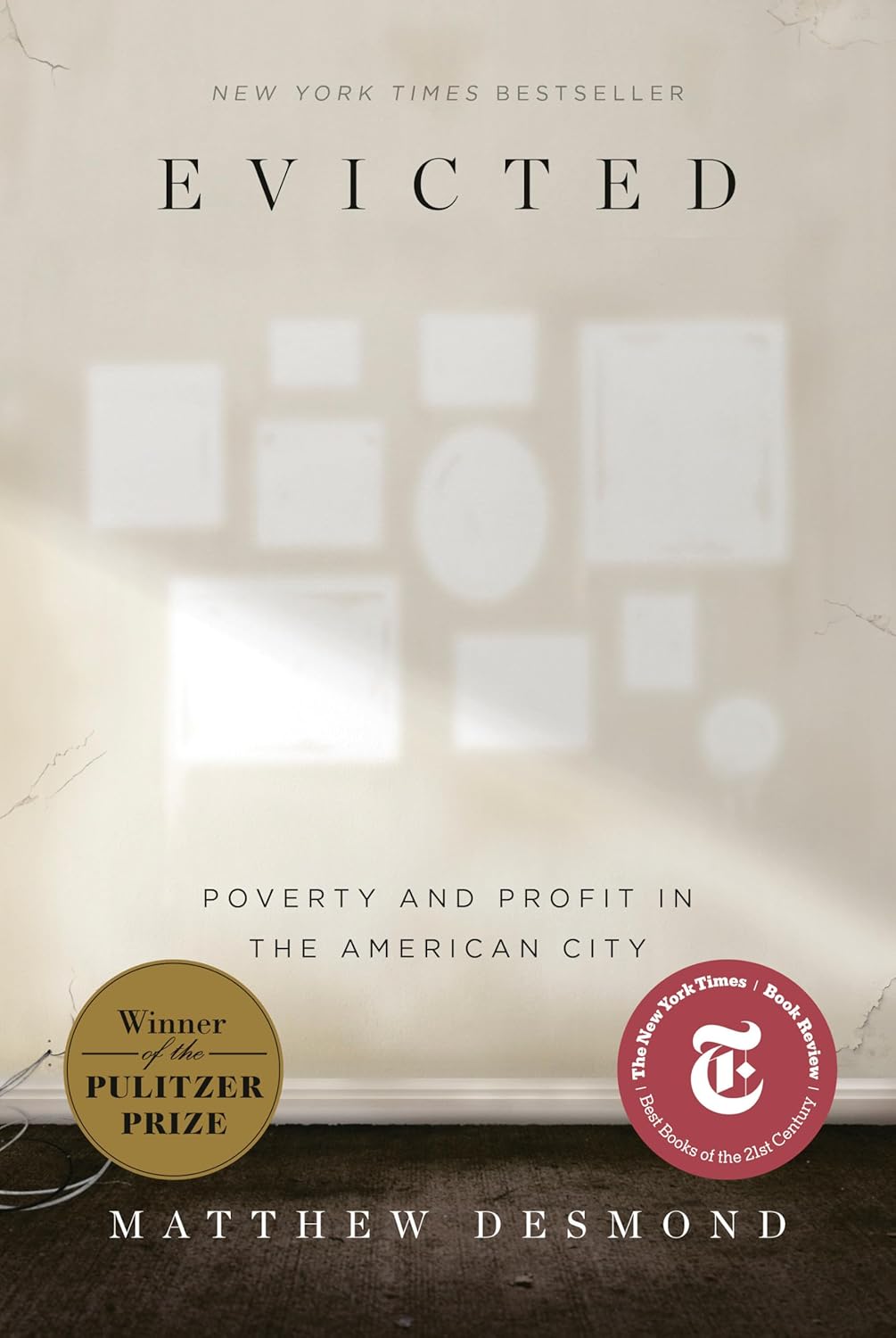
In Milwaukee's poorest neighborhoods, eight families teeter on the edge. Arleen, a single mother, struggles to care for her sons with just $20 left after rent. Scott, a kind nurse, battles heroin addiction. Lamar, despite having no legs, watches over neighborhood kids while striving to escape debt. Vanetta faces desperate measures after a cut in hours. Landlords Sherrena, a former teacher turned entrepreneur, and Tobin, who manages a run-down trailer park, hold their tenants' fates in their hands.
Matthew Desmond's Evicted plunges into the heart of America's eviction epidemic, revealing the human cost of housing insecurity and economic exploitation. Through vivid, intimate storytelling and rigorous research, this Pulitzer Prize-winning book transforms our understanding of poverty, offering fresh ideas for addressing one of the nation's most urgent crises and reminding us of the fundamental importance of home.
Summary of Key Ideas
- •
Eviction: A Cause of Poverty
Eviction as a Cause, Not Just a Consequence, of Poverty: Desmond challenges the common perception of eviction as merely a result of poverty, arguing instead that it actively perpetuates and deepens the cycle of poverty. Eviction leads to job loss, disrupts schooling for children, and damages social networks, making it harder for families to recover financially and emotionally. This perspective reframes eviction as a significant driver of inequality, rather than just a symptom.
- •
Exploitation in the Housing Market
The Housing Crisis Exploits the Vulnerable: "Evicted" exposes how the current housing system disproportionately affects the poor, particularly women and minorities. Landlords often take advantage of tenants' limited options, charging exorbitant rents for substandard housing and engaging in discriminatory practices. This exploitation further entrenches poverty and limits opportunities for upward mobility, highlighting the systemic injustices within the housing market.
- •
The Destabilizing Effects of Eviction
The High Cost of Housing Instability: The book illustrates the profound impact of housing instability on families and communities. Frequent moves disrupt social connections, educational attainment, and employment opportunities. Children who experience eviction often suffer academically and emotionally, and families are forced to live in unstable and sometimes dangerous environments. This instability creates a cycle of disadvantage that is difficult to break.
- •
Profit Motives and Eviction
The Role of Profit in the Eviction Crisis: Desmond highlights how the pursuit of profit by landlords and property owners contributes to the eviction crisis. The pressure to maximize returns can lead to neglecting property maintenance, charging excessive rents, and prioritizing eviction over tenant retention. This profit-driven approach often exacerbates the vulnerability of low-income tenants and reinforces existing inequalities.
- •
Eviction's Disparate Impact
The Intersection of Race and Gender in Eviction: "Evicted" reveals the disproportionate impact of eviction on women, particularly women of color. Single mothers and women with children are especially vulnerable to eviction due to lower incomes, discrimination, and the challenges of balancing work and family responsibilities. The book underscores the need to address the intersectional nature of housing insecurity and its impact on marginalized groups.
- •
The Affordable Housing Shortage
The Lack of Affordable Housing as a Systemic Failure: Desmond emphasizes the severe shortage of affordable housing options for low-income families. This scarcity forces families to compete for limited resources, often accepting substandard housing conditions or paying a large portion of their income on rent. The lack of affordable housing is a systemic failure that perpetuates poverty and housing instability.
- •
Erosion of Community Ties
Community Breakdown and Social Isolation: Eviction leads to the breakdown of communities and increased social isolation. When families are forced to move frequently, they lose ties to their neighbors, support networks, and community institutions. This social isolation can have devastating effects on mental health, economic stability, and overall well-being.
- •
Housing as a Human Right
Housing as a Basic Human Right: Implicit throughout "Evicted" is the argument that access to stable, affordable housing should be considered a basic human right. Desmond suggests that society has a moral obligation to ensure that all individuals and families have access to safe and secure housing, regardless of their income or background. This perspective challenges the prevailing view of housing as a commodity and calls for policy changes to prioritize human needs.
Chapter Recap

About The Author
Matthew Desmond
Main Quotes
"Decent, affordable housing should be a basic right for everybody in this country. The reason is simple: without stable shelter, everything else falls apart."
"Eviction wasn’t merely a condition of poverty; it was a cause of it."
"If I give you a break, you give me a break."
"Our cities have become unaffordable to our poorest families, and this problem is leaving a deep and jagged scar on the next generation."
"Poverty is like a plague that spreads from house to house."
"In this country, we believe in personal responsibility. But that’s a very incomplete story."
"Sometimes I think about the way we treat poor people in this country, like they are disposable."
"No one thought the poor more undeserving than the poor themselves."
"“I have a right to live, and I have a right to live like I want to live,” she said. “People don’t realize that even poor people get tired of the same old taste.""
"Every year in this country, people are evicted from their homes not by the tens of thousands or even the hundreds of thousands but by the millions."
Who Should Read This Book
Readers interested in social justice issues
Individuals passionate about understanding poverty and inequality in America
Urban studies students and academics
Sociology students and academics
Those interested in housing policy and reform
Readers of ethnographic studies and narrative nonfiction
People involved in community development and activism
Policy makers and government officials
Individuals working in social services and non-profit organizations
General readers seeking to understand the challenges faced by low-income families
Book Summaries Like
Evicted




FAQ

Free Access to LitNotes