




 DISCORD
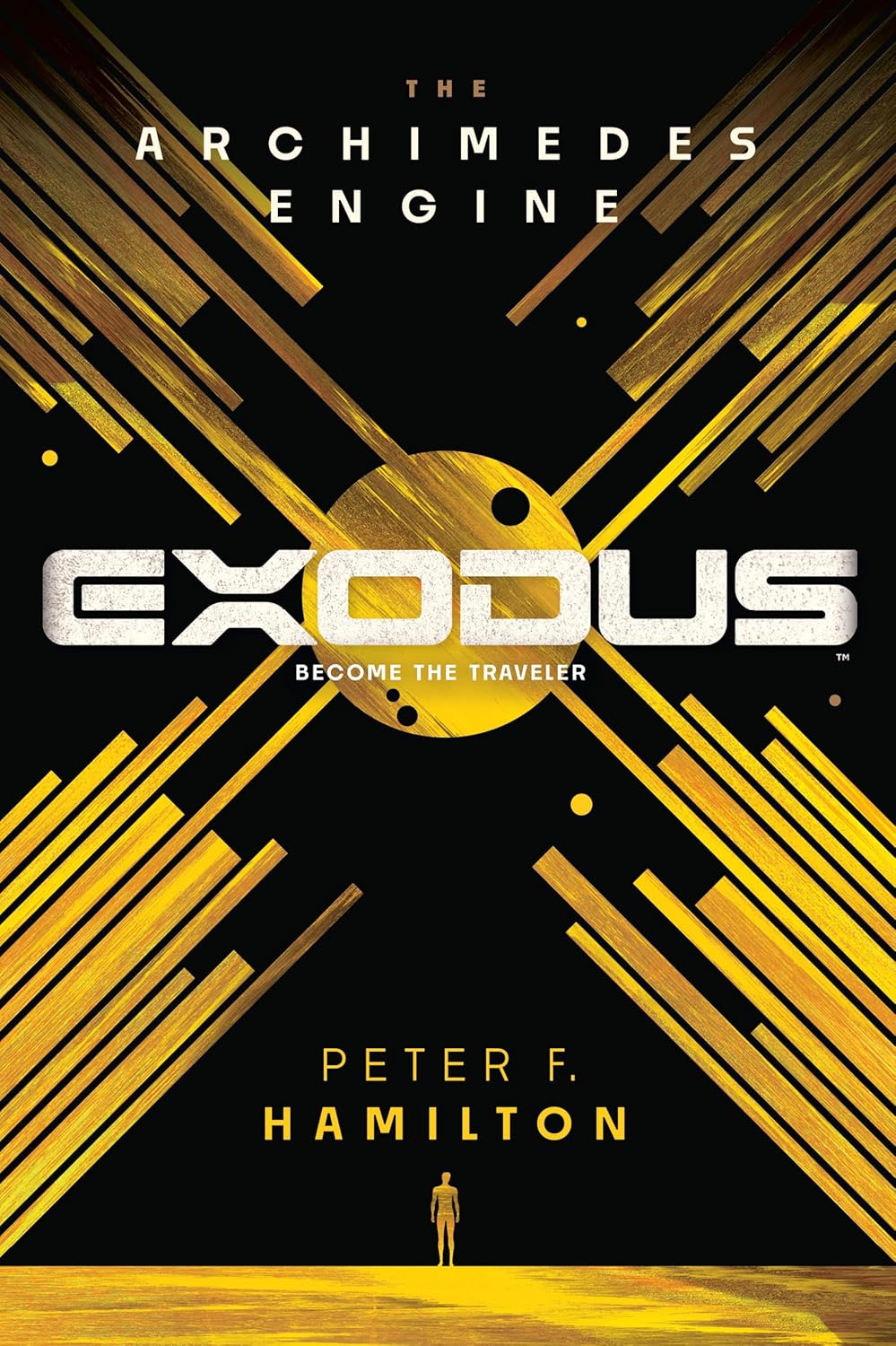
Exodus
Peter F. Hamilton


 Apple Books


 156 Min Reading Time
 Audio Version Available
About this book
Delve into the heart of the Exodus story with Peter Enns as he navigates the complexities and nuances of one of the Bible's most foundational narratives. More than just a retelling, this book explores the historical, literary, and theological dimensions of Exodus, revealing its profound relevance for contemporary readers. Enns tackles challenging questions and offers fresh perspectives, inviting you to grapple with the text's original meaning and its enduring impact. Discover how Exodus speaks to issues of identity, liberation, and the very nature of God, and gain a deeper appreciation for its pivotal role in shaping both ancient Israel and our understanding of faith today.
Summary of Key Ideas
- •
The Great Scattering
Humanity's Interstellar Diaspora: The novel explores the consequences of humanity's forced exodus from Earth 40,000 years in the past. Fleeing a dying planet aboard massive arkships, humans embarked on a journey to colonize the galaxy, creating distinct civilizations shaped by their unique destinations and challenges. This diaspora fundamentally altered the course of human history, leading to fragmentation and the rise of diverse cultures across the stars. The book examines the long-term effects of this scattering, questioning whether humanity can ever truly be unified after such a profound dispersal.
- •
Life on the Fringes
Celestial Empires and Human Enclaves: "Exodus" depicts a galaxy dominated by powerful Celestial empires, ancient alien civilizations with vastly superior technology. Humanity exists on the fringes, often relegated to client races or small enclaves within these empires. The story examines the complex relationships between humans and these advanced alien societies, highlighting the challenges of maintaining autonomy and cultural identity in the face of overwhelming power. The novel delves into themes of subjugation, collaboration, and the constant struggle for survival in a galaxy not entirely welcoming to humankind.
- •
Mastering Spacetime
The Archimedes Engine and Technological Supremacy: The Archimedes Engine represents a pinnacle of technological achievement, a device capable of manipulating spacetime and enabling faster-than-light travel. The control of this technology is a major source of power and conflict in the galaxy. The novel examines the implications of such advanced technology, exploring its potential for both progress and destruction. It also raises questions about who should control such power and the responsibilities that come with it.
- •
The Relativity Divide
Time Dilation and its Societal Impact: A key element of interstellar travel in "Exodus" is the concept of time dilation, where time passes differently for travelers moving at relativistic speeds. This phenomenon creates significant social and personal challenges, as individuals experience time at different rates than those who remain stationary. The novel explores the emotional toll of these temporal disparities, the breakdown of relationships, and the creation of societal divides based on travel experience.
- •
The Engineered Future
Genetic Engineering and Human Evolution: "Exodus" features advanced genetic engineering, allowing humans to adapt to diverse environments and enhance their physical and mental capabilities. This technology raises ethical questions about the definition of humanity and the potential for creating a genetically stratified society. The novel explores the consequences of manipulating the human genome, both positive and negative, and the challenges of maintaining equality and fairness in a world where genetic enhancements are readily available.
- •
Echoes Through Time
The Nature of Legacy and Remembrance: In a galaxy spanning vast distances and time scales, the concept of legacy becomes particularly poignant. Characters grapple with the desire to leave a lasting impact on the future, even as civilizations rise and fall around them. The novel explores different ways of achieving immortality, whether through technological advancements, cultural preservation, or the memories of others. It questions what it means to be remembered and the value of individual lives in the grand tapestry of galactic history.
- •
Galactic Power Plays
Intergalactic Politics and Warfare: The novel delves into the complex political landscape of the galaxy, showcasing the power struggles between empires, corporations, and various factions. Alliances are forged and broken, betrayals are common, and warfare is a constant threat. The story explores the motivations behind these conflicts, the consequences of political ambition, and the human cost of war on a galactic scale. Readers gain insights into the intricacies of interstellar diplomacy and the challenges of maintaining peace in a volatile universe.
Chapter Recap

About The Author
Peter F. Hamilton
Main Quotes
"The exodus, in fact, is really all about getting to Mount Sinai, and how the events there prepare the Israelites for their ultimate destiny."
"Yahweh hardens his heart. It is best to allow the tension of the text to remain."
"A story like the exodus story is what happens when, as I said previously, God lets his children tell the story – in ways they understand and that is packed ..."
"[The Lord's Supper teaches that] Rituals are good, and they are instituted and used by God to 'connect' his people with him. We learn through ritual that ..."
"Sweating bullets to line up the Bible with our exhausting expectations, to make the Bible something it's not meant to be, isn't a pious act of faith."
"“I will make from you a great nation” – The Lord is saying, 'I'm going to start again. I'm going to build a new nation, starting with you, Moses, as the new ..."
Who Should Read This Book
Readers interested in biblical studies and theology
Individuals seeking a modern, critical perspective on the Book of Exodus
Those grappling with questions about the Bible's historical accuracy and interpretation
Readers familiar with Peter Enns' other works and his approach to biblical scholarship
Theologically-minded individuals open to re-evaluating traditional interpretations of scripture
Pastors and church leaders seeking resources for teaching on Exodus
Academics and students in religious studies
People struggling with faith due to perceived conflicts between science and the Bible
Readers interested in the ancient Near Eastern context of the Exodus story
Individuals seeking intellectual and spiritual growth through engagement with challenging biblical texts
Book Summaries Like
Exodus


FAQ

Free Access to LitNotes