




 DISCORD
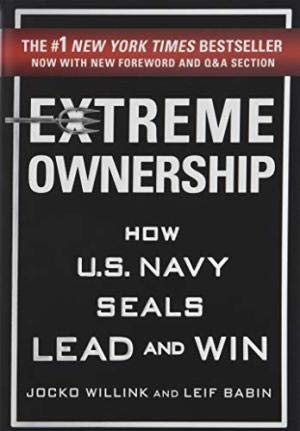
Extreme Ownership
Jocko Willink, Leif Babin

 Amazon Best Sellers
 The New York Times Best Sellers


 40 Min Reading Time
 Audio Version Available
About this book
In the chaotic battlefields of Iraq, Jocko Willink and Leif Babin led SEAL Task Unit Bruiser through seemingly impossible missions. Their secret? Leadership at every level. In Extreme Ownership, these decorated Navy SEALs turned successful entrepreneurs reveal the mindset and principles that enabled their team to achieve victory against all odds.
Through gripping, firsthand accounts of combat, tragic losses, and hard-won triumphs, Willink and Babin demonstrate how the same leadership principles that saved lives on the battlefield can be applied to any team, family, or organization. Discover how to take ownership, decentralize command, and cultivate discipline to achieve extraordinary results. Extreme Ownership isn't just a book; it's a transformative guide for leaders who want to dominate their own battlefields and achieve ultimate victory in business and life.
Summary of Key Ideas
- •
Embrace Radical Accountability
The cornerstone of the book, 'Extreme Ownership,' emphasizes that leaders are responsible for everything that impacts their mission. This means taking ownership not only of successes but, more importantly, of failures. Instead of blaming external factors or subordinates, leaders must look inward and identify what they could have done differently to achieve a better outcome. This principle fosters a culture of accountability and continuous improvement, where problems are seen as opportunities for growth and learning. It requires leaders to proactively address issues, develop solutions, and implement changes to prevent future failures. By embracing Extreme Ownership, leaders build trust, inspire confidence, and create a high-performing team.
- •
No Ego: Believe the Why
This principle stresses the importance of clear and concise communication within a team. Everyone, from the leader to the most junior member, must understand the mission's objectives, their role in achieving it, and the reasons behind the plan. When team members understand the 'why,' they are more likely to be engaged, motivated, and able to execute effectively, even when faced with unforeseen challenges. Leaders must over-communicate, ensuring that the message is received and understood by all. This involves actively soliciting feedback, answering questions, and clarifying any ambiguities. A shared understanding fosters unity, alignment, and a collective commitment to the mission's success.
- •
Empower Through Decentralized Command
According to 'Extreme Ownership,' leaders should not micromanage but rather empower their subordinates by giving them the authority and resources to make decisions and take action. Decentralized Command involves distributing leadership responsibilities throughout the team, allowing individuals to take ownership of their specific tasks and areas of expertise. This approach fosters initiative, creativity, and adaptability. However, decentralized command requires clear communication of intent and expectations. Leaders must clearly define the desired outcome, establish boundaries, and provide guidance, but then step back and allow their team members to execute. This not only improves efficiency but also develops future leaders within the organization.
- •
Believe in the Mission
Leaders must believe in the mission they are asking their team to execute. This authenticity inspires confidence and trust. If a leader does not believe in the mission, they cannot effectively motivate and lead their team. However, if a leader is directed to execute a mission they don't agree with, it is their responsibility to ask questions, understand the reasoning behind it, and then fully commit to its success. They must influence up the chain of command if they have concerns, but once a decision is made, they must support it wholeheartedly. This principle emphasizes the importance of aligning personal beliefs with organizational goals to achieve optimal performance.
- •
Keep Plans Simple
This principle highlights the importance of simplicity in planning and execution. Complex plans are difficult to communicate, understand, and execute, especially under pressure. Leaders should strive to create simple, clear, and concise plans that are easy for everyone to grasp. This involves breaking down complex tasks into smaller, manageable steps and using clear and direct language. Simplicity also extends to communication. Leaders should avoid jargon and technical terms that may confuse team members. A simple plan is more likely to be executed effectively and can be easily adapted to changing circumstances. By keeping things simple, leaders reduce the risk of errors, improve coordination, and enhance overall performance.
- •
Lead Up and Down the Chain
Leading up and down the chain of command is crucial for effective leadership. Leaders must influence their superiors by providing them with the information and insights they need to make informed decisions. This involves respectfully challenging assumptions, presenting alternative perspectives, and advocating for the team's needs. At the same time, leaders must also lead down the chain of command by providing clear direction, guidance, and support to their subordinates. This involves communicating expectations, providing feedback, and developing their skills. Effective leaders build strong relationships with both their superiors and subordinates, fostering a culture of trust, collaboration, and mutual respect.
- •
Discipline Equals Freedom
This key idea emphasizes that discipline equals freedom. While it may seem paradoxical, structure and discipline actually create the conditions for greater autonomy and flexibility. When teams adhere to established procedures, follow clear guidelines, and maintain high standards, they are better able to adapt to changing circumstances and make independent decisions without constant supervision. Discipline provides a framework for action, allowing team members to operate with confidence and efficiency. This principle is not about rigid control but rather about creating a culture of accountability and self-reliance. By embracing discipline, teams can achieve higher levels of performance and enjoy greater freedom to innovate and excel.
Chapter Recap

About The Author
Jocko Willink
Main Quotes
"There are no bad teams, only bad leaders."
"Extreme Ownership. Leaders must own everything in their world. There is no one else to blame."
"When setting expectations, no matter what has been said or written, if doubt remains, then expectations are not clear."
"It’s not what you preach, it’s what you tolerate."
"Discipline equals freedom."
"Leaders must always operate with the understanding that they are part of something greater than themselves and their own personal interests."
"Ego clouds and disrupts everything: the planning process, the ability to take good advice, and the ability to accept constructive criticism."
"When leaders shirk responsibility, when they point fingers, and when they make excuses, the entire team suffers."
"Take ownership of the mistakes and develop a plan to overcome obstacles."
"Leading up the chain of command requires tact, respect, and an understanding of your boss’s priorities."
Who Should Read This Book
Leaders and managers in various industries
Entrepreneurs
Business professionals
Individuals interested in self-improvement and leadership principles
People seeking practical strategies for taking responsibility and achieving goals
Readers of military leadership books
Individuals interested in Navy SEAL perspectives on leadership
Those looking to improve teamwork and communication skills
Readers of Jocko Willink's podcast and other works
Product owners and project managers
Book Summaries Like
Extreme Ownership



FAQ

Free Access to LitNotes