




 DISCORD
Fahrenheit 451
Ray Bradbury


 Amazon Best Sellers
 USA Today Best Sellers


 26 Min Reading Time
 Audio Version Available
About this book
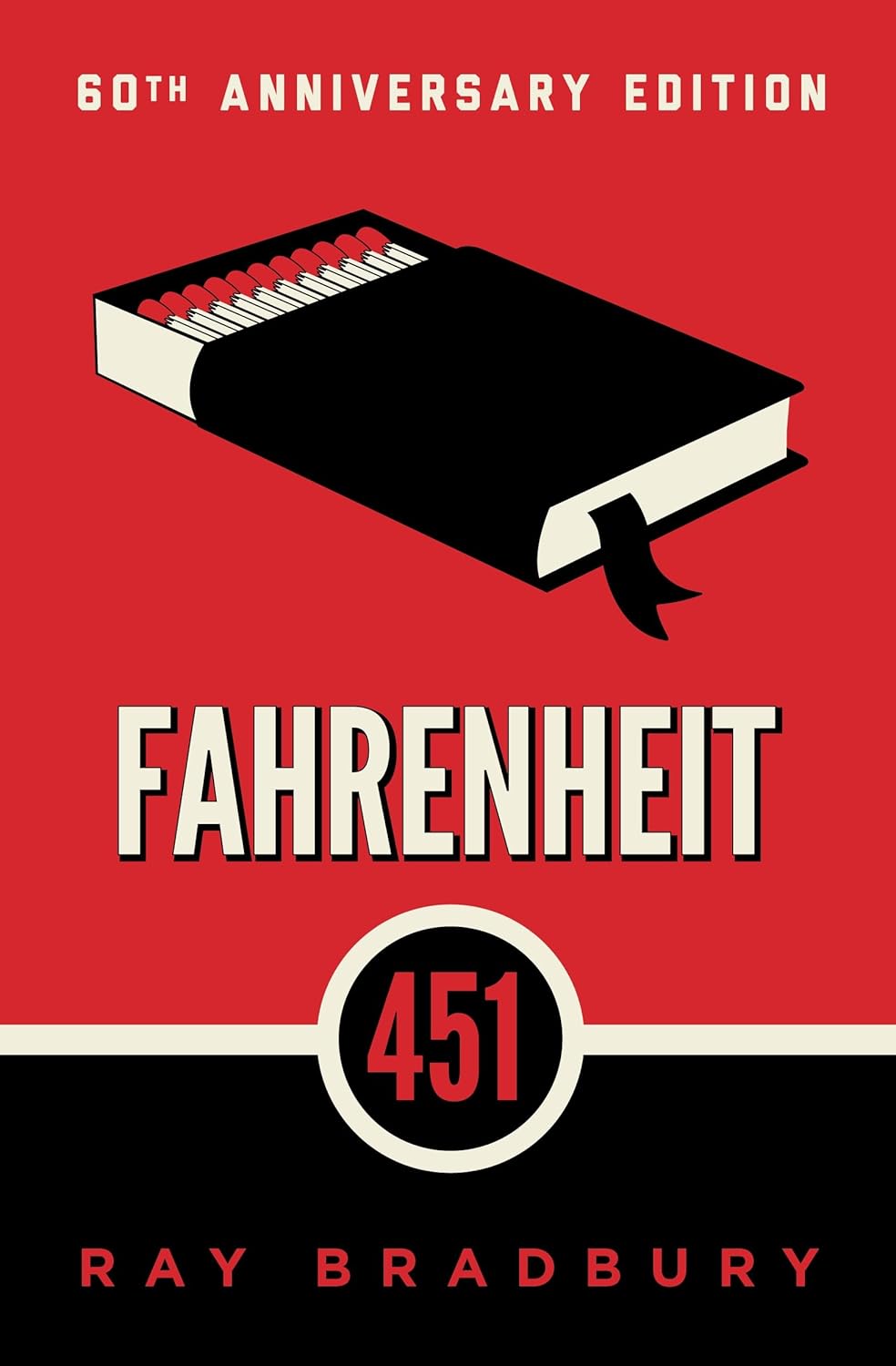
In a chilling vision of the future, books are not just banned—they are burned. Guy Montag is a fireman, a destroyer of knowledge, living a hollow existence in a world obsessed with mindless entertainment. But a chance encounter with a curious young woman named Clarisse ignites a spark of rebellion within him.
As Montag questions the empty values of his society and his own role in perpetuating them, he discovers the life-affirming power of literature. Now, he must choose between continuing his conformist existence or risking everything to preserve the very books he was once paid to destroy.
Ray Bradbury's Fahrenheit 451 is a timeless and haunting exploration of censorship, conformity, and the enduring importance of independent thought.
Summary of Key Ideas
- •
The Peril of Suppressed Thought
The Dangers of Unchecked Censorship: The novel powerfully illustrates the perils of censorship when a society, driven by fear and a desire for homogeneity, suppresses dissenting voices and independent thought by banning and burning books. This act of censorship not only destroys literature but also erodes the foundations of intellectual freedom, critical thinking, and individual expression. Bradbury warns against the slippery slope where the suppression of ideas, even those deemed controversial, can lead to a stagnant and conformist society incapable of progress or self-reflection. The burning of books symbolizes the destruction of knowledge and the potential for tyranny.
- •
Technology's Double-Edged Sword
The Allure and Trap of Technology: Bradbury explores how technology, while offering convenience and entertainment, can also lead to intellectual and emotional detachment. The citizens of this dystopian society are immersed in shallow, sensory experiences provided by wall-sized televisions and seashell radios, which distract them from meaningful connections and critical thought. This dependence on technology creates a passive and unengaged populace, easily manipulated and controlled. The novel serves as a cautionary tale about the importance of maintaining a balance between technological advancement and genuine human interaction.
- •
Knowledge as Resistance
The Importance of Independent Thought and Knowledge: The novel champions the power of knowledge and independent thinking as essential for individual and societal well-being. Characters like Montag and Faber recognize that books hold the key to understanding the complexities of the world and fostering critical analysis. By preserving and sharing knowledge, individuals can resist the forces of conformity and maintain their intellectual autonomy. Bradbury emphasizes that the pursuit of knowledge is a lifelong journey that requires courage, curiosity, and a willingness to challenge established norms.
- •
The Power of Human Bonds
The Value of Human Connection and Relationships: In a society obsessed with superficial entertainment, genuine human connection is a rare and precious commodity. Montag's relationships with Clarisse and Faber awaken him to the importance of empathy, understanding, and intellectual exchange. These connections provide him with the strength and support to question the status quo and seek a more meaningful existence. Bradbury suggests that authentic relationships are vital for personal growth and provide a foundation for resisting oppressive forces.
- •
Duty to Challenge the Status Quo
The Individual's Responsibility to Society: Fahrenheit 451 explores the theme of individual responsibility in challenging societal norms and injustices. Montag's transformation from a book-burning fireman to a rebel seeking knowledge highlights the importance of questioning authority and taking action to promote positive change. The novel suggests that each individual has a moral obligation to resist oppression and contribute to the betterment of society, even in the face of adversity.
- •
Rebirth from the Ashes
The Cycle of Destruction and Renewal: The fiery imagery throughout the novel symbolizes both destruction and the potential for renewal. While fire is used to destroy books and suppress knowledge, it also represents the cleansing of old ideas and the opportunity for new growth. The ending of the novel, with the city destroyed and a small group of intellectuals preserving literature, suggests that even in the aftermath of devastation, hope remains for a future where knowledge and freedom can flourish.
- •
The Empty Promise of Entertainment
The Superficiality of Mass Culture: Bradbury critiques a society increasingly dominated by mass media and shallow entertainment. The characters in Fahrenheit 451 are often more concerned with trivial pursuits and fleeting pleasures than with meaningful engagement or intellectual stimulation. This focus on superficiality leads to a lack of critical thinking and an inability to appreciate the depth and complexity of human experience. The novel warns against the dangers of a culture that prioritizes entertainment over substance.
- •
The Crushing Weight of Sameness
Loss of Individuality and Conformity: The society depicted in Fahrenheit 451 pressures individuals to conform, discouraging unique thoughts and expressions. People fear being different, leading to a homogenized population that lacks depth and critical thinking skills. This conformity is maintained through constant distractions and the suppression of dissenting opinions. The novel underscores the importance of embracing individuality as a crucial component of a vibrant and progressive society.
Chapter Recap

About The Author
Ray Bradbury
Main Quotes
"It was a pleasure to burn."
"You must understand that our civilization is so vast that we can't have our minorities upset and stirred."
"Colored people don't like Little Black Sambo. Burn it. White people don't feel good about Uncle Tom's Cabin. Burn it. Someone's written a book on tobacco and cancer of the lungs? The cigarette people are weeping? Burn the book."
"We must all be alike. Not everyone born free and equal, as the Constitution says, but everyone made equal."
"A book is a loaded gun in the house next door. Burn it. Take the shot from the weapon."
"The important thing for you to remember, Montag, is we're the Happiness Boys."
"Don't face a problem, burn it."
"Stuff your eyes with wonder, live as if you'd drop dead in ten seconds. See the world. It's more fantastic than any dream made or paid for in factories."
"Maybe the books can get us half out of the cave. They just might stop us from making the same damn insane mistakes!"
"And when they ask what I am doing, you can say, 'I'm remembering'."
Who Should Read This Book
Young adults interested in dystopian fiction
High school students studying classic literature
College students in literature or social science courses
Readers interested in themes of censorship, conformity, and technology's impact on society
Individuals concerned about government control and intellectual freedom
Fans of science fiction and speculative fiction
Readers of classic American literature
Individuals interested in social commentary and philosophical discussions
Book club members looking for thought-provoking reads
Readers interested in exploring the power of knowledge and the importance of critical thinking
Adults who enjoy revisiting classic literature from their youth
Book Summaries Like
Fahrenheit 451



FAQ

Free Access to LitNotes