




 DISCORD
Free Fall
Peter Cawdron


 Apple Books


 10 Min Reading Time
 Audio Version Available
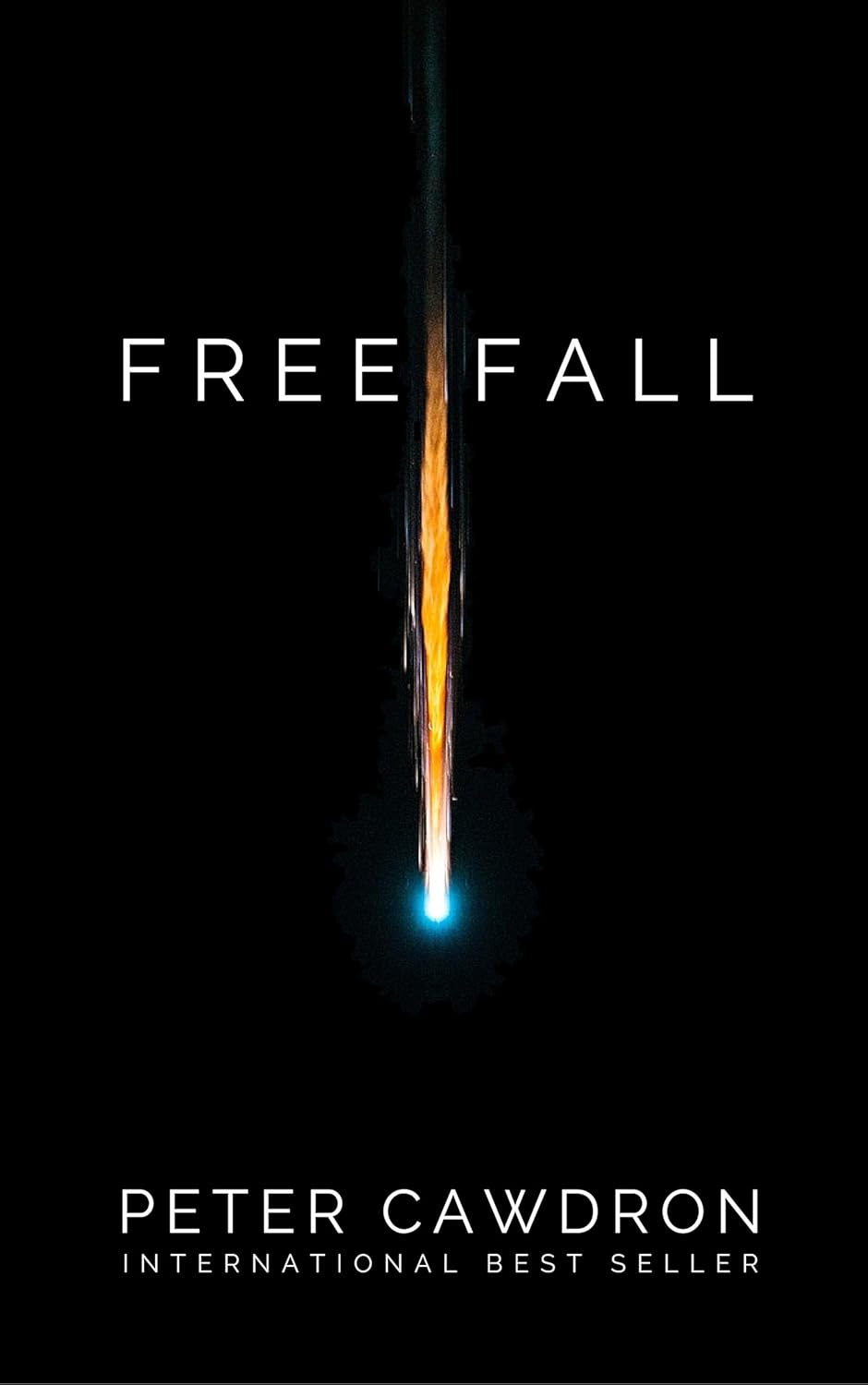
About this book
He left Earth to reach the stars. He returned to silence.
Jackson, an astronaut pushing the boundaries of interstellar travel, returns from a deep-space mission to an Earth profoundly changed. The welcoming embrace he expected is gone, replaced by an eerie stillness. No signals, no communications—only an unsettling void where humanity once thrived.
Alone and adrift, Jackson must unravel the mystery of Earth's demise. Was it a cataclysmic event, a silent plague, or something far more sinister? As he navigates a deserted world, he confronts not only the unknown fate of humanity but also his own isolation and the haunting question of what it means to be the last man on Earth.
In this gripping science fiction thriller, Peter Cawdron explores themes of survival, isolation, and the enduring spirit of humanity in the face of unimaginable loss. "Free Fall" is a chilling and thought-provoking journey into a world where the greatest adventure becomes the ultimate fight for survival.
Summary of Key Ideas
- •
The Weight of Isolation
Isolation and Psychological Impact of Space Travel: The novella deeply explores the mental and emotional toll of prolonged space travel and isolation on astronauts. The protagonist, Jackson, experiences a profound sense of detachment from Earth and humanity, which significantly affects his actions and decisions upon returning to Earth. This isolation highlights the psychological challenges of space exploration and the importance of mental health support for astronauts on long-duration missions.
- •
Cosmic Insignificance
Existential Dread and the Meaning of Life: "Free Fall" delves into existential themes, questioning the meaning of life in the face of cosmic insignificance. Jackson's experiences in space lead him to contemplate humanity's place in the universe, grappling with feelings of insignificance and the fragility of existence. This exploration prompts readers to consider their own perspectives on life's purpose and the broader implications of humanity's endeavors in the vastness of space.
- •
Personal Freedom vs. Public Safety
The Ethics of Returning Home During a Pandemic: The story raises ethical questions about an individual's responsibility to society during a global crisis. Jackson's decision to avoid contact upon returning to Earth, driven by his altered perspective and fear of contamination, poses a moral dilemma. It highlights the tension between personal freedom and the collective well-being, prompting reflection on the ethical considerations in situations where individual actions can have widespread consequences.
- •
Alienation from Humanity
Loss of Connection with Humanity: The protagonist undergoes a transformation that results in a disconnection from human society and its values. This disconnection is a central theme, illustrating how extreme experiences can alter an individual's perception of humanity. Jackson's alienation underscores the potential for space travel to reshape one's identity and relationship with the world.
- •
Civilization's Breaking Point
The Fragility of Civilization: Cawdron subtly emphasizes the vulnerability of human civilization to unforeseen events, such as pandemics. The backdrop of a global crisis underscores how quickly societal structures can crumble and the importance of preparedness and resilience. The story serves as a cautionary tale, reminding readers of the delicate balance that sustains civilization.
- •
Questioning Perception
Unreliable Narrator and Subjective Reality: The narrative is presented through Jackson's perspective, which may be unreliable due to his mental state and the extreme circumstances he has faced. This invites readers to question the accuracy of his perceptions and interpretations, highlighting the subjective nature of reality. The unreliable narrator adds depth and complexity to the story, encouraging critical engagement with the text.
Chapter Recap

About The Author
Peter Cawdron
Main Quotes
"If there was one thing to be said about life in free fall, it was that it was easy to get dressed."
"Solutions present themselves to a calm mind. The anxious miss the obvious."
Who Should Read This Book
Fans of hard science fiction
Readers who enjoy stories about space exploration and colonization
Individuals interested in realistic portrayals of the challenges of living in space
Readers who appreciate thought-provoking narratives focused on scientific accuracy
People who like stories with themes of survival, isolation, and the human spirit tested in extreme environments
Readers of authors like Andy Weir, Arthur C. Clarke, and Kim Stanley Robinson
Book Summaries Like
Free Fall

FAQ

Free Access to LitNotes