




 DISCORD
Frindle
Andrew Clements


 Apple Books


 17 Min Reading Time
 Audio Version Available
About this book
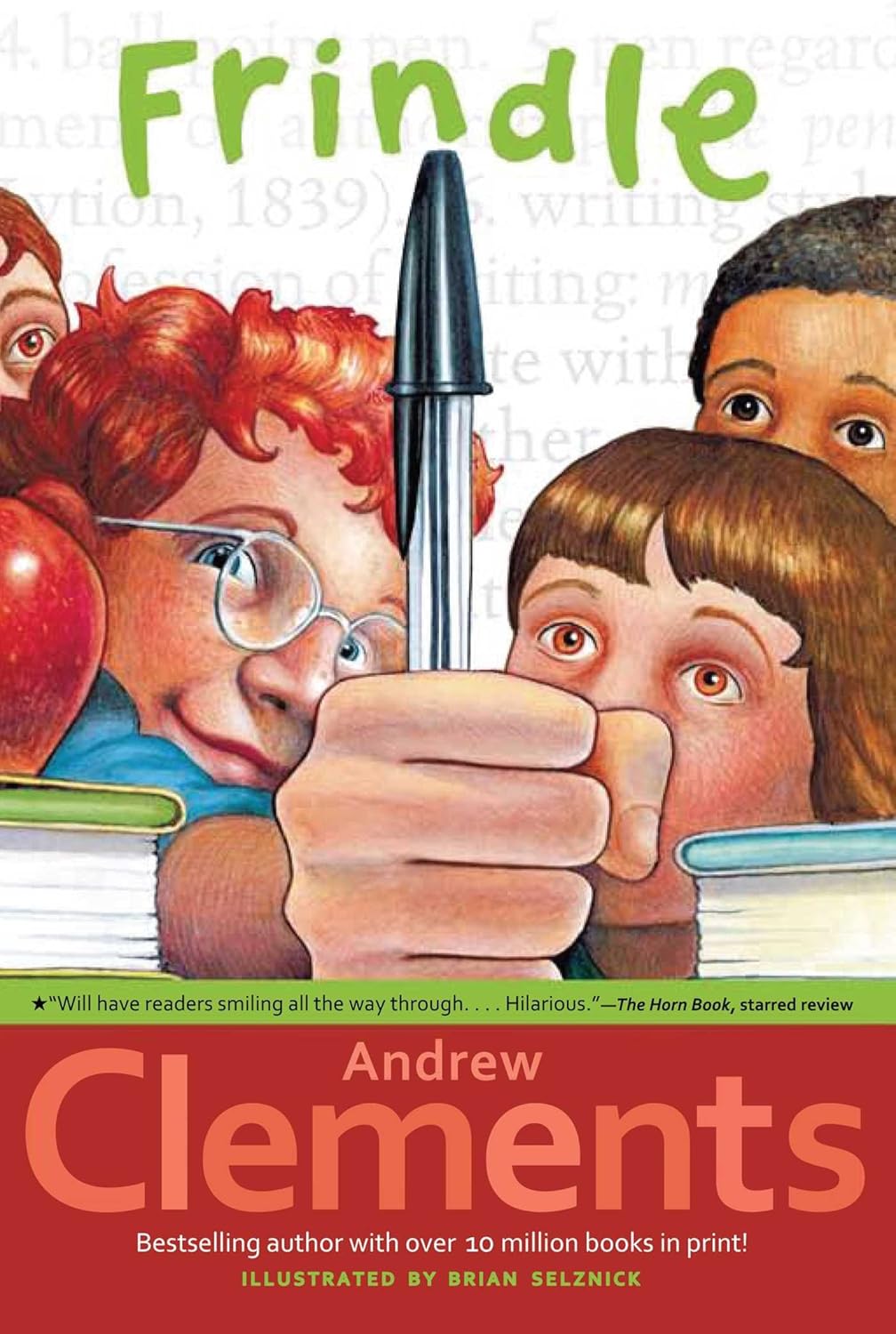
Nick Allen is no troublemaker, but he does have a knack for stirring things up. When his fifth-grade language arts teacher, the formidable Mrs. Granger, assigns a report on the dictionary, Nick discovers a fascinating detail about how words are created. Suddenly, inspiration strikes: Why can't "pen" be called "frindle"?
What starts as a classroom game quickly escalates as Nick and his friends begin using the new word everywhere. "Frindle" spreads like wildfire, causing an uproar at school and turning Nick into an overnight local hero. Mrs. Granger is determined to put an end to the nonsense, but the word has taken on a life of its own, and there's no stopping it now. How far will "frindle" spread, and what will it mean for Nick, Mrs. Granger, and the power of words themselves?
Summary of Key Ideas
- •
Words are Defined by Usage
The Power of Language: 'Frindle' illustrates how language is dynamic and evolves through usage, not just through dictionaries. Nick's creation and popularization of 'frindle' demonstrates that words gain meaning from collective agreement and everyday use. This challenges the traditional view of language as a static, controlled entity, highlighting the users' ability to shape and redefine it. The story emphasizes the fluid nature of language and its responsiveness to cultural shifts and social influence. Ultimately, 'Frindle' celebrates the democratic nature of language, where anyone can contribute to its evolution.
- •
Embrace Creative Thinking
Creativity and Innovation: Nick's ability to invent and promote 'frindle' showcases the power of creative thinking. His innovative approach to language demonstrates how unconventional ideas can take root and spread rapidly within a community. The book encourages readers to embrace their own creativity and consider new possibilities, even if they challenge existing norms. It emphasizes that innovation often arises from questioning established practices and daring to think differently. Nick's success inspires young readers to believe in their ideas and their potential to make a significant impact.
- •
Questioning the Status Quo
Challenging Authority: The conflict between Nick and Mrs. Granger explores the dynamic between students and authority figures. Nick's creation of 'frindle' can be seen as a challenge to Mrs. Granger's authority over language and classroom rules. However, the story also suggests that challenging authority can lead to positive change and growth. It encourages students to question rules and conventions thoughtfully, while also respecting the role of educators. Mrs. Granger, while initially resistant, ultimately recognizes the value of Nick's initiative, demonstrating that authority figures can also learn from and adapt to new ideas.
- •
Media Amplifies Ideas
The Impact of Mass Media: The spread of 'frindle' beyond the classroom highlights the influence of mass media on culture and language. The media's attention amplifies Nick's idea, transforming it from a local phenomenon into a national sensation. This demonstrates the power of media to shape public opinion and disseminate information rapidly. The book also touches on the responsibilities that come with media influence, as the attention can both promote and distort the original intent of 'frindle'. This aspect encourages readers to consider the role of media in shaping perceptions and trends.
- •
Ideas Can Change the World
The Enduring Power of Ideas: 'Frindle' demonstrates how a simple idea can have a lasting impact. What starts as a classroom prank evolves into a cultural phenomenon, proving the power of ideas to transcend their origins. The book suggests that even seemingly small actions can have significant consequences and inspire widespread change. The longevity of 'frindle' as a recognized word emphasizes the enduring nature of innovation and its potential to shape language and culture for future generations. Nick's story underscores that ideas, once unleashed, can take on a life of their own.
- •
Finding Common Ground
Unexpected Alliances: The relationship between Nick and Mrs. Granger is complex, marked by conflict and mutual respect. Despite their initial antagonism, they eventually form an unexpected alliance, working together to manage the impact of 'frindle'. This highlights the idea that people with differing perspectives can find common ground and collaborate towards a shared goal. The book encourages readers to look beyond surface-level conflicts and recognize the potential for cooperation, even with those they initially disagree with. The evolving dynamic between Nick and Mrs. Granger demonstrates the value of understanding and empathy in bridging divides.
Chapter Recap

About The Author
Andrew Clements
Main Quotes
"“Who says dog means dog? You do, Nicholas. You and me and everyone in this class and this school and this town and this state and this country. We all agree. That’s what makes it real.”"
"From this day on and forever, I will never use the word PEN again. Instead, I will use the word FRINDLE, and I will do everything possible so others will, too."
"“A person can watch the sunrise, but he cannot slow it down or stop it or make it go backward. And that is what I was trying to do with your word. At first I thought I could. But I was wrong.”"
"It was her eyes that did it. They were dark gray, and if she turned them on full power, they could make you feel like a speck of dust."
""Now the word has started. And the dictionary people are watching. And so am I.""
""A new word is born, and it belongs to everyone.""
"“Sometimes, things just happen. Sometimes, things happen that you wouldn't expect.""
""Ideas can be dangerous.""
"“Words are containers for power.”"
""The whole point of school is to help kids learn. If a kid is smart enough to learn something without being taught, what's the problem?""
Who Should Read This Book
Children aged 8-12 (Grades 3-6)
Middle school students
Educators looking for classroom reading material
Parents seeking engaging and educational books for their children
Readers interested in stories about language, creativity, and standing up for one's ideas
Fans of Andrew Clements' other works
Librarians and booksellers stocking children's literature
Homeschooling families
Readers who enjoy humorous and thought-provoking stories
Book Summaries Like
Frindle

FAQ

Free Access to LitNotes