




 DISCORD
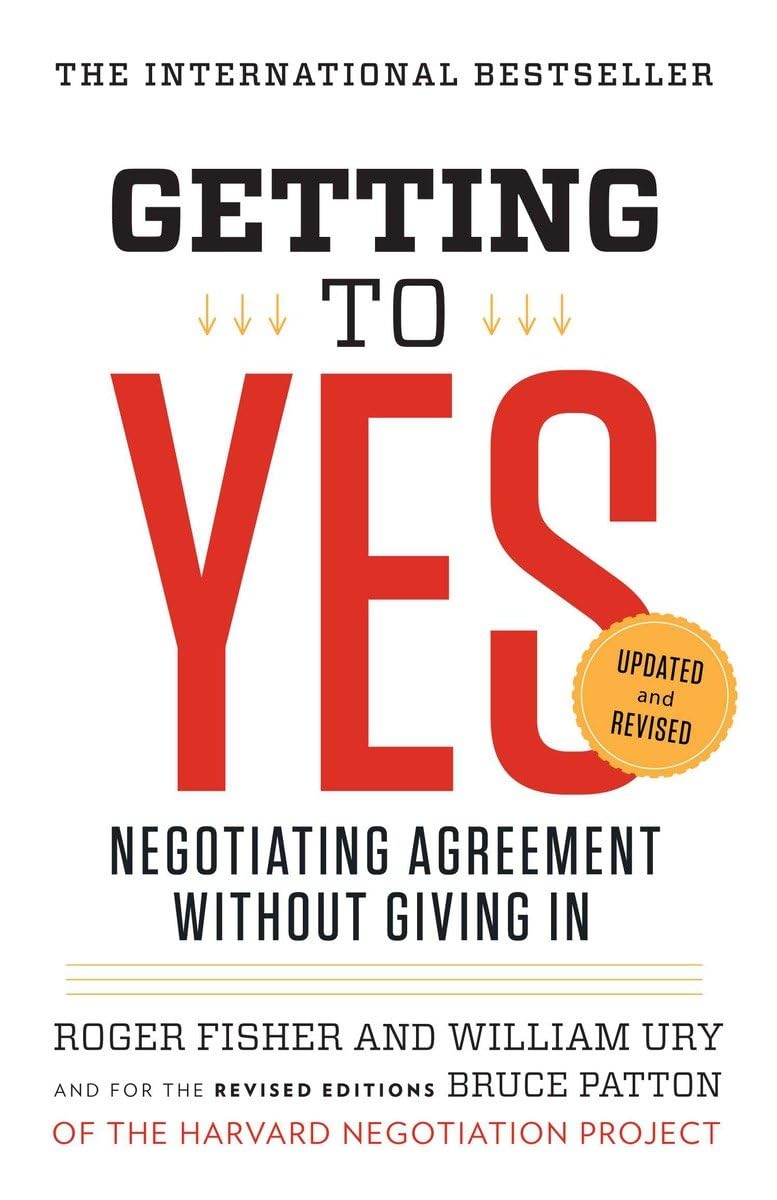
Getting to Yes
Roger Drummer Fisher, Bruce Patton


 Amazon Best Sellers
 Apple Books


 36 Min Reading Time
 Audio Version Available
About this book
Discover the groundbreaking approach to negotiation that has transformed conflict resolution worldwide. Getting to Yes, based on the Harvard Negotiation Project's decades of research, offers a proven, step-by-step strategy for achieving mutually acceptable agreements in any situation.
Learn how to separate people from the problem, focus on interests instead of positions, and create innovative options that satisfy all parties. Whether you're navigating personal disputes, business deals, or international conflicts, Getting to Yes provides a universally applicable method for negotiating effectively, fairly, and without resorting to anger or manipulation.
Master the art of principled negotiation and unlock win-win solutions in every aspect of your life.
Summary of Key Ideas
- •
Embrace Principled Negotiation
Principled negotiation is the cornerstone of 'Getting to Yes.' This approach emphasizes making decisions based on merits rather than a haggling process focused on positions. By adhering to objective criteria and fair standards, negotiators can achieve wise outcomes efficiently and amicably. This method aims to create solutions that are mutually beneficial, fostering collaboration and minimizing conflict. Principled negotiation involves separating the people from the problem, focusing on interests rather than positions, inventing options for mutual gain, and insisting on using objective criteria. This ensures that agreements are fair, sustainable, and beneficial to all parties involved, leading to stronger, longer-lasting relationships.
- •
Separate People from the Problem
Human emotions and relationships often complicate negotiations. 'Getting to Yes' stresses the importance of separating the people from the problem by addressing emotional needs and perceptions independently from the substantive issues at hand. This involves actively listening to the other party, understanding their perspective, and acknowledging their emotions. By treating counterparts with respect and empathy, negotiators can build trust and rapport, making it easier to address the core issues without personal animosity. This approach helps to depersonalize the negotiation process, allowing for a more rational and collaborative problem-solving environment, ultimately increasing the chances of reaching a mutually agreeable solution.
- •
Focus on Interests, Not Positions
Negotiations often stall when parties fixate on their stated positions rather than exploring the underlying interests that drive those positions. 'Getting to Yes' advocates for focusing on interests—the needs, desires, concerns, and fears that motivate people. By understanding the 'why' behind each party's demands, negotiators can identify common ground and develop creative solutions that address the fundamental needs of all parties involved. This approach involves asking 'why' to uncover underlying interests, discussing interests openly, and recognizing that multiple interests may be at play. Focusing on interests promotes a more flexible and collaborative negotiation process, leading to outcomes that are more satisfying and sustainable because they address the real concerns of everyone involved.
- •
Invent Options for Mutual Gain
To overcome impasses and discover mutually beneficial agreements, 'Getting to Yes' encourages negotiators to invent a variety of options before deciding what to do. This involves brainstorming and exploring a wide range of potential solutions without criticism or commitment. The goal is to expand the pie before dividing it, fostering creativity and flexibility in the negotiation process. Techniques such as inventing options for mutual gain, identifying shared interests, and dovetailing differing interests can help generate innovative solutions that satisfy the needs of all parties. By exploring multiple options, negotiators can increase the likelihood of finding a solution that is both effective and acceptable to everyone involved.
- •
Insist on Objective Criteria
When interests diverge, 'Getting to Yes' advises insisting on using objective criteria to resolve disputes. Objective criteria are fair standards, procedures, or benchmarks that are independent of the parties' will. Examples include market value, expert opinion, custom, or law. By grounding agreements in objective criteria, negotiators can avoid subjective arguments and arbitrary outcomes, ensuring fairness and legitimacy. This approach involves jointly identifying potential objective criteria, discussing their appropriateness, and agreeing to be bound by the results. Using objective criteria provides a principled basis for resolving conflicts, making agreements more acceptable and durable.
- •
Know Your BATNA
Even with the best negotiation strategies, it's crucial to have a 'Best Alternative To a Negotiated Agreement' (BATNA). The BATNA is your fallback option if negotiations fail to reach a satisfactory agreement. 'Getting to Yes' emphasizes the importance of identifying and improving your BATNA to increase your negotiating power and set a reservation price. A strong BATNA gives you the confidence to walk away from unfavorable deals and the leverage to push for more favorable terms. Understanding your BATNA also helps you assess the attractiveness of proposed agreements and make informed decisions about whether to accept or reject them, ensuring you never settle for less than you deserve.
Chapter Recap

About The Author
Roger Drummer Fisher
Harvard Law School professor and director of the Harvard Negotiation Project.
Main Quotes
"Like it or not, you are a negotiator."
"Negotiation is a fact of life."
"Whether in business, government, or the family, people reach most decisions through negotiation."
"Any method of negotiation may be fairly judged by three criteria: It should produce a wise agreement if agreement is possible. It should be efficient. And it should improve or at least not damage the relationship between the parties."
"Positional bargaining endangers ongoing relationships."
"The more you clarify your interests, the more inventive you can be in figuring out how to satisfy them."
"Invent options for mutual gain."
"Insist on using objective criteria."
"Be hard on the problem, soft on the people."
"The ability to see the situation as the other side sees it, as difficult as it may be, is one of the most important skills a negotiator can possess."
Who Should Read This Book
Business professionals
Lawyers
Diplomats
Negotiators
Managers
Entrepreneurs
Anyone seeking to improve their negotiation skills in personal or professional contexts
Individuals involved in conflict resolution
Students of business, law, and political science
Individuals interested in improving their communication and relationship-building skills
Book Summaries Like
Getting to Yes

FAQ

Free Access to LitNotes