




 DISCORD
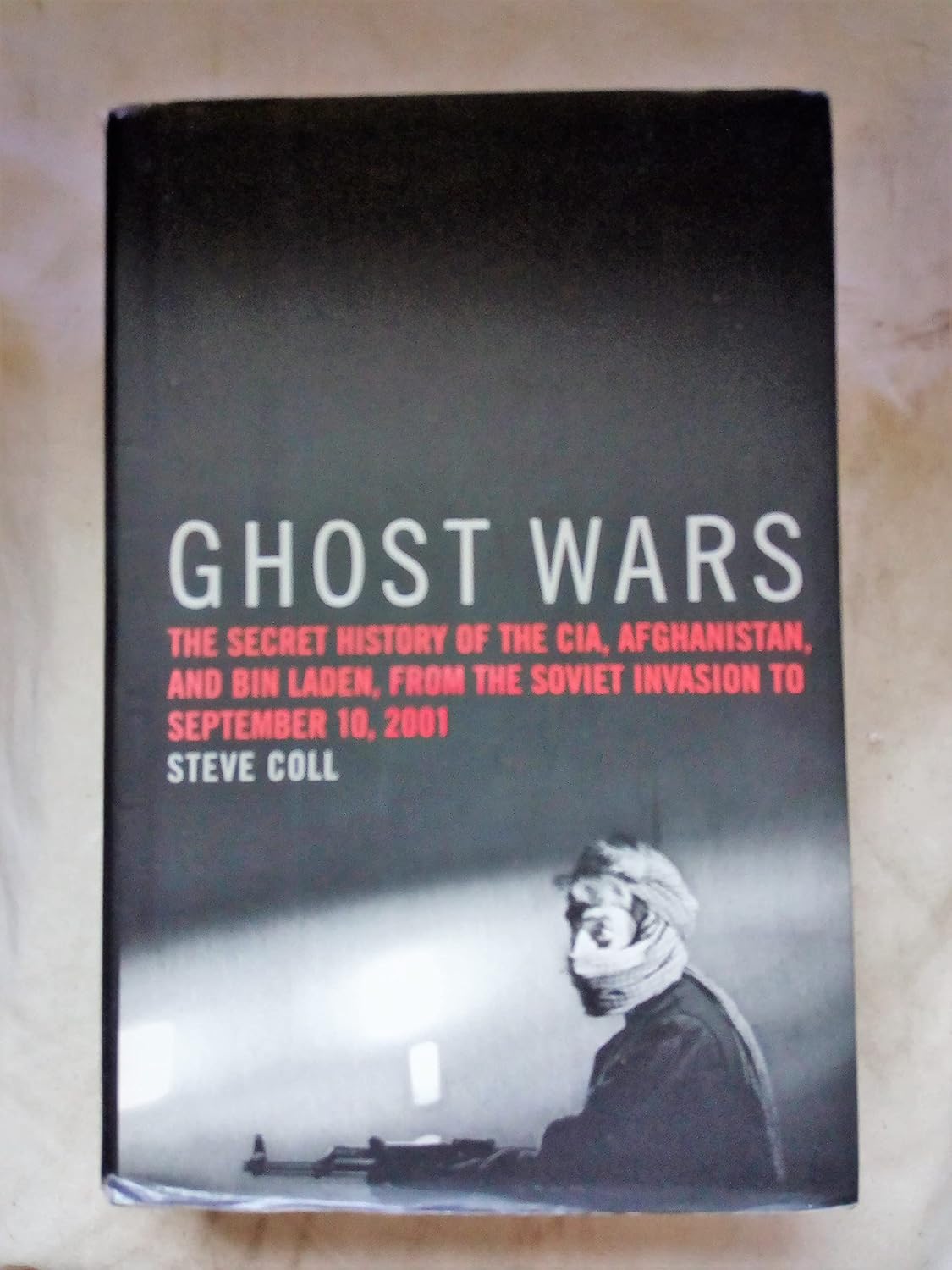
Ghost Wars
Steve Coll


 Apple Books


 95 Min Reading Time
 Audio Version Available
About this book
A Pulitzer Prize-winning investigation, Ghost Wars exposes the hidden history of America's secret involvement in Afghanistan and the rise of Islamic militancy that culminated in the 9/11 attacks. Based on years of reporting, access to classified documents, and interviews with key figures in the CIA, foreign intelligence agencies, and the U.S. government, Steve Coll reveals the covert operations, intelligence failures, and political infighting that fueled the conflict. From the CIA's support of the Mujahideen against the Soviet invasion to the missed opportunities to capture or kill bin Laden, Ghost Wars is a gripping account of the invisible battles that shaped the modern world and the devastating consequences that continue to reverberate today.
Summary of Key Ideas
- •
Unintended Consequences of Covert Action
The CIA's covert operations in Afghanistan during the Soviet-Afghan War inadvertently fostered the rise of radical Islamist groups, including al-Qaeda. The U.S., focused on containing Soviet influence, provided support to the Mujahideen, some of whom later became aligned with or joined terrorist organizations. This support, while initially intended to counter Soviet aggression, had long-term unintended consequences, contributing to the instability and radicalization of the region. The book highlights the complexities and potential pitfalls of covert operations, especially when dealing with ideologically driven groups in volatile geopolitical environments.
- •
Pakistan's Double Game
The book underscores the critical role of Pakistan's Inter-Services Intelligence (ISI) in the Afghan conflict and its subsequent impact on regional stability. The ISI, with its own agenda, acted as a crucial intermediary for funneling support to the Mujahideen, but also fostered relationships with more radical elements. This created a complex and often duplicitous dynamic, where Pakistan simultaneously cooperated with the U.S. while supporting groups that harbored anti-Western sentiments. The ISI's actions and motivations are pivotal to understanding the evolution of the conflict and the challenges of managing proxy relationships in international affairs.
- •
Internal Conflicts and Missed Opportunities
Coll's work meticulously documents the internal conflicts within the U.S. government regarding its approach to Afghanistan and the rising threat of terrorism. Competing priorities, bureaucratic infighting, and a lack of clear strategic vision hampered effective policy-making. The book portrays a fragmented decision-making process, where different agencies often worked at cross-purposes, undermining efforts to address the growing dangers posed by al-Qaeda. This internal discord contributed to missed opportunities and strategic miscalculations that ultimately paved the way for the September 11 attacks.
- •
The Ascent of Al-Qaeda
The rise of Osama bin Laden and al-Qaeda is a central theme. The book traces bin Laden's transformation from a financier of the Mujahideen to the leader of a global terrorist network. It details how the Afghan conflict provided a fertile ground for al-Qaeda's growth, allowing the organization to recruit, train, and radicalize fighters from around the world. Coll also explores the ideological underpinnings of al-Qaeda's agenda and its increasing focus on targeting the United States. This section of the book provides crucial context for understanding the motivations and capabilities of al-Qaeda in the lead-up to 9/11.
- •
The Elusive Target: Missed Chances
Coll explores the missed opportunities to capture or eliminate Osama bin Laden before the 9/11 attacks. Several operations were planned and nearly executed, but were ultimately thwarted by a combination of bureaucratic delays, political considerations, and intelligence failures. These near-misses highlight the challenges of conducting covert operations in complex and politically sensitive environments. The book suggests that a more decisive and coordinated approach could have potentially disrupted al-Qaeda's plans and altered the course of history.
- •
Intelligence Failures and Systemic Problems
The intelligence failures within the CIA and other agencies are critically examined. The book reveals a lack of understanding of the evolving nature of the terrorist threat and a failure to effectively gather and analyze intelligence. Cultural biases, language barriers, and a reliance on unreliable sources contributed to the intelligence gaps. Coll argues that these failures were not simply a matter of incompetence, but rather systemic problems within the intelligence community that needed to be addressed to prevent future attacks.
- •
The Legacy of U.S. Foreign Policy
The book emphasizes how the United States' foreign policy decisions in the 1980s and 1990s created an environment conducive to the rise of extremism. Supporting the Mujahideen against the Soviet Union, while strategically sound in the short term, had long-term repercussions. Neglecting Afghanistan after the Soviet withdrawal created a power vacuum that allowed the Taliban to take control, providing a safe haven for al-Qaeda. This highlights the need for a comprehensive and long-term approach to foreign policy, considering the potential unintended consequences of short-sighted decisions.
Chapter Recap

About The Author
Steve Coll
Main Quotes
"The United States had armed and financed the mujahedin, যাদের মধ্যে বিন লাদেন ছিল, to fight the Soviet Union in Afghanistan."
"The CIA’s covert war in Afghanistan had been transformed into a proxy war."
"Pakistan’s ISI saw Afghanistan as its backyard, a strategic depth against India."
"Bin Laden viewed the United States as a corrupt, decadent power."
"The Taliban kept spinning off in new and bizarre directions."
"The Americans were obsessed with technology, the Afghans with faith."
"The CIA's analysis of bin Laden's network was often hampered by wishful thinking."
"The ISI had become a state within a state."
"Afghanistan had become a black hole for American foreign policy."
"The cold war was over, but the ghost wars had just begun."
Who Should Read This Book
Readers interested in the history of the CIA
Readers interested in the history of Afghanistan
Readers interested in the history of Al-Qaeda and Bin Laden
Readers interested in U.S. foreign policy
Readers interested in intelligence operations
Readers interested in the Soviet invasion of Afghanistan
Readers interested in the events leading up to 9/11
Readers of non-fiction political and historical analysis
Academics and students studying political science, history, or international relations
Journalists and researchers
Book Summaries Like
Ghost Wars


FAQ

Free Access to LitNotes