




 DISCORD
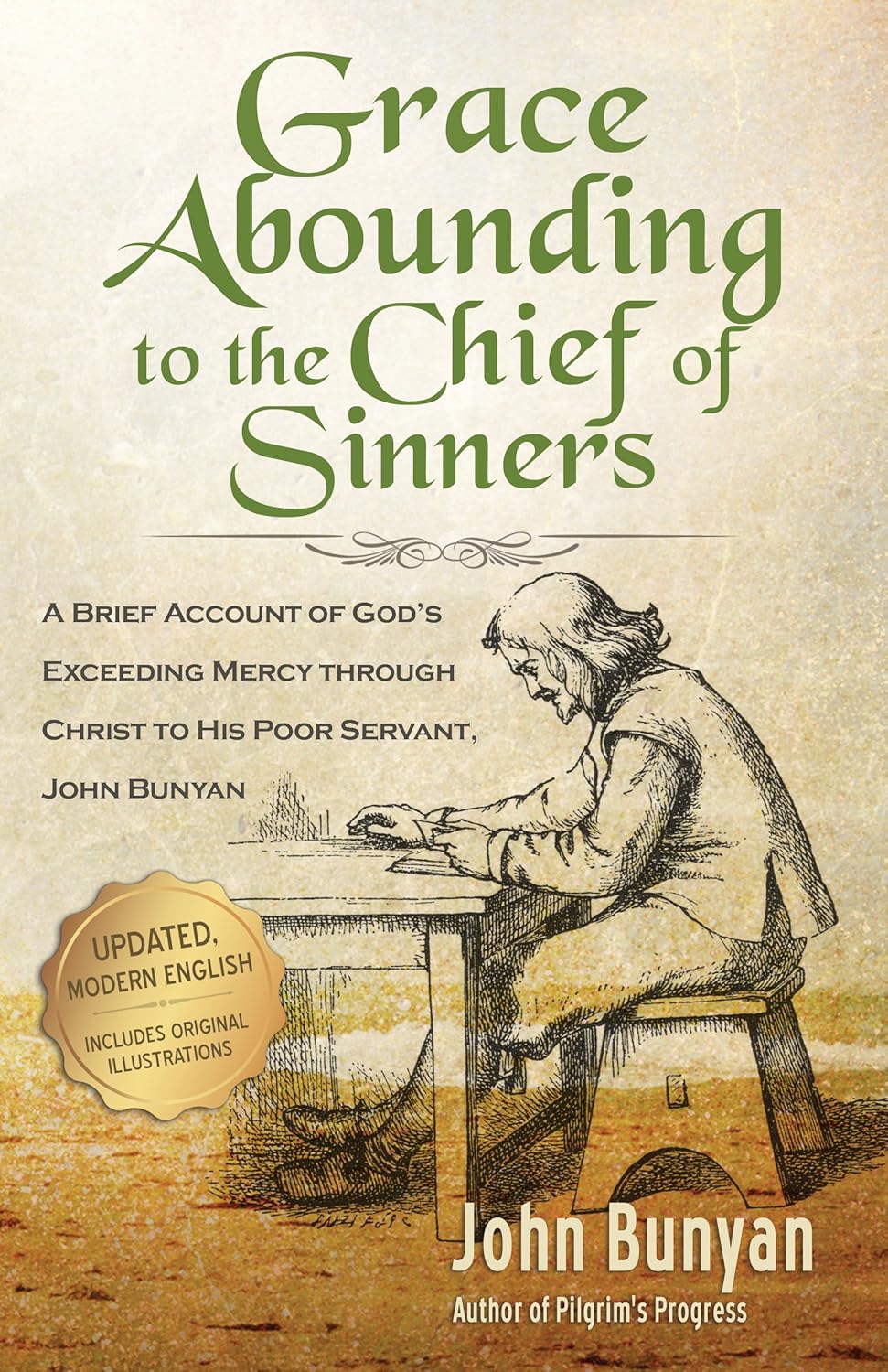
Grace Abounding to the Chief of Sinners
John Bunyan


 Apple Books


 77 Min Reading Time
 Audio Version Available
About this book
In Grace Abounding to the Chief of Sinners, John Bunyan, the celebrated author of The Pilgrim's Progress, pens a profoundly personal and unflinchingly honest spiritual autobiography. More than a historical account, this is a gripping journey through the landscape of the soul, detailing Bunyan's intense struggle with sin, doubt, and the overwhelming grace of God.
From his humble beginnings and youthful transgressions to his transformative conversion, Bunyan lays bare his innermost thoughts and torments. Readers will witness his battles against despair, his wrestling with scripture, and his ultimate triumph in finding solace and assurance in Christ's mercy.
A cornerstone of Puritan literature, Grace Abounding offers a timeless message of hope and redemption. It's a compelling testament to the power of faith, the reality of spiritual warfare, and the boundless grace available to even the "chief of sinners." Experience Bunyan's journey and discover a deeper understanding of God's love and forgiveness in this enduring Christian classic.
Summary of Key Ideas
- •
The Boundless Reach of Divine Grace
Bunyan’s autobiography showcases the transformative power of divine grace, even for the most unlikely individuals. He portrays himself as a ‘chief of sinners,’ emphasizing his unworthiness and the magnitude of God's mercy in redeeming him. This idea serves as a central theme, illustrating that no one is beyond the reach of God's forgiving love. Bunyan's detailed account of his spiritual journey underscores that grace is not earned but freely given, radically altering the course of his life and leading him from despair to hope. This narrative offers solace and encouragement to those struggling with their own sense of inadequacy or past sins.
- •
The Reality of Spiritual Warfare
The book delves deeply into Bunyan’s internal struggles with doubt, fear, and temptation. He vividly recounts his battles against sinful thoughts, despairing beliefs, and the allure of worldly pleasures. This raw honesty provides a window into the intense spiritual warfare that many believers face. Bunyan's transparency about his vulnerabilities makes his eventual triumph over these challenges all the more compelling. It highlights the reality that faith is not a passive state but an active, often painful, process of wrestling with one’s own sinful nature and clinging to God’s promises amidst adversity.
- •
The Authority of Scripture
Bunyan's journey is marked by a profound emphasis on the authority and importance of Scripture. He finds both comfort and conviction through his study of the Bible, using it as a guide to navigate his spiritual turmoil. The Bible becomes a source of truth that challenges his preconceived notions and directs him towards a deeper understanding of God's will. This reliance on Scripture underscores the Protestant belief in *sola scriptura* – that the Bible is the ultimate authority in matters of faith and practice. Bunyan's experiences demonstrate how engaging with Scripture can lead to personal transformation and a more robust faith.
- •
The Pursuit of Assurance
Assurance of salvation is a major theme, as Bunyan grapples with uncertainty about his standing before God. He wrestles with feelings of unworthiness and questions whether his faith is genuine. This internal conflict drives him to seek deeper understanding and stronger evidence of God's grace in his life. His eventual attainment of assurance is not a passive acceptance but a hard-won victory achieved through prayer, reflection, and a growing understanding of God's promises. This struggle highlights the importance of seeking a confident hope in Christ, rather than relying on feelings or good works.
- •
The Importance of Christian Community
Throughout his narrative, Bunyan highlights the crucial role of the Christian community in his spiritual development. He draws strength and encouragement from fellow believers, finding support in their shared faith and experiences. Conversations with godly individuals, participation in church life, and the fellowship of the saints all contribute to his growth and perseverance. This underscores the importance of mutual support and accountability within the Christian faith, demonstrating that no one is meant to walk the path of faith alone. The church serves as a vital source of encouragement and guidance.
- •
Conversion as a Process
Bunyan portrays his conversion not as a singular event but as a process of ongoing transformation. He describes a series of experiences, insights, and struggles that gradually lead him towards a deeper relationship with God. This highlights the dynamic nature of faith and the reality that spiritual growth is a lifelong journey. Bunyan’s story encourages readers to embrace the ups and downs of their own spiritual lives, recognizing that sanctification is a gradual process rather than an instantaneous perfection. This perspective offers hope and patience to those who are striving to live out their faith.
- •
Puritan Theological Foundations
“Grace Abounding” is deeply rooted in Puritan theology, emphasizing concepts such as God's sovereignty, human depravity, and the necessity of divine intervention for salvation. Bunyan's understanding of these doctrines shapes his interpretation of his own experiences and informs his understanding of God’s character. His narrative serves as a practical illustration of Puritan beliefs about the nature of sin, grace, and redemption. This theological framework provides a lens through which Bunyan understands his struggles and ultimately finds peace in God's unwavering love and mercy.
- •
Faithfulness in the Face of Persecution
Bunyan’s unwavering commitment to his faith leads him to face imprisonment and persecution for preaching the Gospel without a license. Despite the hardships he endures, he remains steadfast in his convictions, viewing suffering as a necessary part of following Christ. This willingness to endure hardship demonstrates the depth of his faith and serves as an inspiring example of courage and perseverance. Bunyan’s story calls readers to consider the cost of discipleship and to remain faithful even in the face of adversity.
- •
A Testament to Transforming Faith
While primarily an autobiography, “Grace Abounding” also functions as a powerful testimony to the reality and transformative power of the Christian faith. Bunyan shares his personal experiences not only to recount his own journey but also to encourage and inspire others who may be struggling with doubt, sin, or despair. His story serves as an invitation to experience the same grace and redemption that he has found in Christ. This evangelistic purpose is evident throughout the book, as Bunyan seeks to draw readers closer to God through his own example.
Chapter Recap

About The Author
John Bunyan
Main Quotes
"For, thought I, Christ is the Mediator between God and man."
"I blessed the condition of the poor sparrow that I had wronged."
"I fell, therefore, at his foot, and laid all open to him."
"I blessed the Lord that had so dealt with me."
"I could neither eat my food, stoop for a pin, chop a stick, or cast mine eye to look on this or that."
"I was nothing but a poor, simple man."
"I found my condition was but only to seek."
"I had played the fool, and had erred exceedingly."
"I was driven well-nigh to despair."
"Now I began to thank God that my sin began to be discovered unto me."
Who Should Read This Book
Readers interested in Puritan literature and spirituality
Individuals struggling with feelings of guilt, doubt, and spiritual inadequacy
Those interested in religious conversion narratives and personal testimonies
Students and scholars of religious history and literature
Readers seeking classic works of Christian literature
People interested in the life and works of John Bunyan
Christians looking for devotional and inspirational reading
Individuals exploring themes of sin, grace, and redemption
Readers interested in the historical context of 17th-century England and its religious movements
Book Summaries Like
Grace Abounding to the Chief of Sinners




FAQ

Free Access to LitNotes