




 DISCORD
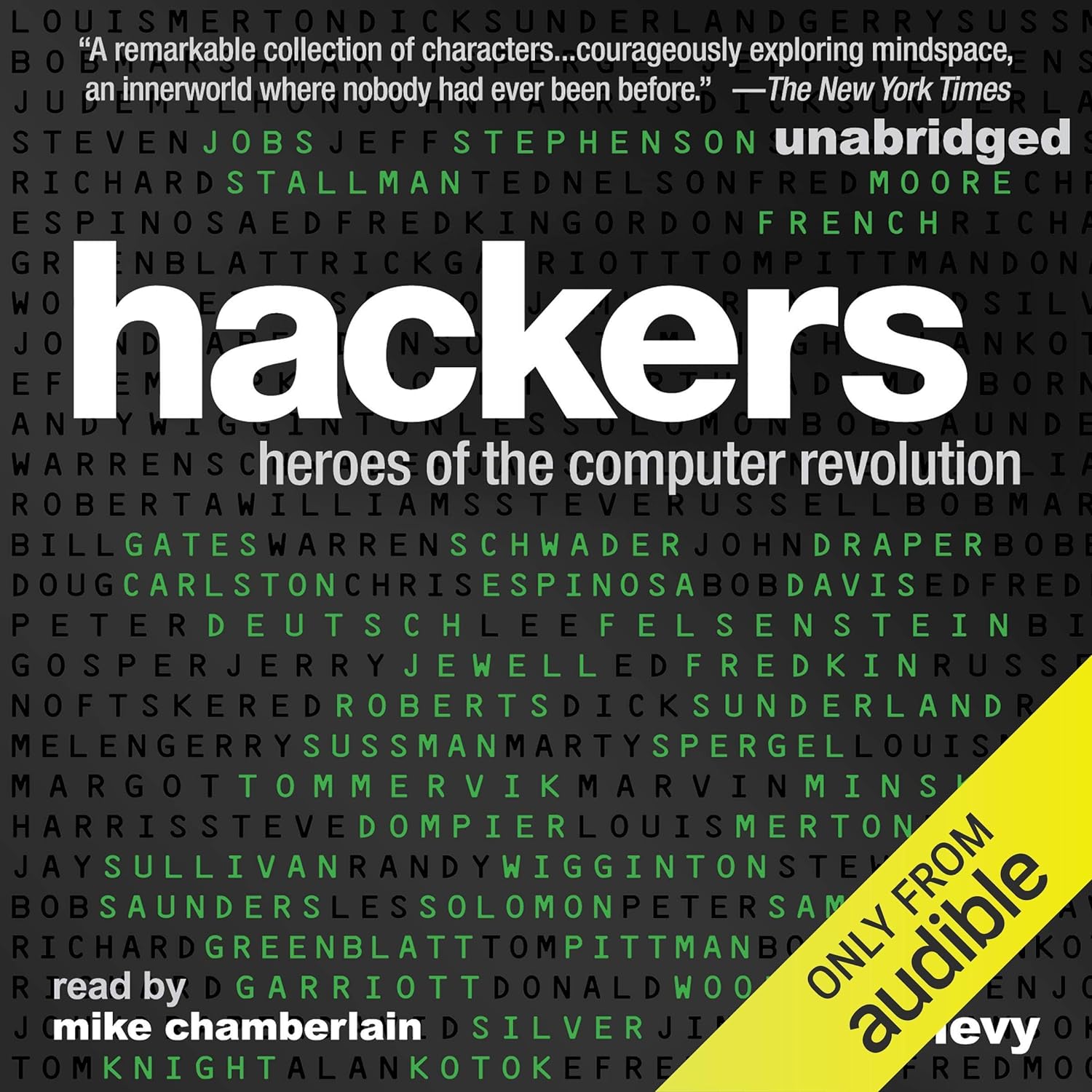
Hackers
Steven Levy


 Apple Books


 137 Min Reading Time
 Audio Version Available
About this book
Meet the original hackers: brilliant, eccentric, and driven by a revolutionary ethic. Steven Levy's classic captures the untold story of the visionaries who defied convention and shaped our digital world. From the MIT labs of the 1950s to the dawn of the personal computer, witness their relentless pursuit of innovation, their clever exploits, and the shared code that fueled a movement. Featuring insights from Bill Gates, Steve Wozniak, and other tech luminaries, Hackers is a captivating journey into the minds that built our future.
Summary of Key Ideas
- •
The Hacker Ethic: A Guiding Philosophy
The Hacker Ethic is the philosophical backbone of the book, outlining the core beliefs and values shared by the early hackers. This ethic emphasizes the importance of open access to computers and information, the belief that all information should be free, and a distrust of authority. It promotes hands-on experimentation, a drive for improvement, and the idea that computers can be used for positive change. The Hacker Ethic isn't about malicious intent but about a deep-seated curiosity and a desire to understand and improve systems. This ethic shaped the early development of computing and continues to influence the open-source movement and hacker culture today.
- •
Hands-On Imperative: Learning by Doing
The book explores the concept of "hands-on imperative," which highlights the importance of direct engagement with technology. Hackers believed in learning by doing, diving deep into systems to understand how they worked and how they could be improved. This hands-on approach fostered innovation and creativity, allowing hackers to develop novel solutions and push the boundaries of what was possible with computers. It contrasts with a more theoretical or passive approach to learning and underscores the value of practical experience in mastering technology.
- •
TMRC: The Birthplace of Hacker Culture
Levy details the significance of MIT's Tech Model Railroad Club (TMRC) as an incubator for early hacker culture. The TMRC provided a space for individuals to experiment with electronics and computing, fostering a collaborative environment where ideas could be shared and refined. The club's focus on problem-solving and its informal, non-hierarchical structure encouraged innovation and set the stage for the development of the hacker ethic. The TMRC demonstrates how a community of like-minded individuals can drive technological advancement.
- •
The 'True Hacker' Spirit: Intrinsic Motivation
The book introduces the concept of "True Hackers," individuals driven by intrinsic motivation to explore and understand technology. These hackers were less concerned with personal gain or recognition and more focused on the intellectual challenge and the pursuit of knowledge. Their passion for computing led them to develop innovative solutions and push the boundaries of what was possible. Levy contrasts these true hackers with those motivated by malicious intent, emphasizing the importance of ethical considerations within the hacker community.
- •
Open Access: The Key to Innovation
Hackers highlights the importance of open access to computers and information as a catalyst for innovation. By providing unrestricted access to computing resources, institutions like MIT allowed hackers to experiment, learn, and develop new technologies. This open access fostered a culture of collaboration and sharing, where ideas could be freely exchanged and built upon. The book argues that restricting access to technology stifles creativity and hinders progress, while open access empowers individuals to explore and innovate.
- •
From Academia to Industry: The Hacker's Impact
The narrative showcases the transition of hacker culture from the academic environment of MIT to the burgeoning personal computer industry. Early hackers, such as Steve Wozniak and Bill Gates, applied their skills and knowledge to create innovative products and companies that revolutionized computing. This transition demonstrates the practical applications of the hacker ethic and the potential for hackers to drive technological progress in the commercial sector. It also explores the challenges and compromises that arise when hacker ideals meet the demands of the marketplace.
- •
Decentralization: Distrust of Authority
The book emphasizes the value of decentralized systems and the distrust of centralized authority within hacker culture. Hackers often sought to create systems that were resistant to control and censorship, empowering individuals and promoting freedom of information. This distrust of authority stemmed from a belief in individual autonomy and the right to access and share information freely. The emphasis on decentralization reflects a broader philosophy of empowering individuals and challenging established power structures.
- •
Sharing and Collaboration: The Power of Community
Hackers delves into the culture of sharing and collaboration that characterized early hacker communities. Hackers freely shared code, ideas, and knowledge, fostering a collaborative environment where everyone could learn and contribute. This spirit of sharing accelerated innovation and allowed hackers to collectively solve complex problems. The book highlights the importance of collaboration in driving technological progress and emphasizes the benefits of open-source development.
Chapter Recap

About The Author
Steven Levy
Main Quotes
"Access to computers—and anything that might teach you something about the way the world works—should be unlimited and total."
"All information should be free."
"Mistrust authority—promote decentralization."
"Hackers should be judged by their hacking, not bogus criteria such as degrees, age, race, or position."
"You can create art and beauty on a computer."
"Computers can change your life for the better."
"To hackers, a program was an organic entity that had a life independent from that of its author."
"Hackers believe that essential lessons can be learned about systems, problem-solving, and even life itself from taking things apart, seeing how they work, and using this knowledge to create new and even more interesting things."
"Hackers are people who believe that computers can be used to do anything."
"Hackers can do almost anything and be a hacker. You can be a hacker carpenter. It's not necessarily high tech. I think it has to do with craftsmanship and caring and dedication."
Who Should Read This Book
Computer enthusiasts and hobbyists
Individuals interested in the history of computing and technology
Programmers and software developers
People curious about hacker culture and ethics
Readers interested in the early days of the personal computer revolution
Students of computer science and technology
Individuals interested in counterculture movements
Readers of non-fiction, technology, and history books
Those interested in the biographies and stories of influential figures in the tech world
People seeking to understand the origins of the internet and the digital age
Book Summaries Like
Hackers



FAQ

Free Access to LitNotes